
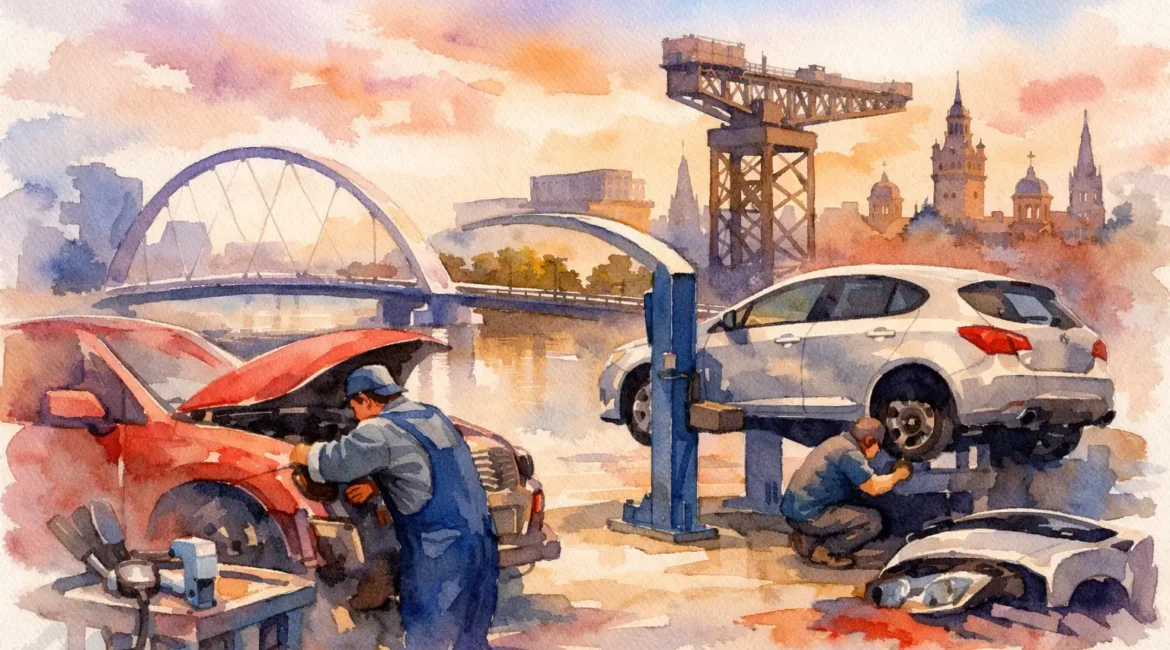
A scuffed bumper outside the supermarket, a dent from a tight parking space or scraped alloy wheels can make an otherwise well-kept car look tired. So, how much do car body repairs cost in Glasgow? For a small cosmetic repair, prices commonly start from around £80 to £150, while larger accident repairs, panel replacement and paintwork can run into several hundred pounds or more.
The honest answer is that the right price depends on the damage, the vehicle and the standard of finish required. A proper bodyshop quote should reflect the work needed to restore the car properly, not simply hide the mark for a few weeks.
How much do car body repairs cost in Glasgow?
Here are realistic guide prices for common vehicle body repairs. These are estimates rather than fixed prices, as every vehicle needs to be inspected before an accurate quotation can be given.
| Repair type | Typical Glasgow price guide | | — | — | | Minor scratch or paint scuff | £80 to £200 | | Small dent repair | £100 to £250 | | SMART repair to bumper or panel | £150 to £350 | | Bumper repair and repaint | £250 to £500+ | | Alloy wheel refurbishment | £60 to £130 per wheel | | Panel repair and repaint | £300 to £700+ | | Major accident or structural repairs | £1,000+ |
A light bumper scuff that has not cut through the paint can often be repaired locally, keeping the cost and time off the road down. A cracked bumper, damage across several panels or a repair involving sensors, trims and advanced paint matching will naturally cost more.
It is tempting to choose the lowest figure you see online, but cheap repairs can become expensive if the colour match is poor, lacquer starts peeling or corrosion has been left beneath the surface. The aim should be a clean, durable finish that protects the vehicle’s appearance and resale value.
What affects the price of car body repairs?
The size and depth of the damage
Surface marks are usually the most affordable repairs. If a scratch is only in the clear coat, it may be polished out or repaired with minimal painting. Once the scratch reaches the colour coat, primer or bare metal, more preparation is needed. Exposed metal should be dealt with promptly, particularly in Glasgow’s wet weather, as rust can spread beneath the paint.
Dents work in a similar way. A shallow dent on an accessible panel may be repaired without painting in some cases. A sharp crease, stretched metal or dent on a body line takes more time and skill to reshape before refinishing.
Which panel is damaged
Bumpers, doors, wings, sills and quarter panels all present different challenges. A bumper may look like a simple plastic part, but modern versions can contain parking sensors, cameras, radar equipment, grilles and mouldings that need removing and refitting correctly.
Rear quarter panels and sills can take longer because they are integrated into the vehicle’s structure. Damage in these areas may require careful pulling, welding or blending into neighbouring panels to achieve a proper result.
Paint colour and finish
Solid colours are generally more straightforward to match than metallic, pearl and tri-coat finishes. Some modern colours change noticeably depending on light and viewing angle. A skilled refinisher will prepare test cards and blend paint where necessary, rather than leave a visible difference between the repaired panel and the original paintwork.
Matte, satin and special-effect finishes need particular care. They cannot always be polished or blended in the same way as conventional gloss paint, which can increase labour and material costs.
Parts, sensors and vehicle age
A repair may involve more than paint and panel work. Broken brackets, wheel-arch liners, headlamps, trims, badges or clips can all add to the final bill. On newer cars, sensor calibration may also be needed after a bumper repair or replacement.
Older cars can be less expensive for straightforward cosmetic work, but hidden rust and previous poor repairs sometimes add time. A bodyshop should explain this clearly if extra damage becomes visible once the work begins.
SMART repairs versus full panel repairs
SMART repair means Small to Medium Area Repair Technique. It is a practical choice for isolated damage such as a corner bumper scuff, a small scratch on a door or a minor dent. The technician repairs and repaints the affected area, rather than automatically refinishing the entire panel.
For the right damage, this can save money and reduce turnaround time. Many small repairs can be completed the same day, subject to the paint process and the condition of the vehicle.
However, SMART repair is not always the best option. A large scrape, damage on a sharp body line, a difficult metallic colour or damage covering much of the panel may need a full panel repair and paint blend. That costs more, but it is often the route to a finish that genuinely looks right rather than merely acceptable from a distance.
When insurance repairs may be the better choice
For accident damage, paying privately is not always the sensible option. If the repair is substantial, or another driver was responsible, an insurance or non-fault claim may be appropriate. This can cover repairs that would otherwise be difficult to fund in one payment, particularly where there is hidden damage behind the bumper or to the vehicle structure.
Before deciding, consider the excess on your policy, the likely repair cost and whether claiming could affect future premiums. If the accident was not your fault, support with the non-fault claims process can remove much of the hassle and help ensure the vehicle is repaired properly.
Do not assume an insurer estimate tells the whole story from photographs alone. An initial assessment can change once the vehicle is stripped down and damaged components are inspected. A dependable repairer will keep you informed and seek approval before carrying out additional authorised work.
Getting an accurate body repair quote
Photographs can provide a useful starting point, especially for small scratches and dents. Take clear pictures in daylight, including one close-up image and one showing the full panel. Let the repairer know the make, model, registration year and whether there are sensors or existing damage nearby.
For anything more than minor cosmetic damage, an in-person assessment is best. It allows the bodyshop to check panel gaps, paint condition, underlying damage and whether a repair is safe and worthwhile. A good quote should set out what is being repaired, whether parts are included, the expected timescale and the finish you can expect.
Be wary of a quote that is dramatically lower than the rest without a clear explanation. It may exclude paint materials, preparation, VAT, parts or proper colour matching. The cheapest repair can be poor value if it needs redone.
Is it worth repairing cosmetic damage?
Usually, yes. A small scrape may seem harmless, but it can detract from the car every time you walk up to it and make a good vehicle harder to sell or part-exchange. Scratches through paint can also allow moisture to reach metal panels, creating a larger problem later.
For leased or PCP vehicles, repairing damage before hand-back can also be more cost-effective than accepting end-of-contract charges. The key is choosing a repair method that suits the vehicle and the damage, rather than paying for a full respray when a local repair would do, or accepting a quick patch where a proper panel repair is needed.
Unique Bodywork provides repair options for everyday scuffs through to insurance accident work, with collection and drop-off available across the Glasgow area for added convenience. The best next step is a clear assessment, a straightforward quote and workmanship aimed at returning your car to showroom condition.