
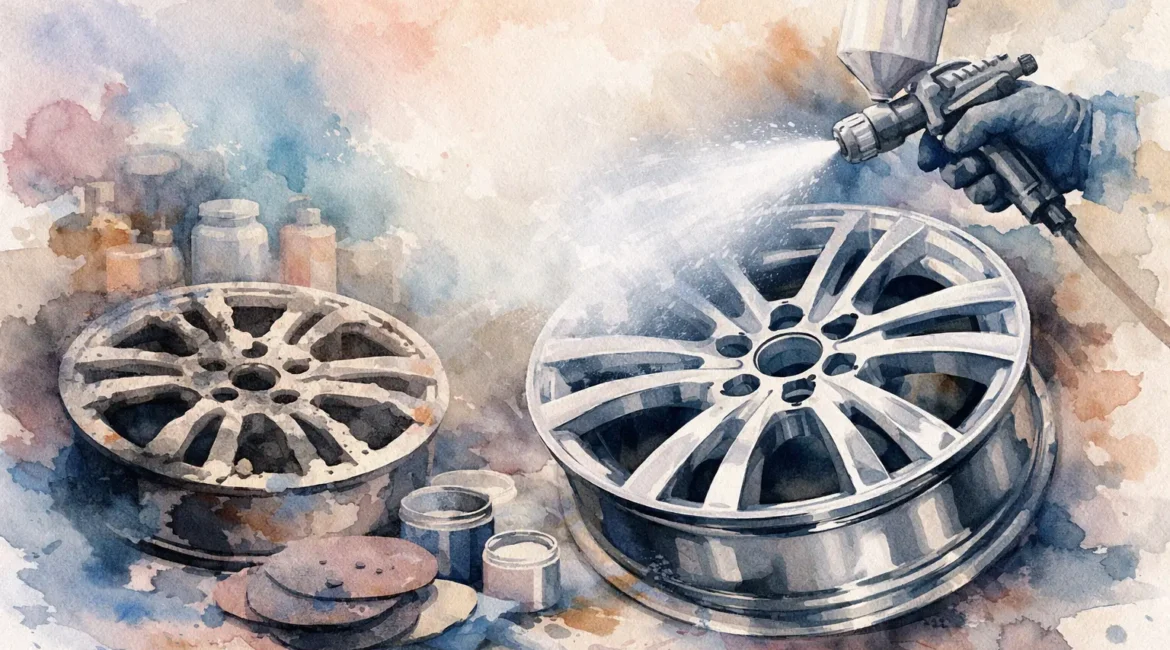
Kerbed an alloy while parking, spotted lacquer peeling, or noticed corrosion setting in around the rim? The first question most drivers ask is simple – what is the alloy wheel refurbishment cost, and is it worth paying for rather than living with the damage or replacing the wheel altogether?
The honest answer is that price depends on the wheel, the finish, and how bad the damage is. A light cosmetic repair on one wheel will usually cost far less than a full refurbishment on a diamond-cut set. That is why the cheapest quote is not always the best one, and the highest quote is not always necessary either. What matters is getting the right repair for the condition of the wheel.
What affects alloy wheel refurbishment cost?
If you are comparing prices, it helps to know what you are actually paying for. Alloy wheel refurbishment is not one fixed service. It can range from a localised cosmetic repair to a full strip, preparation, repaint and lacquer process.
The biggest factor is the type of damage. Light kerb marks and surface scuffs are usually straightforward. Corrosion, flaking paint, lacquer peel and previous poor-quality repairs take more time to put right. If the wheel has suffered deeper gouges, buckling or cracking, that moves beyond a basic cosmetic refurbishment and may require specialist repair work or replacement.
The finish also changes the price. Standard painted alloys are generally the most cost-effective to refurbish. Powder-coated finishes can offer excellent durability, but the process is more involved. Diamond-cut wheels often cost more because the face of the wheel needs to be precision-cut on a lathe after preparation, and not every damaged wheel is a good candidate for that process.
Wheel size matters too. Larger wheels usually need more materials and more labour. A 19-inch or 20-inch alloy is rarely priced the same as a smaller wheel from a city car. Design can also make a difference. Intricate spoke patterns take longer to prepare properly than simpler wheel styles.
Typical alloy wheel refurbishment cost in the UK
For most everyday drivers, the usual price question is about cosmetic refurbishment rather than structural wheel repair. As a rough guide, painted alloy refurbishment often starts from around the lower end of the market for light repairs and rises depending on finish and condition. Diamond-cut wheels usually sit at the upper end.
In practical terms, many drivers will see quotes along these lines:
- light cosmetic refurbishment on a painted wheel – often around £60 to £90 per wheel
- more involved painted refurbishment – often around £80 to £120 per wheel
- diamond-cut refurbishment – often around £100 to £150+ per wheel
These are guide figures rather than fixed rates, because condition is everything. A wheel with minor kerbing is very different from one with corrosion around the whole rim and damage across multiple spokes. If you are having all four wheels done at once, some repairers may offer better value than pricing each wheel entirely separately.
Why one quote can be much cheaper than another
A low price can mean a good deal, but it can also mean a quicker, more limited repair. That is where drivers sometimes get caught out.
Some services focus on improving the visible area of damage without fully stripping the wheel. That can be the right option for minor cosmetic issues and for customers who want a tidy result at a sensible price. Other refurbishments involve removing the tyre, stripping old coatings, preparing the surface properly, repainting the full wheel and applying lacquer before curing. That takes more time and costs more, but it usually gives a more complete finish.
There is no point paying for a full process if a smaller repair will do the job. Equally, there is no bargain in a cheap repair that starts to peel or discolour a few months later. A proper assessment matters more than a headline price.
When refurbishment is worth it
In many cases, refurbishment makes far more financial sense than replacement. New alloy wheels can be expensive, especially if you need to match an original manufacturer design. Even a single replacement wheel can cost significantly more than refurbishing the damaged one.
Refurbishment is usually worth considering when the damage is cosmetic, the wheel is structurally sound, and you want to protect the appearance and value of the car. It is especially worthwhile before selling a vehicle, returning a leased car, or tidying up a car you otherwise keep in very good condition.
It also makes sense if only one or two wheels are marked but the rest of the car is presentable. Damaged alloys can make an otherwise clean vehicle look neglected. A smart set of wheels changes the overall look of the car straight away.
When the cheapest option is not the right one
If a wheel is cracked, badly buckled or heavily corroded, price should not be the only concern. Safety comes first. Some wheels can be repaired safely by specialists, while others are better replaced. A reputable repairer will tell you the difference.
This is also true with diamond-cut alloys. They look sharp when finished properly, but they cannot be cut endlessly. If a wheel has already been refurbished several times, there may be limits on what can be done. In that case, a straightforward painted finish might be a more practical and cost-effective alternative than trying to preserve the original style at any cost.
That kind of honest advice matters. Most drivers are not looking for jargon. They want to know what can be done, what it will cost, how long it will take, and whether the result will last.
Alloy wheel refurbishment cost versus replacement
If you are deciding between repair and replacement, think beyond the upfront number. Replacement sounds simple, but the true cost can rise quickly. There is the wheel itself, possible delays in sourcing the correct match, tyre fitting, balancing and, in some cases, the awkward reality that one brand-new wheel can make the others look tired by comparison.
Refurbishment often gives better overall value when the wheel is repairable. You keep the original set, restore the appearance, and avoid paying dealer-level prices for new parts. For many family cars, company cars and everyday runarounds, that is the practical choice.
For prestige vehicles and enthusiast cars, the calculation can be different. Owners may want the exact original finish, and that can raise the price. Even then, refurbishment is often still the sensible first option if the wheel is structurally sound.
How long does the job take?
Turnaround affects value just as much as price. If you rely on your car every day, a cheaper quote is less attractive if the vehicle is off the road longer than necessary.
Minor repairs can sometimes be completed quickly, while full refurbishments may take longer depending on the process and the number of wheels involved. Same-day options are possible in some cases, but not every wheel and finish suits a rushed repair. A good repairer should be clear about what is realistic rather than promising speed at the expense of quality.
For drivers around Glasgow and the surrounding areas, convenience can be just as important as the figure on the estimate. Collection and drop-off, clear booking times and straightforward advice make the whole job easier to manage.
How to get an accurate price
The best way to get a reliable figure is to have the wheels inspected properly. Photos can help, but they do not always show the full condition, especially where corrosion is concerned.
When you ask for a quote, it helps to know the wheel size, the finish, how many wheels are damaged, and whether the issue is kerbing, peeling lacquer, corrosion or something more serious. A proper estimate should tell you what work is included, not just give you a number without explanation.
If a quote seems unusually cheap, ask whether the repair is localised or a full refurbishment. Ask if the tyre needs to come off, whether the whole wheel will be refinished, and what finish is being used. Clear answers usually tell you a lot about the standard of service.
Paying for finish, not just repair
A good alloy refurbishment is about more than covering damage. It is about restoring the wheel so it looks right on the car and stays looking right. That means proper preparation, colour matching where needed, and a finish that holds up against weather, brake dust and day-to-day driving.
That is why alloy wheel refurbishment cost should be judged on result as much as price. A tidy, durable finish at a fair rate offers real value. A fast cosmetic patch that looks tired again after a short time usually does not.
At Unique Bodywork, that practical approach matters. Drivers want straight answers, competitive pricing and workmanship that brings the car back to a standard they are happy to be seen in.
If your alloys are letting the rest of the vehicle down, the right repair is often more affordable than you expect – and far easier than putting up with the damage every time you walk up to the car.