
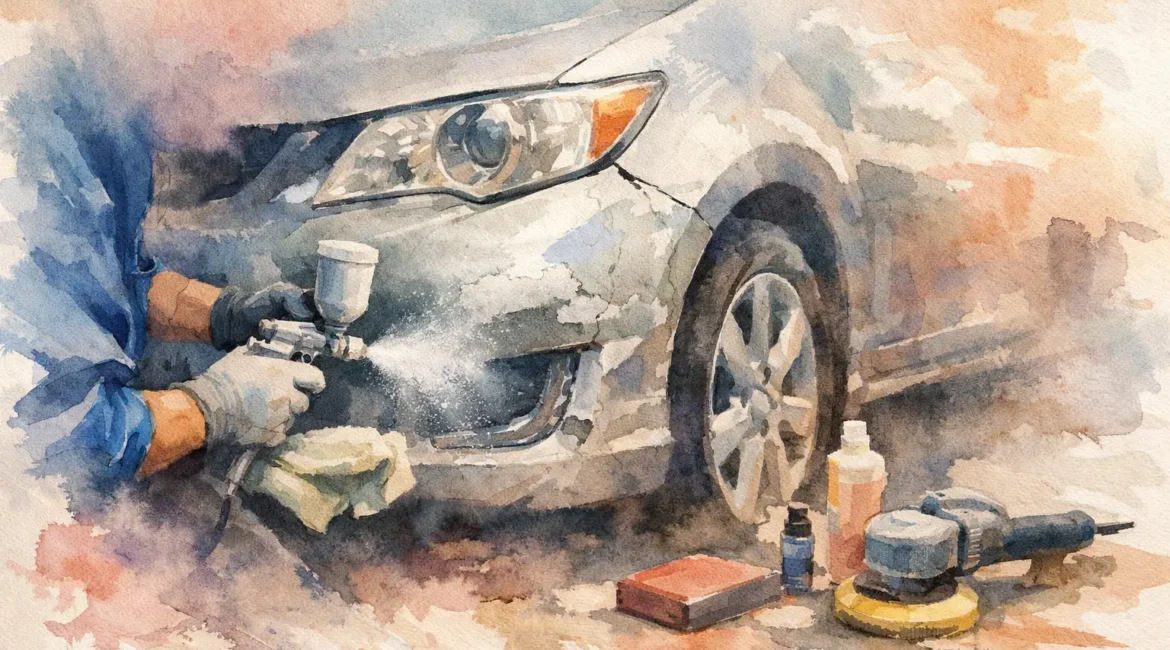
That annoying scrape on the bumper in a supermarket car park. The shallow dent on the door you spot every time you walk up to the car. The alloy wheel kerbed on a tight street. Smart repairs explained: the fast & affordable way to fix car damage often starts with one simple point – not every mark on your vehicle needs a full bodyshop job.
For many everyday cosmetic issues, SMART repair is the quickest and most cost-effective route back to a clean, tidy finish. It is designed for localised damage, which means the repair is focused only on the affected area rather than repainting or replacing whole panels unnecessarily. If you want your car looking right again without paying over the odds or losing it for days, this is usually where the conversation should start.
What smart repairs explained really means
SMART stands for Small to Medium Area Repair Technology. In plain terms, it is a method of repairing minor cosmetic damage in a targeted way. That could be a bumper scuff, a light scratch, a small dent, paint chips, or kerb damage on alloy wheels.
The key difference is scale. Traditional body repairs can involve removing and repainting larger sections for the sake of consistency across a panel. SMART repair techniques are built to restore a smaller damaged area with precise prep, colour matching and refinishing. Done properly, the repair blends in cleanly and the vehicle keeps its original appearance without the cost of more extensive work.
This is why SMART repairs appeal to so many drivers. They are practical. They are quicker. And when the damage fits the method, they make far more financial sense than replacing parts or carrying out a full respray.
Why smart repairs are the fast and affordable way to fix car damage
Speed matters when you rely on your car every day. Whether it is the school run, commuting, client visits or simply getting around Glasgow and the surrounding areas, most people do not want their vehicle off the road any longer than necessary.
Because SMART repairs focus on the damaged section only, the process is usually much faster than conventional bodyshop work. Less stripping down, less paint over a wide area, and less time spent on work your car may not actually need. In many cases, that means same-day turnaround is possible.
Affordability comes from that same efficiency. Labour time is lower, material use is lower, and there is often no need to replace panels that can be properly restored. For vehicle owners dealing with minor cosmetic damage, that can mean a noticeable saving.
That said, cheaper should never mean rushed. A SMART repair only works if the surface is prepared correctly, the paint is matched properly and the final finish is carried out to a high standard. A poor repair will stand out just as much as the original damage. The value is in getting the job done well, not just getting it done quickly.
What kind of damage can SMART repairs fix?
This is where a proper assessment matters. SMART repair is ideal for small, localised damage, but it is not the answer to everything.
Bumper scuffs are one of the most common jobs. Plastic bumpers pick up scrapes easily, especially in car parks and tight driveways. If the damage is limited to the surface and has not badly distorted the bumper, a SMART repair is often the right fix.
Light scratches and paintwork damage can also be repaired this way, particularly when the affected area is contained and has not spread across multiple panels. Small dents may be suitable too, depending on their depth, location and whether the paint surface has been broken.
Alloy wheel refurbishment often overlaps with SMART techniques as well. Kerb marks, scuffs and minor cosmetic damage can usually be repaired without the cost of replacing the wheel.
Where things become less suitable is with larger impact damage, sharp creases, cracked panels, extensive rust, or anything affecting structural integrity. If there has been an accident, especially one involving alignment issues or deeper body damage, a more traditional repair approach may be needed. The best repair is the one that matches the actual condition of the vehicle, not the cheapest option on paper.
The repair process in simple terms
Most motorists do not need a lesson in bodyshop chemistry. What they do need is confidence in how the job is handled.
A SMART repair usually begins with inspection. The damaged area is assessed to confirm whether a localised repair will give the right result. If it will, the technician prepares the area carefully, smoothing damage, filling where necessary and making sure the surface is ready for paint.
From there, the colour is matched to the vehicle and applied in a controlled way so the repaired section blends naturally with the surrounding finish. Once cured and refined, the area is polished and checked so the repair sits as it should.
The same principle applies across different types of cosmetic damage. Precision is the whole point. You are not paying for unnecessary work. You are paying for skilled repair in exactly the area that needs it.
Smart repairs explained vs traditional bodyshop repairs
There is no need to pretend SMART repair is always the better option. It depends on the damage, the panel, the age of the vehicle and the finish the customer expects.
If your car has a small bumper scrape, a localised repair is often the obvious choice. It is faster, costs less and avoids larger-scale paintwork. If the side of the vehicle has been badly gouged, or a panel is heavily dented, then a full repair and repaint may be the only way to restore it properly.
This is especially important for drivers who care about long-term appearance and resale value. A good repair should not just cover the damage for now. It should leave the car looking right over time. That means being honest about where SMART repair is suitable and where it is not.
At a reputable repairer, you should expect that honesty from the start. If a job needs more than a SMART repair, you are better being told upfront than sold a quick fix that will not hold up.
Who benefits most from SMART repairs?
The short answer is any driver who wants minor damage sorted quickly without sacrificing finish quality.
Commuters often use SMART repairs to tidy up cars that pick up wear from daily use. Families use them to deal with bumper knocks, door scrapes and wheel scuffs before the car starts to look tired. Lease customers and motorists preparing to sell their vehicle often find them especially worthwhile because cosmetic flaws can affect handover charges or buyer confidence.
They are also useful after low-speed incidents where the damage is visible but limited. In those cases, getting the vehicle back to a clean standard without a drawn-out repair process makes life simpler.
For local drivers, convenience matters just as much as price. Fast booking, reliable turnaround, and services like collection and drop-off can make a big difference when fitting repairs around work and family life. That is a big part of why SMART repairs continue to be so popular.
Choosing the right repairer matters as much as the repair method
SMART repair sounds straightforward, but the result depends entirely on the standard of workmanship. Poor prep, poor paint match or poor blending will leave a finish that catches the eye for the wrong reasons.
That is why experience matters. You want a repairer who understands not only how to treat the damage, but when to recommend a different approach. A confident, dependable bodyshop will explain the options clearly, keep the process simple and focus on the finish your vehicle actually needs.
For drivers across Glasgow, Cambuslang, Rutherglen, East Kilbride and nearby areas, that usually comes down to three questions. Can they assess the damage honestly? Can they complete the work quickly? And can they return the car looking as though the damage was never there?
At Unique Bodywork, that practical approach is exactly what customers are looking for. Fast turnaround matters. Competitive pricing matters. But the finish still has to be right.
When it is worth getting that small damage fixed
A lot of cosmetic damage gets left because people assume it is not worth the hassle. Then one scuff becomes several, a tidy car starts looking neglected, and the value of the vehicle quietly drops.
Getting minor damage sorted early is often the better move. It keeps the car looking cared for, helps protect resale value and saves you from living with marks that only get more frustrating over time. It can also stop a minor issue becoming a more involved one if damaged paintwork is left exposed.
If your car has picked up a scuff, scratch, dent or alloy mark, the smartest next step is not guessing. It is having it properly assessed and repaired in the way that makes sense for the damage. Sometimes that means a SMART repair. Sometimes it means more. Either way, a good repair should make your life easier and your car look right again.