
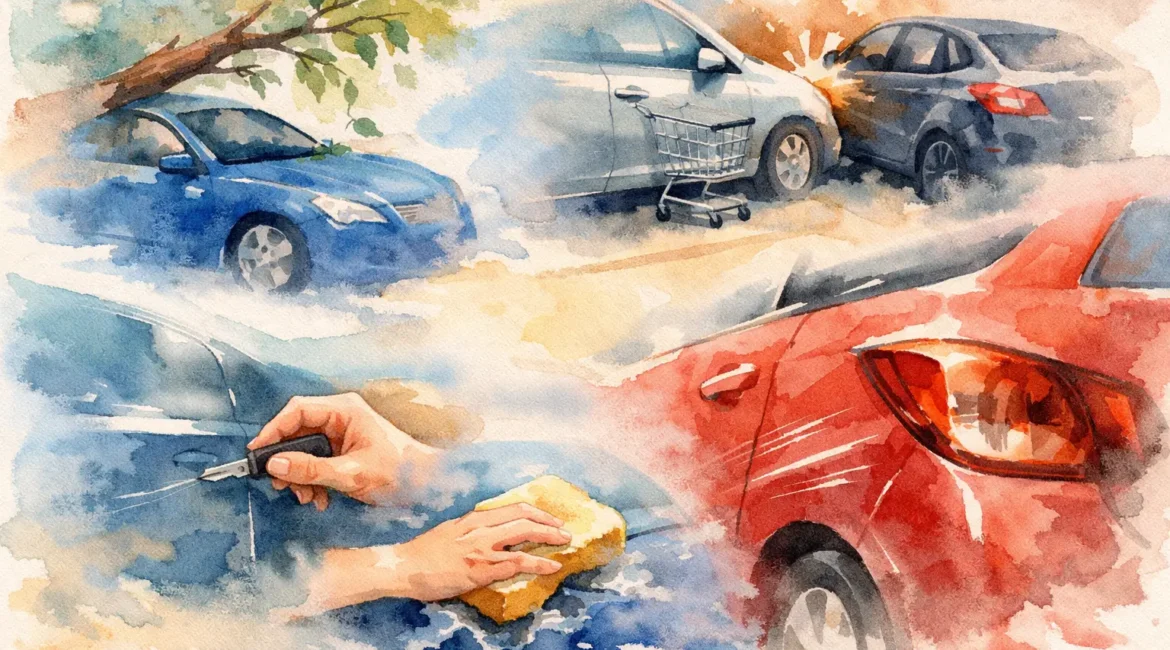
You do not need a major bump to spoil your car’s finish. Most paint damage starts with ordinary habits – where you park, how you wash the car, and what brushes against it during the week. If you are looking for 5 common causes of car scratches and how to prevent them, the good news is that most of them are avoidable with a bit of care and the right routine.
A scratch might seem minor at first, but it can quickly make an otherwise tidy vehicle look tired. On darker paint especially, every mark stands out. For many drivers, that is frustrating enough. On top of that, repeated cosmetic damage can affect resale value and leave you with repair costs that could have been avoided.
5 common causes of car scratches and how to prevent them
Some scratches are simply bad luck. A stray stone or another driver’s carelessness can catch anyone out. But a lot of paintwork damage comes from the same few causes turning up again and again, especially on cars used daily around busy streets, supermarket car parks and tight residential areas.
1. Poor parking and tight spaces
Car parks are one of the most common places for scratches to happen. Tight bays, narrow access routes and drivers rushing in and out all increase the risk. Even if your car is stationary, another door opening too far, a shopping trolley rolling loose or someone misjudging a turn can leave a mark behind.
Prevention starts with where you leave the car. If you have the option, choose a bay with more room around it rather than the space closest to the entrance. End spaces can be useful, but only if they do not force another vehicle to squeeze past your front or rear corner. It is also worth folding mirrors in where appropriate and avoiding parking too close to hedges, walls or rough brick surfaces.
At home, the same principle applies. If your driveway or garage is narrow, take a few extra seconds when pulling in. Many scratches happen not on the road, but beside your own house when a mirror, bumper edge or door catches a wall, gatepost or bike.
2. Bad washing habits
A surprising amount of scratch damage is caused by cleaning the car the wrong way. Dirt and grit sitting on the paint act like sandpaper if they are rubbed across the surface with a sponge, brush or dirty cloth. Automatic car washes can also leave fine swirl marks, especially if the brushes are worn or holding debris from previous vehicles.
The best prevention is a safer wash routine. Rinse the car properly before touching the paint, use clean wash mitts rather than old sponges, and keep separate cloths for wheels and bodywork. If you are washing it yourself, changing the water when it gets dirty makes a real difference. Drying matters too. Dragging a rough towel across the paint can create light scratches that build up over time.
If convenience matters, as it does for most busy drivers, it is still worth being selective about where the car is cleaned. A quick wash is not much of a bargain if it leaves the finish dull and marked. Consistent paint care usually costs less than repeat correction work later.
3. Trees, bushes and overgrown areas
Branches scraping along the side of a car are an obvious cause of scratches, but lighter contact can be just as damaging. Reversing past hedges, driving down narrow lanes, or parking beside overgrown shrubs can all leave fine marks in the clear coat. In some cases, sap and bird droppings make matters worse by damaging the surface if they are left too long.
Prevention here is mostly about awareness. If a space puts your car close to branches, it is usually better to park elsewhere. On narrow roads, slowing right down helps you avoid branches flicking back onto the paint. At home, trimming bushes near the drive or gate can stop repeat damage.
This is especially relevant in older residential streets where space is tighter and greenery often hangs over kerbs and driveways. It might not look like much at the time, but repeated brushing against leaves and twigs soon takes the shine off the panels.
4. Road debris and loose stones
Not every scratch starts in a car park. While driving, loose chippings, grit and debris can strike the bodywork, particularly lower doors, bumpers, wheel arches and bonnets. This is more likely on roads with poor surfaces, temporary repairs or ongoing works, where stones can be thrown up by your own tyres or vehicles ahead.
You cannot remove the risk entirely, but you can reduce it. Leave more distance between your car and the vehicle in front, especially behind vans, lorries and cars travelling quickly on rough roads. If you see fresh roadworks, slow down and avoid sudden lane changes onto loose gravel where possible.
Some damage from debris is inevitable if you use the car every day, and that is where timing matters. Small chips and scratches are easier to sort when dealt with early. Left untreated, they can become more noticeable, collect dirt or lead to paint breakdown around the damaged area.
5. Bags, keys, bikes and everyday contact
Many scratches happen because of simple everyday contact rather than a specific incident. Keys dragged along the door while unlocking it, bags brushing against the boot, children getting in with zips or buckles exposed, or bikes and tools stored too close in the garage can all mark the paint. These are the kinds of scratches people often notice later and cannot quite explain.
Prevention comes down to routine. Avoid placing bags or shopping on the bonnet or roof. Be careful with keyrings, especially around door handles. If you store bikes, prams or tools beside the car, leave more space than you think you need. In family cars and work vehicles, where things are constantly being loaded and unloaded, this is one of the biggest causes of repeated cosmetic damage.
It is also worth paying attention to the boot lip and door edges. These areas take a lot of knocks because they are used constantly. A little extra care while loading shopping, suitcases or equipment can save a surprising amount of paint damage over time.
When prevention is not enough
Even careful drivers pick up scratches. That is just reality, especially if the car is used daily and parked in busy areas. The key point is knowing when a mark is superficial and when it needs proper repair.
Very light surface marks can sometimes be polished out, but anything that has gone deeper into the paint should be assessed properly. DIY kits can help in some cases, but they can also make a tidy repair harder if the colour match is off or too much product is applied. It depends on the depth, the panel, and how visible the damage is.
For drivers who want the car looking right again without guesswork, professional repair is usually the quicker and more cost-effective route. A good repair should blend properly, restore the finish, and avoid the patchy look that often comes from rushed touch-ins.
Why early action makes a difference
A fresh scratch nearly always looks worse to the owner than anyone else, but there is still a practical reason to get it looked at sooner rather than later. Once the paint surface is broken, moisture and grime can sit in the damaged area. That does not mean every scratch is urgent, but waiting months rarely improves the outcome.
If the mark is shallow, early treatment gives you more options. If it is deeper, sorting it before it spreads or becomes more obvious can keep the repair smaller and more affordable. That is especially true if you are planning to sell the vehicle, return a lease car, or simply want to keep it in showroom condition.
For motorists across Glasgow and surrounding areas, convenience matters just as much as the repair itself. That is why many people look for a bodyshop that can assess the damage quickly, explain the options in plain language, and get the car back looking right without dragging the job out.
Keeping your paintwork in good condition is not about being precious with the car. It is about protecting its appearance, value and finish with a few sensible habits. And if a scratch has already happened, getting it repaired properly is often the fastest way to stop a small mark becoming a bigger irritation.