
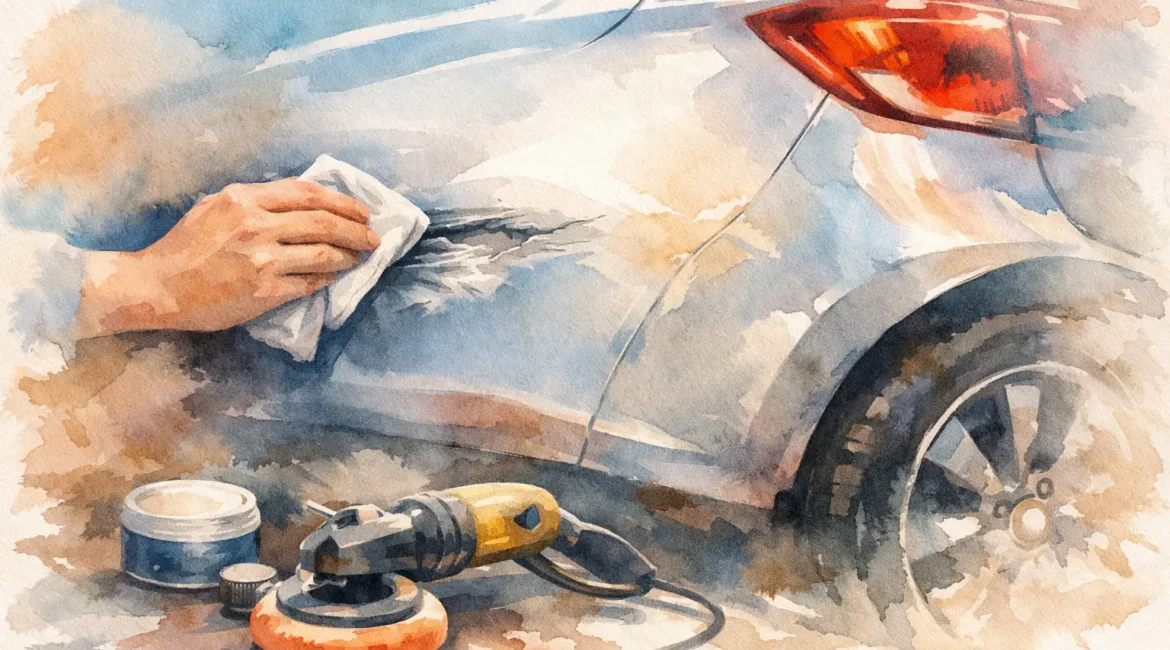
That small scrape on the door or dent above the wheel arch always looks worse in daylight. If you are searching for how to remove scratch and dent from car panels, the real question is usually this – can it be sorted properly without wasting money, making it worse, or ending up with paint that never quite matches again?
The honest answer is that some damage can be improved at home, but not every mark should be treated as a DIY job. A light surface scratch is one thing. A dent that has stretched the metal, cracked the paint or damaged the panel edge is another. Knowing the difference saves time, money and a lot of frustration.
How to remove scratch and dent from car panels safely
Before you touch the damage, wash the area properly. Dirt trapped under a cloth or polishing pad can add more scratches, which defeats the point. Use car shampoo, rinse thoroughly and dry the panel so you can see exactly what you are dealing with.
Next, assess the scratch. If it is only in the clear coat, it may look white or dull but still feel fairly smooth. These marks can often be reduced with a cutting compound or scratch remover and careful polishing. If the scratch catches your fingernail deeply, or you can see primer or bare metal, it has gone beyond a simple polish-and-go fix.
Dents need the same kind of honest check. A shallow dent in the middle of a panel with no paint damage is a better candidate for paintless dent repair. If the dent is on a body line, near the edge of a panel, or has chipped the paint, the repair becomes more involved. That is where proper bodyshop work usually gives the better result.
Removing light scratches at home
For minor surface scratches, the goal is to level the clear coat around the mark, not scrub the panel until the scratch disappears by force. That is where many home repairs go wrong.
Start with a scratch remover or fine cutting compound made for automotive paint. Apply a small amount to a microfibre cloth or applicator pad and work in short, controlled motions. Keep checking your progress rather than rubbing harder and harder. Once the scratch is reduced, polish the area to restore gloss, then protect it with wax or sealant.
This can work well for light scuffs from shopping trolleys, hedge branches or careless fingernails around door handles. It will not fix deep scratches through the paint layer. In those cases, the panel may need sanding, filling, priming and repainting to restore the finish properly.
A touch-up paint kit can help with very small stone chips or narrow scratches, especially on older cars where perfection is less of a concern. Even then, colour match and finish matter. If too much paint goes on, or the lacquer sits proud, the repair can end up more obvious than the original damage.
When scratch removal stops being a DIY job
If rust has started, leave the quick-fix products on the shelf. Once bare metal is exposed, moisture gets to work fast, especially in British weather. The scratch may look cosmetic now, but corrosion spreads under the paint and turns a small repair into a larger one.
The same applies if the scratch runs across multiple panels or into plastic trims and mouldings. What looks like one mark can involve different materials, paint textures and blending work. A bodyshop can repair the damage evenly so the panel does not stand out against the rest of the car.
Removing dents without damaging the paint
A lot of drivers look online for suction tools, hot water methods or push-from-behind tricks. These can occasionally improve a soft dent, but they are not reliable across all vehicle panels. Modern car bodies use different metal strengths, panel shapes and paint systems, so there is no one-size-fits-all shortcut.
Paintless dent repair works best when the paint surface is intact and the metal has not been sharply creased. A skilled technician uses specialist tools to massage the dent out from behind the panel or carefully pull it from the outside. Done properly, it can restore the shape without filler or paint.
That is often the best-case scenario because it keeps the factory finish intact and can be faster than conventional repair. It is also why random DIY pulling kits can be risky. Pull too hard and you can stretch the metal. Heat the panel badly and you risk damaging lacquer or trim. Push from the wrong point and you create a high spot that is harder to correct than the original dent.
How to tell if a dent needs bodyshop repair
If the dent has a sharp centre, cracked paint or a visible crease, it usually needs more than a simple pull or push. The panel may need reshaping, filling and repainting to get it back to pre-damage condition.
The panel location matters too. Dents on swage lines, wheel arches, door edges and bumper corners are harder to repair invisibly because the shape is more complex. Plastic bumpers can also distort differently from metal panels, so methods that work on a bonnet or door will not necessarily suit a bumper scuff and dent.
Scratch and dent together – what is the best repair?
When a car has both a dent and a scratch in the same area, the repair has to deal with shape and finish. This is where quick home methods usually fall short. Even if you improve the dent slightly, the paint damage can still leave the panel looking poor.
A proper repair usually starts with reshaping the panel as close to original as possible. After that, the damaged paint is prepared, the area is filled if needed, then primed, colour matched and refinished. On modern cars, matching paint is not just about finding the right code. Age, sun exposure and previous repairs all affect how the final finish looks.
That is why a cheap patch repair can sometimes stand out badly from the rest of the car. A good bodyshop focuses on blending and finish, not just covering the damaged spot.
Is it cheaper to repair or leave it?
That depends on the damage and on the car. If it is a small scuff on an older runabout, you may decide to live with it. But if the scratch has broken the paint or the dent affects the panel line, leaving it can cost more later.
Paint damage leads to corrosion. Dents can also affect resale value more than owners expect, especially if they are on visible areas like doors, wings or bumpers. If the vehicle is on finance, lease, or due to be returned, cosmetic damage can become an expensive issue at handover.
Insurance is another factor. If the damage happened in a non-fault accident, there may be a route to repair without carrying the full cost yourself. For many drivers, that support matters as much as the repair itself.
When to call a professional bodyshop
If you want the car back to showroom condition, there is a point where DIY stops making sense. Deep scratches, dented body lines, cracked bumper paint and anything involving rust or panel distortion are best handled by professionals.
A good repair should not only remove the obvious mark. It should restore the panel properly, match the paint, and leave you without that nagging feeling every time you walk up to the car. That matters whether the vehicle is your daily commuter, family car or something you take real pride in.
For drivers around Glasgow and the surrounding areas, convenience matters too. Being able to have the damage assessed quickly, repaired to a high standard and turned around without the usual hassle makes a real difference when life is already busy.
At Unique Bodywork, that is exactly the sort of job we handle every day – from small cosmetic scratches to dents and more involved accident damage. The right repair is not always the biggest one or the most expensive one. It is the one that restores the car properly and saves you from paying twice.
If you are deciding what to do next, start with a simple rule. If the damage is truly light and only on the surface, a careful home repair may improve it. If the paint is broken, the dent is creased, or you want a finish that actually looks right, get it seen by a specialist before a small problem turns into a bigger one.