
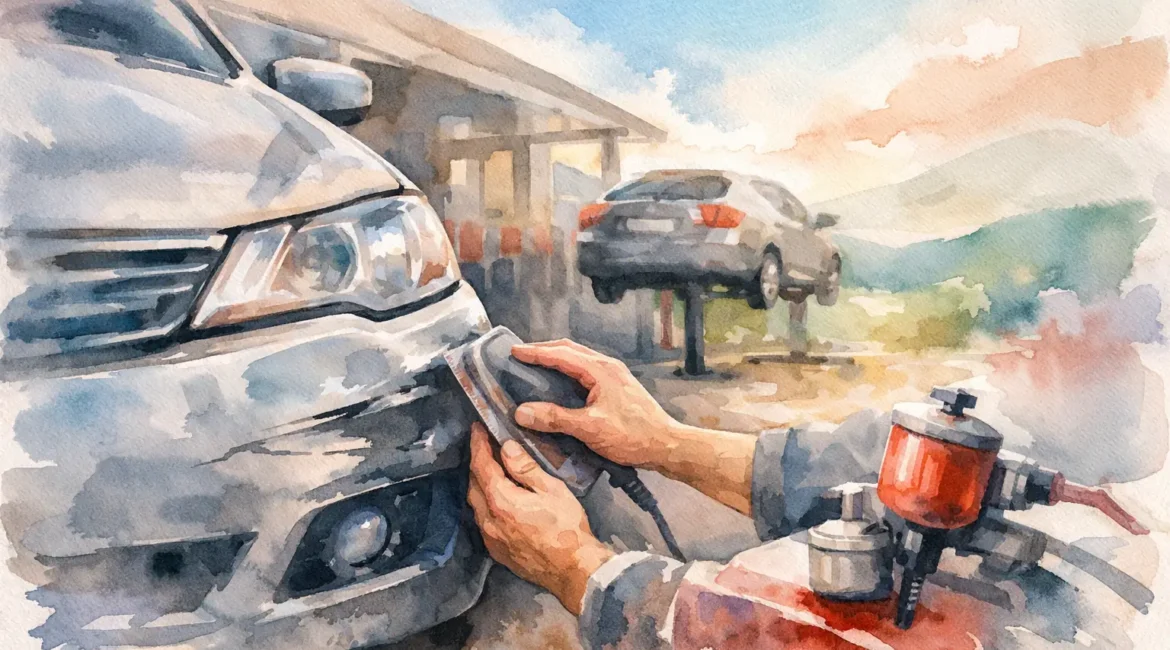
That low-speed knock in a car park can leave more than a mark on your paint. A cracked, scuffed or loose bumper affects how your car looks, what it is worth, and in some cases how well it protects the bodywork underneath. This car bumper repair guide explains what kind of damage can be repaired, when replacement makes more sense, and why a proper finish matters if you want your vehicle back to pre-damage condition.
Most drivers look at bumper damage and ask the same question first – can this be fixed, or am I looking at a full replacement? The honest answer is that it depends on the material, the depth of the damage, the location, and whether the impact has affected any brackets, sensors or adjacent panels. Some bumper damage is straightforward cosmetic work. Some needs a more involved repair to restore strength, shape and finish. And some damage is simply too severe to repair cost-effectively.
What this car bumper repair guide covers
Modern bumpers are designed to take minor impacts better than older metal body parts, but that does not mean every mark will polish out. A light surface scuff from another car door, a scrape against a wall, or paint transfer from a low-speed bump may only need localised cosmetic work. A split bumper corner, dented plastic, torn mounting point or damage around parking sensors is a different job altogether.
The key is knowing the difference between damage that is only affecting appearance and damage that may affect fit, support or safety features. If the bumper is hanging loose, sitting unevenly, rubbing against a wheel arch liner or interfering with sensors, it needs proper inspection rather than a quick touch-up.
Common types of bumper damage
Scuffs are the most common issue and often the least serious. These usually affect the paint surface and can range from light abrasions to deeper scratches that cut through primer. If the plastic underneath is intact, this type of damage is often ideal for a SMART repair or localised refinishing.
Cracks are more serious because they affect the structure of the bumper skin. Small cracks can often be repaired by plastic welding or specialist filling and reinforcement, then reshaped and refinished. Larger cracks, especially near mounting points or body lines, may not be worth repairing if the finish or durability would be compromised.
Dents and distortion are another common problem. Plastic bumpers can flex, but after an impact they do not always return cleanly to their original shape. Heat reshaping can help in some cases, but if the plastic has stretched badly, the panel may still show rippling or weakness after repair.
Then there is hidden damage. A bumper can look like it only has a scrape, but the impact may have broken clips, displaced brackets or affected parts behind it. On newer vehicles, parking sensors, radar units, trims and lower grilles all add complexity. That is why visual damage and actual repair needs are not always the same thing.
Repair or replace?
This is where a good bodyshop earns its keep. Repair is usually the better option when the bumper has cosmetic damage, light cracking, minor dents or limited local distortion. It keeps costs down, avoids unnecessary parts replacement and often gets the car back on the road faster.
Replacement becomes more likely when the bumper has multiple cracks, major tears, broken mountings in several areas, severe deformation or damage that extends into sensor housings and trims. A poor repair on a heavily damaged bumper can end up costing more in the long run if the finish fails or the panel never sits correctly.
There is also a practical point here. A cheaper repair is not always the better-value choice if it leaves the car looking patched up. For many drivers, especially if they plan to sell or return the vehicle later, a proper match in paint, texture and fit is just as important as getting the damage covered up.
How professional bumper repair usually works
A proper bumper repair starts with assessment, not guesswork. The technician checks the visible damage, removes trims or the bumper itself if needed, and looks for hidden issues around clips, brackets and surrounding panels. If the damage is repairable, the next step is restoring the shape and preparing the surface.
For scuffs and scratches, that may involve sanding back the damaged area, filling where needed, priming and repainting. For cracks, the repair can include plastic welding, reinforcing the rear of the bumper and refinishing the front face so there is no obvious repair line. If there is distortion, controlled heat may be used to reshape the bumper before surface work begins.
The paint stage matters more than most people realise. Bumpers do not just need the right colour. They need the right finish and blend, especially on metallic and pearlescent paints where a poor match stands out immediately in daylight. A good repair should look consistent from panel to panel, not just acceptable from ten feet away.
When a DIY fix is false economy
A lot of bumper damage looks tempting to tackle at home. Touch-up kits, filler, aerosol paint and online tutorials make it seem straightforward. Sometimes, for a tiny mark on an older car, that may be enough. But most DIY bumper repairs fail in the same places – poor preparation, uneven filling, weak crack repair and obvious paint mismatch.
Plastic bumpers are not as forgiving as people think. If the surface is not properly keyed, cleaned and primed, paint can react badly or peel. If a crack is only filled from the front and not structurally repaired, it usually returns. And if the bumper has sensor openings or textured finishes, a home repair can quickly look worse than the original damage.
That does not mean every scratch needs a full bodyshop process. It means you should be realistic about the result you want. If you care about appearance, resale value and getting the car back to showroom condition, professional repair is usually the sensible route.
Cost, time and what affects both
Drivers often want a quick answer on price, but bumper repair costs vary for good reason. A light scuff on one corner is a very different job from a split bumper with parking sensors and paint damage across the full width. Labour, paint type, parts availability and whether the bumper needs removal all affect the final figure.
Turnaround can vary too. Some cosmetic bumper repairs can be completed the same day. More involved work may take longer, especially if replacement parts or additional paintwork are needed. The best repairers will tell you plainly what the job involves and whether a quick turnaround is realistic rather than overpromising at the start.
If the damage came from a non-fault accident, the process may be easier than many drivers expect. In those cases, support with claims and repair handling can remove a lot of hassle, particularly if you rely on your car every day.
Choosing the right repairer
Not every garage that offers paintwork is set up to carry out bumper repairs to a high standard. This kind of work needs experience in plastic repair, refinishing and colour matching, not just general mechanical knowledge. The quality difference usually shows up in the details – panel alignment, paint finish, texture match and whether the repair remains invisible after a few months of use.
For local drivers around Glasgow and South Lanarkshire, convenience matters as well. Collection and drop-off, honest timescales and clear advice can make a big difference when your car is damaged and you just want the problem sorted properly. That is why many motorists choose a specialist bodywork company rather than trying to patch things up or waiting weeks for a vague estimate.
At Unique Bodywork, bumper repairs are treated like any other visible body repair – the job is not finished until the damage is properly restored, the finish is right and the car looks the way it should.
A few signs not to ignore
If your bumper has come loose, is rubbing, has cracked near a corner mount, or your parking sensors have started behaving oddly after an impact, get it checked sooner rather than later. What starts as a cosmetic issue can lead to more repair work if the bumper shifts, catches or allows moisture and dirt into damaged areas.
Likewise, if a scrape has gone through the paint and exposed the material underneath, leaving it too long can make the repair more involved. Fast action usually means a cleaner, cheaper fix.
A bumper is one of the first things people notice on a car, especially when it is damaged. If yours has taken a knock, the right repair can save money, protect value and put the whole vehicle back to the standard it should be in.