
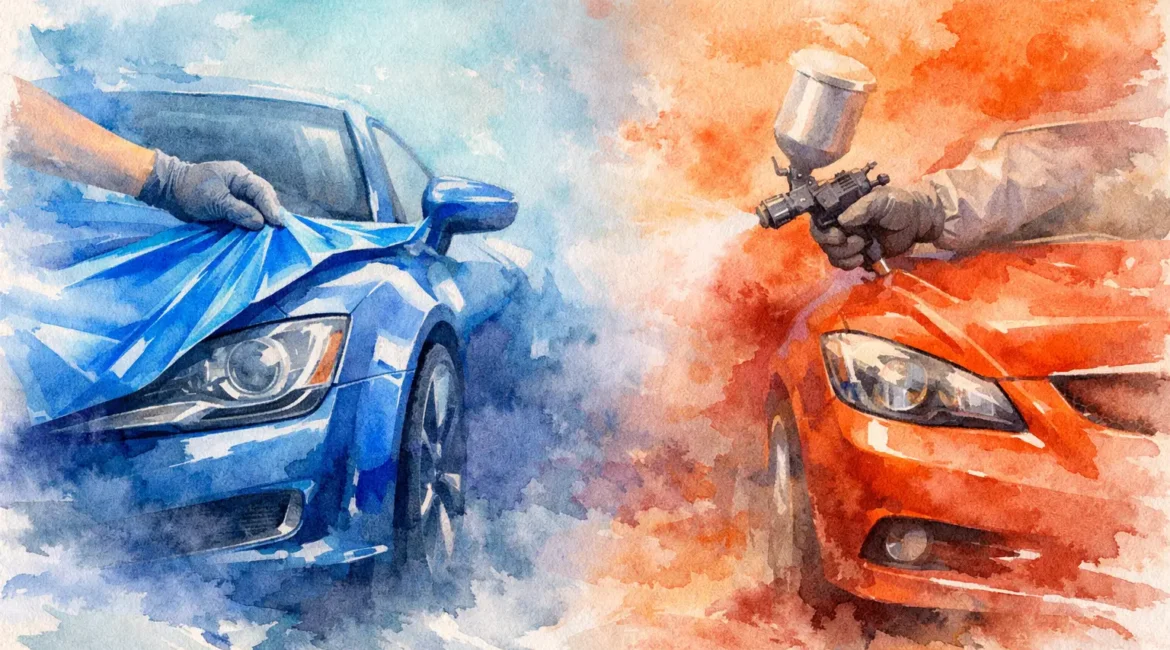
A colour change can make a tired car feel new again, but the cheapest quote is rarely the whole story. When comparing car wrapping versus respraying costs, the right choice depends on the condition of the panels, the finish you want, how long you plan to keep the vehicle and whether you need repair work before anything cosmetic begins.
For drivers across Glasgow and the surrounding area, a wrap may look like the quick answer while a respray can seem like the permanent one. Both can produce a striking result when carried out properly. They are not, however, interchangeable services, and choosing the wrong route can mean spending twice.
Car wrapping versus respraying costs: the usual price difference
A vinyl wrap is generally less expensive than a quality full respray, particularly where the existing paintwork is sound. The price varies significantly with vehicle size, the amount of preparation needed, the vinyl chosen and whether door shuts, handles, mirrors and trims are included.
As a broad guide, a partial wrap, such as a roof, bonnet, mirrors or stripes, may cost a few hundred pounds. A full colour-change wrap for a small or medium car often starts around the low thousands, while larger vehicles, complex shapes and premium films can push the figure higher. Matte, satin, colour-shift, metallic and textured materials usually cost more than a straightforward gloss vinyl.
A proper respray normally costs more because the work involves far more than applying paint. Panels must be cleaned, repaired, rubbed down, masked, primed where necessary, painted and lacquered before the finish is baked and polished. A localised paint repair is a different job from repainting an entire vehicle, so quotations should always be compared on a like-for-like basis.
For a full respray, a realistic budget is usually several thousand pounds rather than a bargain-basement figure. The exact cost depends on the vehicle, the condition of its bodywork, the paint system and whether you are retaining the original colour or changing it completely. A low price may exclude vital preparation, panel repairs or areas that will still show the old colour when doors, bonnet or boot are opened.
What you are paying for
The material itself is only one part of a wrap or respray quote. Skilled preparation is where lasting results are made.
With wrapping, the fitter needs a clean, smooth and stable surface. Existing lacquer peel, deep scratches, stone chips, corrosion, poor previous repairs and lifting paint can all cause problems. Vinyl follows the shape beneath it. It will not make a dent disappear, and it can highlight rough filler edges or damaged paint rather than hide them.
With respraying, preparation is even more central. A bodyshop needs to repair dents and scratches correctly, deal with corrosion, level damaged areas and create a sound base for the new coating. This is why two respray quotes can be very different. One may cover a quick blow-over; another may include the detailed repair and refinishing work needed to restore a panel to showroom condition.
If your car has accident damage, scuffs or rust, repairing the bodywork first is usually the sensible investment. Wrapping damaged panels to save money may create a short-term visual improvement, but the underlying issue remains. In some cases, removing the wrap later can reveal that the paint underneath has deteriorated further.
Durability: temporary change or long-term finish?
A professionally fitted vehicle wrap commonly lasts around five to seven years, although this depends on the quality of film, where the car is parked, mileage, washing habits and exposure to sun and road grime. Horizontal panels such as bonnets and roofs tend to work harder because they receive more UV exposure and weathering.
A quality respray can last much longer when it is correctly prepared, painted and maintained. It becomes part of the vehicle rather than an applied layer. That makes paint the stronger option for an owner planning to keep the car for years, particularly if the original finish has failed or body repairs are already required.
Neither option is maintenance-free. Wrapped cars should be washed carefully, avoiding aggressive brushes and pressure washing too close to edges. Bird droppings, fuel spills and tree sap should be removed promptly. Fresh paint also needs sensible care, especially during its initial curing period, followed by regular washing and protection.
Finish quality matters more than people expect
A wrap can look excellent from every angle when installed by an experienced professional on a suitable vehicle. It also offers finishes that are difficult or expensive to reproduce in paint, including satin, matte, forged carbon effects and dramatic colour-shift films. For a distinctive look without permanently changing the factory paint, that flexibility is a major benefit.
There are limits. On close inspection, a wrap may show joins on larger panels, edges around complex curves or differences where openings and shuts have not been wrapped. These are not always signs of poor workmanship; sometimes they are the practical result of fitting vinyl around a complicated vehicle design. A good installer will explain where joins are likely and what level of disassembly is included before work begins.
A respray offers the most integrated finish, especially when colour-changing the complete car and painting visible edges, shuts and related panels. It is usually the best route when you want the vehicle to look as though it left the factory in its new colour. It can also be colour-matched to repair damage without changing the entire car, provided surrounding paintwork is assessed properly.
When a wrap is the better-value choice
Wrapping can make strong financial sense if your existing paint is in good condition and you want a reversible style change. It is popular with enthusiasts who like the idea of a fresh colour without committing permanently, as well as business owners who need graphics or branding that can be removed or updated later.
It can also help protect decent original paint from minor scuffs and UV exposure. That does not mean vinyl is armour. It will not prevent every chip or impact, and standard colour-change film is not the same as paint protection film.
A wrap may also be the practical option when you are leasing a vehicle, as long as the agreement permits it and it is professionally removed before return. Always check the terms first. Any pre-existing paint damage should be photographed and discussed before installation.
When respraying is worth the extra cost
Respraying is often the better investment when the paintwork is already damaged, faded, peeling or heavily marked. It is also the more appropriate repair where corrosion, poor earlier repairs or accident damage need attention. In those situations, spending money on a wrap can simply delay the work the car really needs.
Paint is also preferable when you want to preserve or improve resale appeal on a vehicle where originality and finish quality matter. A well-executed repair or factory-correct respray can restore confidence in the car’s appearance. A bold wrap may appeal to one buyer and put off another, even if it can be removed.
For insurance repairs, the decision may not be yours alone. Insurers normally approve a repair method that returns the car to its pre-accident condition, which often means panel repair and refinishing rather than wrapping. If you are making a non-fault claim, it is worth getting clear advice early so the vehicle is repaired properly and the process is handled without unnecessary stress.
Do not compare quotes by the headline figure alone
Before agreeing to either service, ask what is included. Is bodywork repair included or charged separately? Will trims, handles, lights or badges be removed where appropriate? Are door shuts included in a colour change? What material or paint system is being used, and what warranty is offered on workmanship?
For wraps, ask whether the fitter has inspected the existing paint and whether there is any risk when removing old vinyl or loose lacquer. For resprays, ask whether the quote includes blending adjacent panels, corrosion treatment and polishing. Clear answers are a good sign that the work is being planned properly rather than priced to win the job and revised later.
Photographs can help with an initial estimate, but an in-person inspection is the only reliable way to identify hidden damage, previous repairs and the preparation needed for a durable finish. Unique Bodywork can assess the condition of your vehicle and advise honestly whether a repair and respray, a wrap, or a combination of both will give you better value.
The best choice is the one that suits the car you own, not simply the price you first see. If the panels are straight and the paint is sound, a wrap can deliver a major change quickly. If the bodywork needs attention, repair it properly first, then enjoy a finish that looks right every time you walk back to the car.