
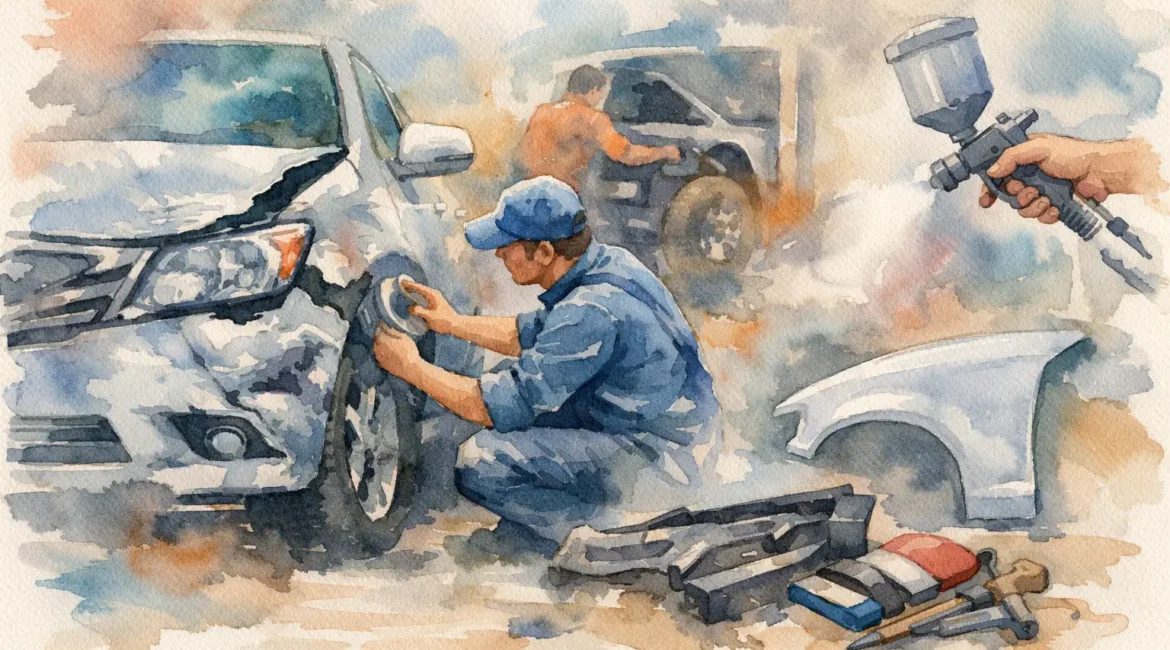
The damage never looks quite as bad in the moment as it does the next morning. In daylight, what seemed like a small bump can turn out to be a cracked bumper, a scuffed wing, a wheel scrape and a boot that no longer sits quite right. That is where proper vehicle accident damage repair matters – not just to make the car look better, but to make sure it is safe, sound and worth keeping.
After an accident, most drivers want the same thing. They want the hassle taken off their hands, the repair done properly, and the car returned looking as it should. Fair enough. But there is often confusion around what actually needs repaired, what can be blended, what should be replaced, and how quickly it all needs sorted.
What vehicle accident damage repair actually includes
Vehicle accident damage repair is not one single job. It can range from a light cosmetic tidy-up to a full structural rebuild depending on the impact. A car that has been clipped in a car park may only need dent removal, scratch repair and paint refinishing. A heavier collision might involve panel replacement, alignment checks, bumper repair, wheel refurbishment, calibration work and insurance documentation.
That is why a proper assessment matters. Two cars can show similar marks on the outside but need very different work underneath. A bumper can spring back and still have damaged mounts behind it. A door can open and close but be out of alignment. Paint damage can seem minor but expose bare metal that will only get worse if it is left.
For most motorists, the real question is simple – can it be repaired properly without turning into a drawn-out, expensive process? In many cases, yes. Modern body repair methods allow a lot of damage to be corrected efficiently, especially when the work is inspected early and handled by experienced technicians.
Cosmetic damage versus structural damage
Not every accident leaves obvious heavy damage, and not every light-looking knock is harmless. Cosmetic damage usually includes dents, scratches, bumper scuffs, cracked trims and chipped paint. These issues affect appearance and can lower resale value, but they may also lead to bigger problems if ignored. Exposed surfaces can corrode, plastic trim can loosen further, and damaged paint edges rarely improve on their own.
Structural damage is a different matter. This can involve impact to the chassis area, mounting points, suspension-related components or the alignment of major panels. You may notice uneven gaps, pulling while driving, vibration, warning lights or doors and boots that do not shut cleanly. When that happens, the repair needs more than a quick cosmetic fix.
The trade-off is straightforward. Cosmetic work is often faster and more affordable, while structural repair takes more inspection, more labour and more care. But cutting corners on structural work is false economy. The car may look tidy on the outside and still not perform as it should.
Why quick action usually saves money
A lot of drivers put off repairs because the vehicle still runs, the damage seems manageable, or life simply gets in the way. That delay often costs more than people expect. A split bumper can worsen with vibration. A scratched panel can start to corrode. A wheel that took an impact can affect tyre wear or handling over time.
There is also the question of value. If you plan to sell or part-exchange the vehicle later, accident damage nearly always drags the price down more than owners think. Buyers notice poor panel fit, mismatched paint and unfinished repairs straight away. Even if they do not spot every detail, they will price in the risk.
Getting the car looked at early gives you options. Sometimes damage can be handled with SMART repair methods or localised refinishing rather than larger panel work. Wait too long and the repair may become more involved.
What a good repair process should look like
A proper vehicle accident damage repair process should feel clear from the start. First comes inspection. That means identifying visible damage, checking for hidden issues and deciding whether repair or replacement is the better route. There is no one-size-fits-all answer here. Repairing an original panel can be the best option when the damage is localised, but replacement may be more sensible if the panel is badly distorted or the time involved pushes the cost too high.
Next comes preparation and repair. This may include dent correction, panel reshaping, filler work where appropriate, bumper plastic repair, sanding and refinishing. Paintwork should be colour matched properly, not guessed. On modern vehicles, that takes skill. Age, sun exposure and factory variations all affect the final finish.
Then there is reassembly, checking panel alignment, and making sure the finish holds up both close up and at a glance. The standard should not be that it looks fine from ten feet away. It should look right when you walk up to it.
That is one of the reasons local drivers often choose established repairers with a strong reputation rather than chasing the cheapest quote. Price matters, of course. But so does getting the vehicle back in pre-damage condition without repeat visits or patch-up work a few months later.
Insurance claims, non-fault accidents and the practical side
For many people, the repair itself is only half the stress. The paperwork, phone calls and uncertainty around insurance can be just as frustrating. If the accident was not your fault, there may be options for repair support and claims handling that make the process easier. If it is an insurance-backed repair, the key thing is making sure the damage is documented properly and the work approved without unnecessary delays.
This is where experience counts. A bodyshop that understands both repair work and the claims side can help keep things moving. That matters when you rely on your car for commuting, school runs or day-to-day work. In areas around Glasgow and South Lanarkshire, convenience often matters just as much as the repair itself. Collection and drop-off, fast turnaround and clear communication are not extras to most customers – they are part of what makes the whole process manageable.
When repair is better than replacement
Drivers often assume damaged parts always need replaced. Sometimes they do. Sometimes they absolutely do not. A scuffed bumper, a creased arch or a scratched door may be repaired to a high standard without full replacement, keeping costs down and reducing time off the road.
That said, repair is not always the right answer. If a panel has torn metal, severe distortion or compromised mounting areas, replacement may deliver a stronger, cleaner result. The right choice depends on damage level, part availability, labour time and the finish you expect at the end.
A good repairer should explain that honestly. If a repair will hold up and look right, they should say so. If replacement is the better long-term option, they should say that too.
The finish matters more than people think
A poor repair is usually obvious once you know what to look for. Paint mismatch, dry spray, rough lacquer edges, overspray on trims, uneven gaps and ripples in reflected light all tell the story. Even small flaws can make the whole car look tired.
That is why quality refinishing is such a big part of accident repair. The aim is not simply to cover damage. It is to restore the vehicle so the repaired area blends naturally with the rest of the bodywork. That takes preparation, accurate colour matching and pride in workmanship.
At Unique Bodywork, that standard matters because customers are not just trying to get mobile again. They want their car back looking right, whether it is a family hatchback, a leased vehicle, a work van or something they genuinely take pride in owning.
Choosing the right repairer
The best people to reach out to after an accident are the ones who can handle the job from first inspection to final handover without making the process harder than it needs to be. That means experience, yes, but also straightforward advice, realistic timescales and repairs that stand up properly once the car is back on the road.
Look for a repairer who can assess both cosmetic and structural issues, explain the options in plain language, and deliver the finish you would expect if the damage had never happened. If they can also help with insurance work, same-day services where suitable, and practical collection arrangements, even better.
Accident damage is frustrating enough without living with it longer than necessary. Get it checked properly, get it repaired properly, and you give yourself the best chance of keeping your vehicle safe, presentable and ready for the road ahead.