
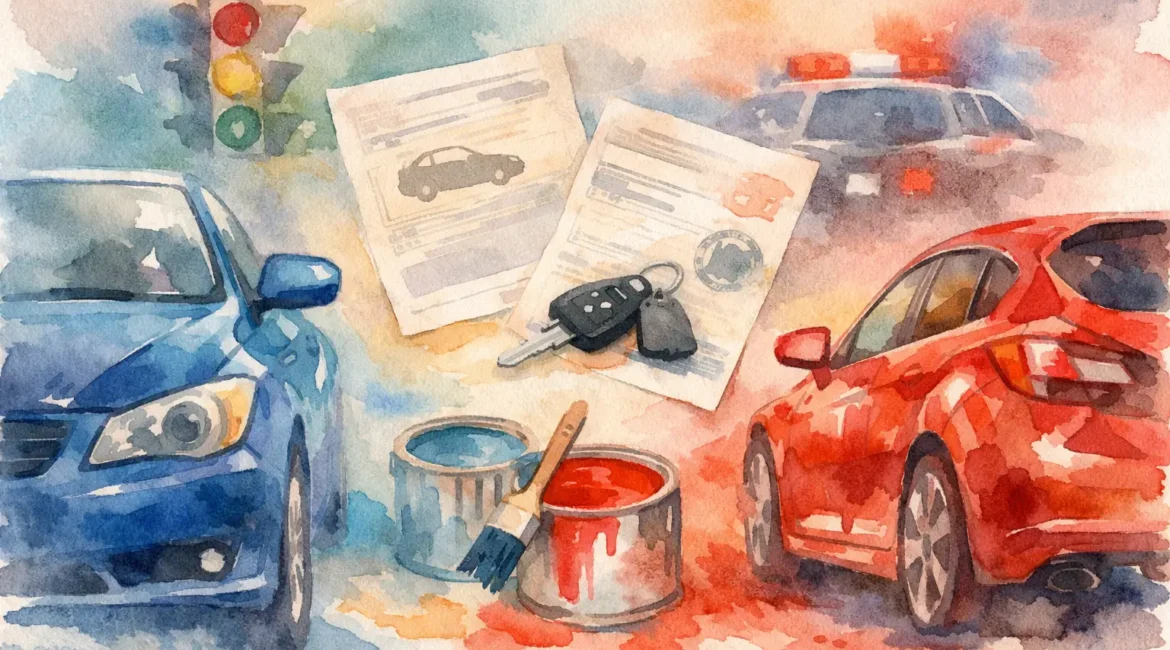
A full colour change can make an ageing car feel brand new, set a custom build apart, or bring a repaired vehicle back to the look you actually want. Before booking the work, though, paint colour change legalities need to be part of the plan. In the UK, changing your car’s visible colour is allowed, but the paperwork and insurance details must match the vehicle on the road.
The good news is that this is usually straightforward. The key is to treat the colour change as more than a cosmetic job. A high-quality respray should look right, last well and leave your vehicle records accurate.
Do you need to tell the DVLA about a paint colour change?
Yes. If you permanently change the main colour of your vehicle, you must update the colour shown on its V5C registration certificate, often called the logbook. This applies whether the change comes from a full respray, a professionally applied wrap or another finish that changes how the car appears from the outside.
The DVLA uses broad colour descriptions rather than exact paint names. Your car may be registered as blue, black, red, grey or another primary colour, rather than a specific manufacturer shade such as Nardo Grey or Racing Blue. If the finished vehicle is clearly a different main colour, the record needs changed.
You can update the V5C through the DVLA’s online service or by post, depending on your circumstances and the documents available. There is normally no fee for notifying a colour change. Do it as soon as the work is complete, rather than leaving it until the next MOT, service or sale.
A poor-quality paint job can cause problems here too. If the finish is patchy, partly completed or the car is still visibly two colours, it may be hard to describe its true main colour. That is one reason to use a bodyshop that prepares the vehicle properly and completes the work to a consistent standard.
What counts as a colour change?
A complete move from silver to black is the obvious example. So is changing a white hatchback to a bright green, a classic car from red to cream, or a repaired vehicle from one dominant colour to another.
More subtle work depends on the final appearance. A like-for-like repaint in the existing colour does not require a V5C update. Repairing a scraped bumper, blending a wing or carrying out a SMART repair is not a colour change when the vehicle remains the same registered colour.
Changing a car from dark blue to a very similar blue may not always result in a different DVLA description. However, if there is any doubt, check the V5C and ask the refinishing specialist how the finished car will be perceived. It is better to update the details unnecessarily than to drive around with information that is clearly wrong.
Paint colour change legalities and your insurance
Your insurer should be told before the colour change is carried out. A respray can be viewed as a modification, especially where it changes the vehicle’s appearance from standard or is part of wider custom work such as a body kit, tinted lights or alloy wheel changes.
Even where the insurer does not charge extra, failing to declare the change can create trouble if you need to make a claim. The insurer may see a different colour than the one recorded on the policy, while police checks and vehicle databases may show something else again. That does not automatically mean a claim will be refused, but it is an avoidable complication at the worst possible time.
Be clear when you speak to your insurer. Explain whether the car is receiving a manufacturer-style repaint, a non-standard custom colour, a partial colour change or a wrap. Ask them to confirm that the policy remains valid and whether the premium, excess or agreed value will change.
This matters particularly for enthusiast vehicles. A properly completed custom respray can add value, but only if the insurer understands what has been done and the level of finish involved. Keep photographs, invoices and paintwork details after the job. They help demonstrate the condition and specification of the car if it is damaged, stolen or later sold.
What about wraps, two-tone finishes and graphics?
A vinyl wrap is not paint, but it can still trigger the same DVLA and insurance considerations. If the wrap changes the vehicle’s main visible colour, notify the DVLA and insurer. A temporary promotional wrap or a removable covering can be more of a grey area, yet it is still sensible to declare it if the car will be driven in that appearance for any meaningful period.
Two-tone paintwork needs a practical approach. The DVLA records one primary colour, so choose the colour that is most dominant across the exterior. If the finish is evenly split, the DVLA may use a description that reflects the main visible colour or a combination where appropriate. Do not guess if your car has an unusual scheme – check the available DVLA guidance when submitting the change.
Small decals, racing stripes and business graphics usually do not alter the car’s registered colour on their own. They can still count as modifications for insurance purposes, particularly if they make the vehicle look significantly different or form part of commercial use. Again, a quick call before work begins is the simplest route.
Number plates, lights and roadworthiness still matter
Changing paint colour does not give you freedom to alter the parts of the vehicle that have separate legal requirements. Number plates must remain clearly visible, correctly displayed and legal in their font, spacing and reflective finish. A new colour scheme should never obscure the registration mark or make it difficult to read.
The same goes for lights, reflectors, windows and mirrors. A dark custom finish around lamps may look sharp, but it must not reduce the required light output or visibility. Window tints are regulated too, and their legality is not changed by the colour of the vehicle.
For the MOT, colour itself is not normally a test item. The tester is concerned with safety and roadworthiness, not whether your car is satin black or metallic blue. However, a vehicle must still be identifiable and safe to use. If custom bodywork, replacement panels or repairs have affected lights, sharp edges, corrosion protection or structural areas, those are separate issues that should be dealt with properly.
Finance, leases and company cars
Do not arrange a full respray on a financed, leased or company vehicle without checking the agreement first. The registered keeper may not be the legal owner, and the contract may prohibit permanent modifications or require written approval.
A lease company may allow a removable wrap but refuse a permanent non-standard respray. A finance provider may have similar conditions because the car is their security until the agreement is settled. Returning a car in a colour the provider did not authorise can lead to recharging or restoration costs.
If you own the vehicle outright, you have more freedom, but the V5C and insurance obligations remain exactly the same.
Choose the right finish before the work starts
A colour change is a major visual decision, and the cheapest quote is rarely the best value. Proper preparation takes time. Panels need assessed, dents and corrosion repaired, trims and fittings handled carefully, and the paint applied in controlled conditions. Cutting corners can leave mismatched edges, peeling lacquer, overspray and a finish that harms resale value rather than improving it.
It is also worth deciding how far the colour should go. A full exterior respray may leave door shuts, engine bays and inner panels in the original colour unless you have agreed otherwise. There is no single right answer. For a daily driver, an exterior change may be the sensible balance of appearance and cost. For a show car or a vehicle being restored to showroom condition, a more comprehensive colour change can deliver the result you expect.
At Unique Bodywork, colour changes are approached as refinishing work, not just paint applied over old problems. A proper assessment allows you to discuss the finish, repair any existing damage and understand what the completed vehicle will look like before it enters the workshop.
A straightforward order to follow
First, speak to your insurer and get the colour change noted or approved. Next, confirm the scope of the respray with your bodyshop so there is no uncertainty about the final colour or which areas are included. Once the vehicle is complete, update the V5C promptly and retain the invoice and photographs with your vehicle paperwork.
That small amount of admin protects you from awkward questions after an accident, during a sale or if your car is stopped for a routine check. With the legal details handled and the paintwork completed to a high standard, you can enjoy the new look for the right reasons.