
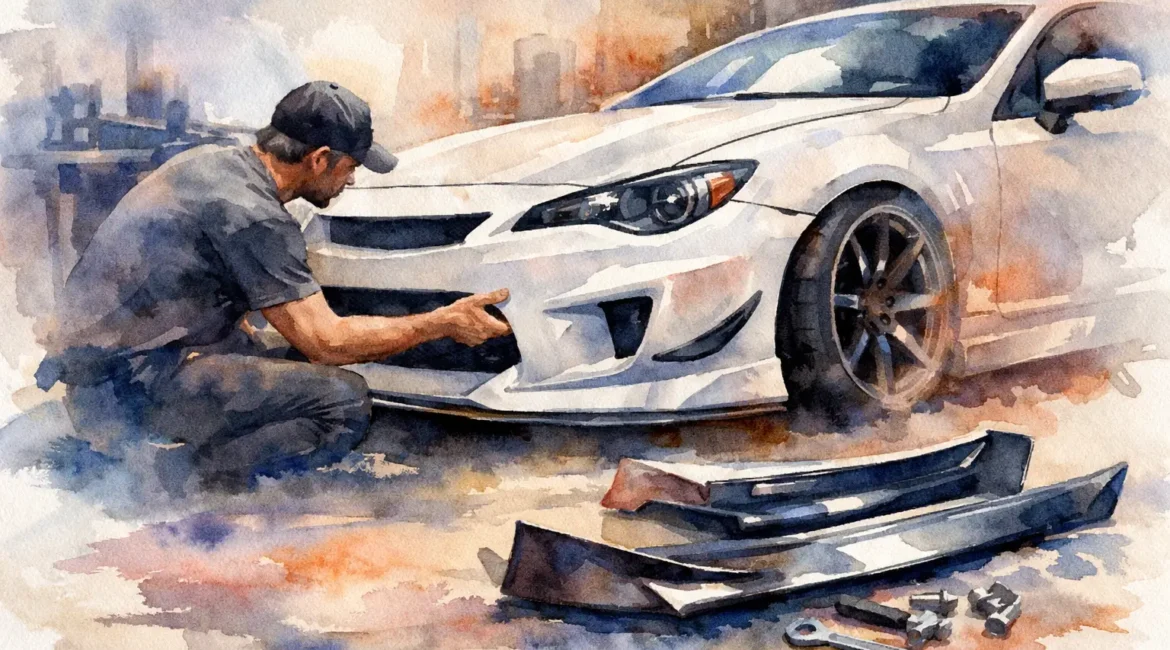
A body kit can completely change how a car looks, but the finish only looks right when the fitment is right. That is why body kit fitting for cars is never just a case of bolting on a few panels and hoping for the best. If the lines are off, the gaps are uneven or the paint match is poor, even an expensive kit can make the car look worse rather than better.
For most drivers, the goal is simple. You want the car to look sharper, more individual and properly finished, without rattles, rubbing, cracking or obvious signs that parts have been added later. That comes down to preparation, experience and taking the time to fit each section correctly before any final paintwork goes near the vehicle.
What body kit fitting for cars actually involves
A lot of people picture a body kit as a front bumper, side skirts and a rear bumper or splitter. Sometimes that is exactly what it is. In other cases, the kit may include wider arches, spoilers, diffusers, bonnet vents or other styling parts that change the overall shape of the car.
Fitting those parts properly means much more than attaching them to the body. Each panel has to be checked against the car, lined up with existing body lines and adjusted where needed. Depending on the kit, some parts may need trimming, reshaping or reinforcing before they are ready for paint and final installation.
This is where quality control matters. Even branded kits are not always a perfect out-of-the-box fit, and lower-cost aftermarket kits can vary quite a bit. That does not automatically make them a bad choice, but it does mean the fitter needs to know what they are doing. The final result depends less on the box the kit came in and more on how carefully it is prepared and installed.
Why poor fitment stands out straight away
Most people cannot name every panel on a car, but they can spot when something looks off. A front bumper that sits too low on one side, side skirts that do not sit flush, or a rear diffuser with uneven spacing will be noticeable every time you walk up to the car.
There are practical issues too. Badly fitted kits can catch on speed bumps, trap water, rub tyres, loosen over time or crack around fixing points. If paint is applied before the parts have been test-fitted properly, there is also a higher chance of damage during installation, which adds cost and delays.
That is why test fitting is one of the most important stages. Before anything is painted and secured permanently, the parts should be trial-fitted to check alignment, clearances and how they sit against the vehicle. It is a step that saves problems later.
Choosing the right kit for your car
Not every body kit suits every vehicle, and not every owner wants the same result. Some drivers want a subtle upgrade that looks close to factory styling. Others want something more aggressive and customised. Neither is wrong, but the right choice depends on how you use the car and what standard of finish you expect.
If the vehicle is a daily driver around Glasgow and the surrounding areas, practicality matters. Very low front splitters and extended side skirts may look the part, but they can become a nuisance on rough roads, steep drives and speed cushions. A more restrained kit often gives a cleaner long-term result and is easier to live with.
Material matters as well. Fibreglass kits can be popular because they are widely available and often cheaper, but they may need more prep work to get a precise fit. Polyurethane and ABS plastic parts can offer more flexibility and durability for road use, though availability and cost vary by model. There is always a balance between price, finish and durability.
The process behind a proper fit
Inspection and planning
The first step is checking the condition of the vehicle itself. If the car already has accident damage, poor previous repairs or misaligned panels, that needs to be addressed before a body kit goes on. Otherwise, the new parts may never sit correctly.
At this stage, it is also worth deciding whether the kit will be fully colour-coded, partly contrasted or finished with selected trims left in gloss black or another accent colour. Good planning avoids last-minute decisions and helps the finished look feel intentional rather than pieced together.
Test fitting and adjustment
This is the stage that separates a proper job from a rushed one. Each component is offered up to the car, checked for alignment and adjusted where needed. Mounting points may need refining, edges may need trimming and some kits need careful reshaping to sit as they should.
A professional fitter will be looking at panel gaps, symmetry, door and wheel arch clearances, and how the new parts flow into the existing bodywork. The aim is to make the kit look like it belongs on the car, not like an add-on.
Surface preparation and paint
Once the fit is right, the surfaces need preparing correctly for primer and paint. This part matters just as much as the fitting. A poor paint match or badly prepared panel can spoil the whole job.
Colour matching is especially important if the new parts are blending into existing panels. Pearlescent, metallic and older faded paintwork can all need more attention to get a consistent finish. If the car has previous paintwork repairs, that can affect how the new parts are blended too.
Final installation
After paint, the kit is fitted for the last time using the correct fixing methods for the parts and vehicle. Depending on the kit, that may involve mechanical fixings, bonding methods or a combination of both. Done properly, the panels should feel secure, sit evenly and stay that way.
A final check should cover more than just appearance. It should confirm that nothing fouls moving parts, wheel travel is clear, parking sensors still work if fitted, and there are no issues with doors, boots or bonnets opening cleanly.
Common mistakes to avoid
The biggest mistake is buying on looks alone and assuming every kit will fit well. Photos online can be misleading, especially when the car has been heavily edited or the parts have only been loosely installed for a shoot. Asking about fit quality, material and prep requirements is always sensible.
Another common issue is painting parts before they have been test-fitted. It might seem like a time saver, but it often creates more work. If parts need trimming or reshaping afterwards, the finish can be damaged and the whole process becomes more expensive.
Trying to save money with poor installation usually costs more in the long run as well. Loose fixings, poor paint adhesion and cracked panels tend to come back as repeat repairs. If you want the car to hold its appearance and value, the workmanship matters as much as the parts.
Is body kit fitting worth it?
If you choose the right kit and have it fitted properly, yes. A good body kit can sharpen the shape of the car, make it look more premium and give it a more individual finish. For enthusiasts, that is a big part of the appeal. For everyday drivers, it can simply be about taking pride in how the car looks.
That said, it depends on the vehicle and the quality of the work. On some cars, a subtle styling package adds more value than a dramatic wide-body setup. On others, a full custom look makes sense. The key is making sure the style suits the car and the install is done to a proper standard.
For owners who also need repair work, there is another advantage. If a car is already in for bumper damage, arch repairs or paintwork correction, it can make sense to plan body kit installation at the same time. That can streamline labour, reduce repeat visits and help achieve a more consistent finish across the whole vehicle.
Getting a result that looks factory or better
The best body kit jobs have one thing in common. They do not look rushed. The lines are clean, the panels sit evenly, the paint matches properly and the finish looks thought through from every angle.
That comes from experience in both body repair and refinishing, not just parts fitting alone. A workshop that understands panel alignment, paint preparation and cosmetic detailing is in a much stronger position to deliver a result that actually improves the car. For drivers who want the job handled properly without the usual hassle, that is exactly where a specialist bodyshop earns its keep.
If you are considering a body kit, think beyond the part itself. The real difference is in the fitting, the finish and how well the final look suits your car. Get those right, and the upgrade feels worth it every time you see the car parked up.