
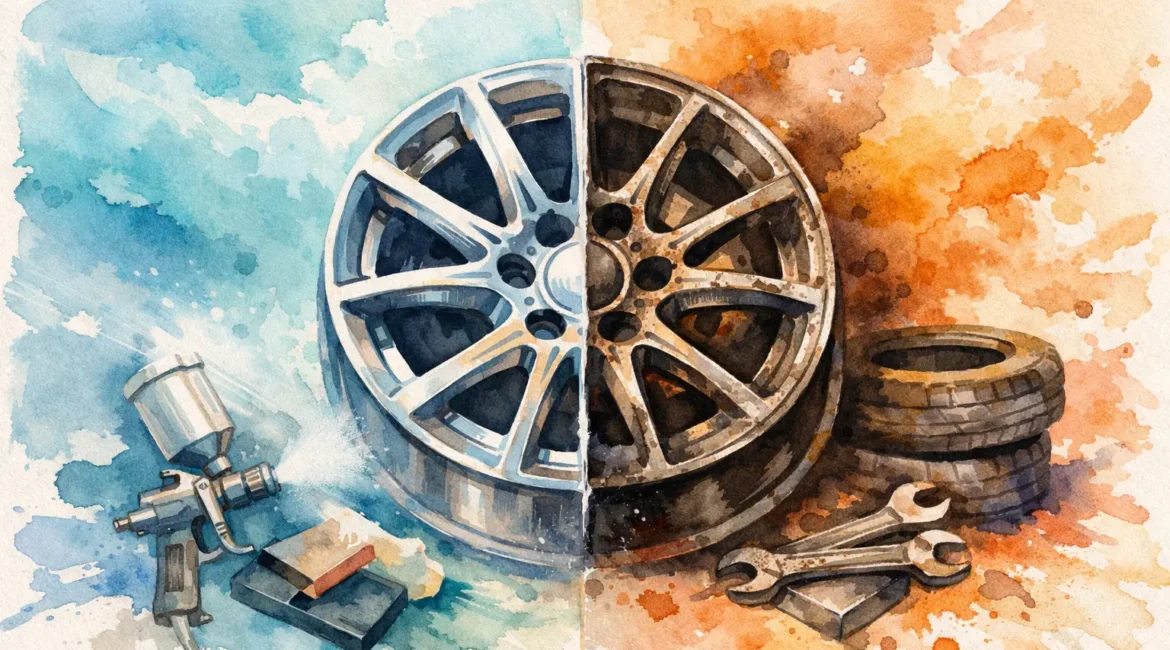
A kerbed alloy can make an otherwise well-kept car look tired, while a bent or cracked wheel may raise a more serious question about safety. Alloy wheel refurbishment vs replacement: which is better? The right answer depends on the type and extent of damage, the wheel’s condition, your budget and how quickly you need the car back on the road.
For many Glasgow drivers, refurbishment is the sensible, cost-effective route for everyday scuffs, scratches and corrosion. Replacement is usually the better choice where a wheel is badly distorted, repeatedly leaking air or has damage that cannot be repaired safely. A proper inspection removes the guesswork.
When alloy wheel refurbishment is the better option
Refurbishment is designed to restore the appearance and protective finish of an existing alloy wheel. It is most suitable when the underlying wheel remains sound but the surface has suffered from kerb damage, peeling lacquer, stone chips, brake dust staining or corrosion around the rim.
A quality refurbishment normally involves cleaning the wheel, assessing the damage, smoothing and filling minor imperfections where appropriate, preparing the surface and applying a durable painted, powder-coated or machined-style finish. The aim is not to disguise the damage for a few weeks. It is to bring the wheel back to a clean, smart standard that suits the rest of the vehicle.
This is often the best route if your wheels have met the kerb while parking, picked up cosmetic damage from potholes, or simply look dull compared with the bodywork. On a family car, daily commuter or lease vehicle, a tidy set of alloys can make a noticeable difference to the whole appearance of the car without the expense of buying a full replacement set.
Refurbishment can protect resale value
Damaged alloys are one of the first signs of wear a buyer notices. They can make a car appear less cared for, even if it has been mechanically maintained. Refurbishing kerbed or corroded wheels helps present the vehicle properly when it is time to sell, return a lease car or simply enjoy driving it again.
It also allows you to retain the original manufacturer wheel. That matters when the alloy is a specific factory design, an uncommon size or part of a matching set. Finding one identical replacement wheel can be harder than expected, particularly on older models or special trim levels.
It is usually more cost-conscious
For surface-level damage, refurbishing an alloy is generally far less expensive than replacing it with a new genuine wheel. Even aftermarket replacements can become costly once tyre removal, fitting, balancing and matching the finish are included.
That does not mean the cheapest repair is always the right repair. A poor finish can peel, discolour or leave the wheel looking uneven. The value comes from having the work carried out properly, with careful preparation and a finish that stands up to daily driving, weather and brake dust.
When replacing an alloy wheel is the safer decision
A wheel is more than a cosmetic feature. It supports the tyre, helps maintain a proper seal and has to cope with potholes, road surfaces, braking forces and everyday impacts. If its structure has been compromised, a fresh finish will not solve the problem.
Replacement should be considered when there is a significant crack, a serious buckle, missing material, major distortion or damage around the mounting area. The same applies if a wheel has a history of losing pressure and the cause cannot be resolved, or if previous repairs have left doubts about its condition.
A specialist should inspect any wheel after a heavy pothole strike, collision or impact with a raised kerb. Warning signs include steering vibration, pulling to one side, a visible flat spot on the rim, unexplained tyre pressure loss, or damage that reappears after the wheel has been cleaned.
Cracks and buckles need professional assessment
Not every crack automatically means replacement, and not every buckle means a wheel cannot be corrected. However, these are not DIY or cosmetic decisions. The position, size and nature of the damage matter, as does the wheel design and the quality of any previous work.
A reputable repairer will assess whether repair is safe and worthwhile rather than promising to refurbish every wheel that comes through the door. Where replacement is the responsible route, it should be explained plainly. Safety and reliability must come before saving money on a repair that will not last.
Replacement can be the best match for severe damage
If one wheel is beyond repair, replacing only that alloy may be enough. The key is matching the correct size, offset, load rating and design for the vehicle. A near-match may look acceptable at first but can be obvious once fitted alongside the other three wheels.
For rare, diamond-cut or heavily corroded alloys, it may make more sense to refurbish a pair or full set for a consistent finish, even when one wheel has been replaced. The best decision is often about the final overall result, not just the price of one individual wheel.
Alloy wheel refurbishment vs replacement: cost, finish and convenience
Cost is usually the starting point, but it should not be the only factor. Refurbishment is normally the stronger value choice when damage is cosmetic and the wheel is structurally sound. It removes kerb marks and corrosion without the cost of sourcing a new alloy, and it can restore the clean, showroom-style appearance drivers want.
Replacement costs can vary widely. A genuine manufacturer wheel is often the most expensive option, while a used wheel may carry unknown history and may not be in the condition advertised. An aftermarket wheel can be a good solution when correctly specified, but it should never be chosen on appearance alone.
Finish is another consideration. Painted alloys are often straightforward to refurbish and can look excellent when prepared correctly. Diamond-cut wheels have a machined face beneath lacquer, creating their distinctive bright look. They can be refurbished, but repeated cutting is limited because only a small amount of metal can be removed. If corrosion is extensive or the wheel has already been machined several times, replacement may become the more sensible long-term option.
Convenience matters too. A cosmetic repair may be completed far more quickly than locating, ordering and fitting a replacement wheel. For motorists balancing work, school runs and daily travel, a fast turnaround can be a real benefit. At Unique Bodywork, wheel repairs are assessed with the same practical approach as bodywork repairs: the job should look right, be completed to a high standard and minimise disruption where possible.
Questions to ask before choosing either option
Before agreeing to refurbishment or replacement, ask whether the wheel has been checked for cracks, buckles and air leaks. Ask what finish will be applied, whether the colour and sheen will match the other wheels, and whether the tyre valve, balance and tyre condition will also be considered.
If you are replacing a wheel, confirm that the specification is correct for your exact vehicle. Wheel diameter alone is not enough. The width, offset, bolt pattern and load rating all need to be right.
It is also worth thinking about how you use the car. If it is a well-used daily vehicle with light kerb marks, a professional refurbishment is usually a sensible investment. If the vehicle has suffered a major impact or the wheel is no longer true, replacement may offer greater peace of mind.
The practical answer for your wheels
There is no benefit in replacing an alloy that can be safely refurbished to a high standard, and no saving in refurbishing one that should be replaced. The best outcome starts with an honest inspection, followed by work that restores both the look and the confidence you have in your car. Whether your alloys need a fresh finish or a safer replacement, deal with the damage early before a small issue becomes a more expensive one.