
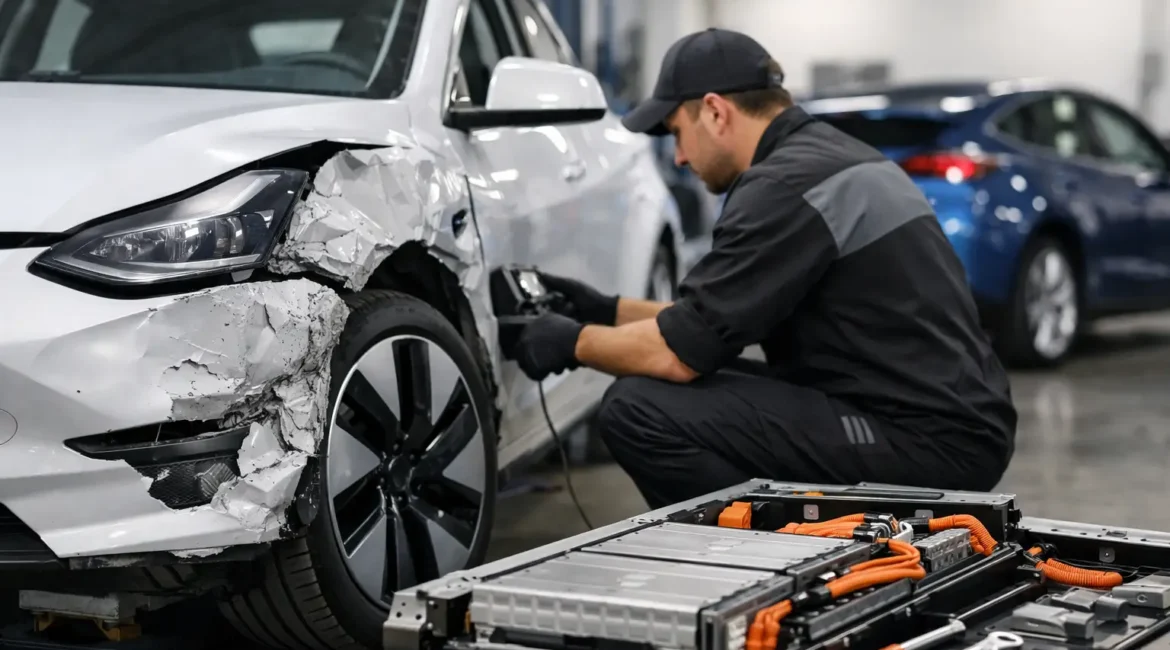
A low-speed knock outside the supermarket can look like nothing more than a scuffed bumper. With an electric car, however, electric vehicle repairs should begin with a proper assessment, not a quick cosmetic fix. Behind that marked panel may sit parking sensors, camera wiring, charging components or high-voltage cabling that need to be checked before the vehicle goes back on the road.
That does not mean every scratch on an EV becomes a major repair. It means the work needs to be planned properly. The right bodyshop will identify what has been damaged, protect the vehicle during repair and restore the finish to a standard that keeps your car looking right and holding its value.
Why EV body damage needs a closer look
Electric vehicles share plenty with petrol and diesel cars: painted bumpers, doors, wings, alloys, windscreens and vulnerable parking sensors. Everyday dents, kerbed wheels and car park scrapes can often be repaired in much the same way. The difference is what may be fitted behind or around those parts.
Many EVs use advanced driver assistance systems, with cameras and sensors built into bumpers, mirrors, grilles and windscreens. Even a small impact can move a sensor mounting point or damage a connector. If this is missed, functions such as parking assistance, lane support or emergency braking may not work as intended.
The battery pack itself is normally positioned low in the vehicle and protected by a strong casing. It is not automatically damaged in every accident, but a heavy underside impact, collision near the floorpan or damage around the battery enclosure needs immediate specialist attention. Never assume a car is safe to drive simply because it still starts and moves.
The first steps after an accident
If your electric vehicle has been involved in a collision, treat warning messages, unusual smells, smoke, fluid leaks or heat from beneath the car as urgent signs. Move away from the vehicle if it is safe to do so, keep others clear and contact emergency services where needed. Do not attempt to inspect orange high-voltage cables or remove damaged trims yourself.
For less serious cosmetic damage, take clear photographs before washing or polishing the affected area. Include wider shots showing the position of the damage, as well as close-ups of scratches, cracks and panel gaps. This helps when obtaining an estimate or starting an insurance claim.
It is also worth checking whether the charging flap, charge port door and surrounding panel align correctly. A charge port that will not close, feels loose or has taken an impact should be inspected before charging. Water and damaged electrical components are not a combination to ignore.
What a proper EV repair assessment covers
A good assessment goes beyond the visible scrape. The repairer should inspect how the impact has affected the panel, its mounts and the parts around it. On an electric car, this can include confirming whether sensor brackets, wiring looms, charging-area trims or underbody protection have been affected.
The aim is not to add unnecessary work. It is to avoid the false economy of repairing paintwork while leaving a cracked bumper reinforcement, loose sensor or distorted panel behind it. A repair may look excellent on collection day but cause warning lights, water ingress or poor sensor performance later if the preparation has been rushed.
Where high-voltage equipment or battery-related damage is suspected, the vehicle may need to be made safe and assessed by an appropriately qualified EV technician. A reputable body repair specialist will be clear about this and coordinate the right next step rather than taking risks with work outside the scope of a cosmetic repair.
Paint, panels and plastic bumpers
Modern EV paint finishes can be difficult to match, especially with pearl, metallic and matte colours. Blending into adjacent panels is sometimes the best way to achieve an even result under daylight, street lighting and the harsh lighting of a forecourt. The smallest repair is not always the cheapest repair if it leaves an obvious colour edge.
Plastic bumpers bring their own considerations. A scuff may be suitable for a SMART repair, while a split, distorted mounting point or deep crack may call for a more extensive repair or replacement. The decision depends on the location and severity of the damage, as well as what sits behind the bumper.
Sensors, cameras and calibration
A bumper can look perfectly straight while a parking sensor sits a few millimetres out of position. Similarly, a camera can require recalibration after work around its mounting area. This is why the repair process matters as much as the paint finish.
Ask whether the vehicle’s driver-assistance systems will be checked after the repair. If recalibration is required, it should be completed using the correct process for the make and model. A dashboard free from warning lights is reassuring, but it is not a substitute for a proper post-repair check where calibration is needed.
Can cosmetic electric vehicle repairs be completed quickly?
Sometimes, yes. Minor scratches, scuffs, small dents and alloy wheel damage may be suitable for a same-day repair, depending on the vehicle, paint type and extent of the damage. This can be an excellent option for drivers who want their EV looking smart again without losing it for several days.
After an accident, though, speed should never come before safety. A cracked bumper, damaged wheel, panel misalignment or warning light may point to issues that need a longer inspection. The sensible approach is to get an honest assessment first, then choose the repair route that protects both your time and your vehicle.
At Unique Bodywork, the focus is on restoring the visible damage to a high standard while making the process straightforward for local drivers. Collection and drop-off can be particularly useful when a damaged car is inconvenient to move, although suitability will always depend on its condition and whether it is safe to transport.
Insurance repairs and non-fault accidents
After a non-fault accident, you may be entitled to have your vehicle repaired and recover reasonable costs from the at-fault driver’s insurer. The details depend on the circumstances, the evidence available and your policy, but you do not need to accept poor workmanship simply because the repair is being handled through insurance.
Tell the repairer if your EV is leased, on finance or still within a manufacturer warranty. There may be specific requirements around parts, repair methods and records. Keeping photographs, estimates, invoices and any calibration documentation can also be useful when you return a leased vehicle or sell it later.
If another driver has caused the damage, get their registration, contact details and insurer information if possible. Photographs of the scene, road layout and vehicle positions can help support the claim. If you feel shaken or unsure what to do, a repair business experienced in accident work can explain the practical next steps without making the situation more complicated.
Questions worth asking before booking
Before agreeing to repair work, make sure you understand what is included. The following questions can prevent surprises and help you compare estimates fairly:
- Has the quote allowed for any sensor, camera or parking-assistance checks needed after the impact?
- Is the repair suitable for the panel material and paint finish on my specific EV?
- Will damaged trims, clips and mounting points be repaired or replaced where necessary?
- If battery, charging or high-voltage damage is suspected, who will complete the specialist safety assessment?
Price matters, but it should not be the only deciding factor. A very cheap repair that skips preparation, blends paint poorly or ignores electronic features can reduce resale appeal and create another bill later. The best value is work that looks right, functions properly and is explained clearly before it begins.
Protecting the finish once repairs are complete
After repair, follow the bodyshop’s advice on washing and waxing newly painted areas. Fresh paint needs time to cure fully, so avoid aggressive polishing, automatic car washes and harsh chemicals until you have been told it is safe. Keep an eye on repaired parking sensors, charge-port alignment and any dashboard warnings during the first few journeys.
A clean, carefully repaired EV makes a difference every time you approach it, but the real benefit is confidence that the work has not stopped at the surface. Whether it is a light scrape in Glasgow traffic or accident damage that needs insurance support, choosing a repairer that understands the extra checks around electric vehicles gives you a better route back to a car you are proud to drive.