
A door ding can look minor until sunlight catches the panel and makes it the first thing you see every time you walk towards your car. If you are wondering how to fix door dings, the right answer depends on more than the size of the mark. The condition of the paint, the location of the dent and the shape of the panel all affect whether it can be repaired cleanly at home or needs professional attention.
The good news is that many door dings can be removed without replacing a panel or repainting the whole side of the vehicle. The key is choosing the repair method that protects the finish already on your car.
Check the Ding Before You Try to Repair It
Start by washing the affected area. Road film, dust and polish residue can hide a scratch or make a shallow dent look deeper than it really is. Dry the panel, then inspect it in good light from different angles. A torch or the reflection of a straight object can help reveal the true shape of the damage.
A small, smooth, shallow dent with unbroken paint is the best candidate for paintless dent repair. This method carefully reshapes the metal from behind the panel, or uses controlled pulling techniques from the outside, without disturbing the factory paintwork.
If the paint is cracked, chipped or split, do not treat it as a simple ding. Bare metal can begin to corrode, particularly through a Scottish winter when roads are wet and treated with salt. A dent with paint damage normally needs both panel repair and a localised paint finish to restore the appearance and protect the vehicle properly.
The position matters too. A ding in the flat centre of a door is usually more straightforward than damage on a sharp body line, near the edge of the door, or close to a handle. Modern doors also contain bracing, wiring, window mechanisms and side-impact protection. That is why a dent that appears small from the outside may not be a sensible DIY job.
How to Fix Door Dings With Paintless Repair
Paintless dent repair, often called PDR, is usually the best option when the original paint is intact. A skilled repairer gains access behind the door trim where possible and uses specialist tools to apply small, precise movements to the reverse of the dent. The metal is gradually returned to its original profile rather than pushed out in one forceful action.
This work takes patience. Vehicle body panels have a natural tension, and a professional has to read the reflection in the paint to see high and low areas as they work. Rushing can stretch the metal, leave a raised spot, or create a rippled finish that is more noticeable than the original ding.
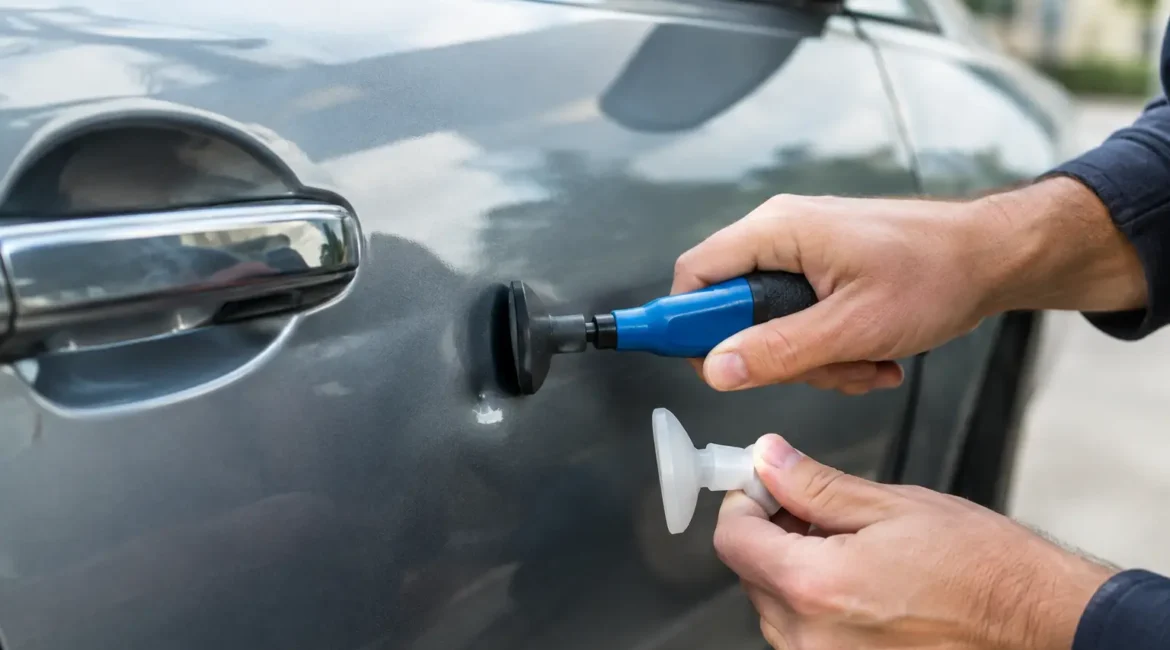
For a shallow dent, a glue-pulling system may be used instead. A temporary tab is attached to the panel with specialist adhesive, then gently pulled using a controlled tool. The tab and adhesive are removed afterwards without harming sound factory paint. This is useful where access behind the door is limited, but it is still a technique best handled by someone who understands panel tension and paint condition.
A proper PDR repair preserves the original finish, avoids unnecessary paintwork and can often be completed more quickly than a conventional body repair. It is particularly worthwhile on newer vehicles, leased cars and well-maintained family cars where keeping the factory paintwork intact helps protect appearance and resale value.
When PDR is not suitable
Paintless repair is not a cure for every dent. It may not be suitable where the panel has a sharp crease, the metal has been badly stretched, the damage sits on a complex body line, or the paint has already cracked. Older repainted panels can also need extra care, as previous paintwork may not have the flexibility or adhesion of a factory finish.
An honest inspection should come before any repair. A good bodyshop will tell you if PDR is likely to achieve a near-invisible result and recommend a different approach when it will not.
Be Careful With DIY Door Ding Fixes
There is no shortage of online videos showing people using plungers, boiling water, hairdryers, compressed air or household suction cups to remove dents. Some of these methods occasionally move a very shallow dent, but they are unreliable and can turn a manageable repair into a more expensive one.
Heat can damage paint, especially on a panel that has been previously repaired or repainted. A plunger can pull unevenly and create a high spot. Aggressive suction devices may distort thin metal rather than restore it. Trying to push from inside the door without removing the trim correctly can damage clips, moisture barriers, electrical connections or the window mechanism.
DIY kits designed for glue pulling are less risky than improvised methods, but they still require care. Pulling too hard can lift lacquer or paint from a weak area, and knocking down raised points without the right tools often leaves the door looking uneven. The cost saving disappears quickly if the panel then needs filling and repainting.
If the ding is tiny, the paint is perfect and you are comfortable accepting a less-than-perfect result, a quality DIY kit may be worth considering. For anything on a visible crease, a vehicle with premium paintwork, or a ding you want completely gone, professional repair is the safer investment.
When a Door Ding Needs Paint Repair
Where there is a chip, scrape or crack through the paint, the repair should deal with both the dent and the damaged finish. The area is carefully prepared, the dent is reshaped, and any small imperfections are levelled before primer, colour and clear coat are applied. The repair is then blended and polished to match the surrounding panel as closely as possible.
A localised SMART repair can be ideal for contained cosmetic damage. It avoids repainting more of the vehicle than necessary while still giving a durable, tidy result. However, larger dents, extensive scratches and damage near panel edges can require a broader repair area to achieve the correct colour match and finish.
This is one area where cheap, rushed work often shows. Poor preparation can lead to visible edges, mismatched colour, rough texture or paint that fails prematurely. A proper repair should look right not only on collection day, but after regular washing, bad weather and everyday use.
Do Not Ignore the Door’s Operation
Most car park dings are cosmetic, but it is worth checking that the door opens, closes and latches normally. Look for a change in panel gaps, difficulty winding the window up or down, loose trim, water ingress or a door that catches against the wing or rear quarter panel. These signs suggest the impact may be more than surface-level damage.
If another vehicle hit your parked car and left a deep mark, take photographs before cleaning or repairing it. Clear images of the damage, the location and any available registration details may help with an insurance or non-fault claim. You should not have to navigate that process alone when the other driver is responsible.
Get a Result That Is Worth Keeping
A door ding does not always need a full respray, and it does not always need an expensive repair. What it does need is an accurate assessment. The best solution is the least invasive one that restores the panel properly, whether that is paintless dent repair, a small localised paint repair or more detailed bodywork.
For drivers across Glasgow and the surrounding area, Unique Bodywork can assess the damage and advise on the most cost-effective route to a high-quality finish. With experienced workmanship, convenient collection and drop-off options, and same-day repairs available for suitable jobs, getting your car looking right again need not disrupt your week.
Do not let a small dent become the blemish you learn to live with. A well-chosen repair can bring back the clean lines of your door, protect damaged paint from the elements and leave you pleased with your car every time you see it.