
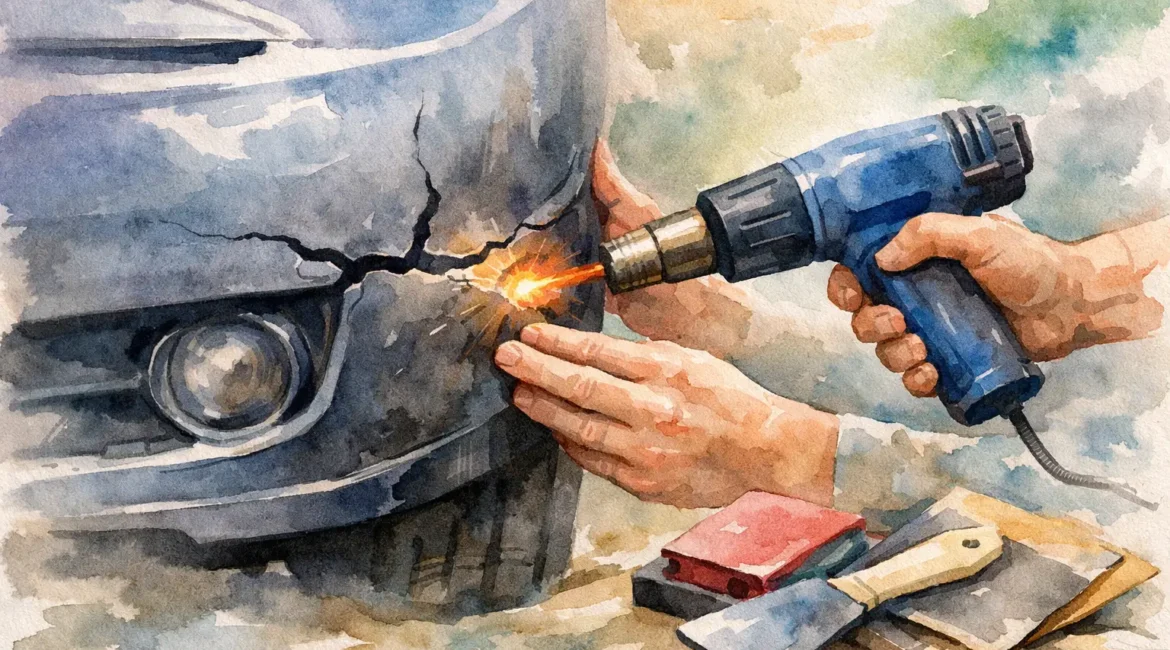
A bumper crack always looks worse the morning after. What seemed like a light knock in a car park can turn into a split line, loose paint, and a corner that no longer sits quite right. If you are wondering how to repair cracked bumper damage, the right answer depends on more than the size of the crack. The material, the location, and whether the bumper has shifted out of place all matter.
For some minor plastic cracks, a careful repair can restore strength and improve the look of the panel. For others, especially where the damage runs through mounting points or distorted sections, a quick home fix often ends up costing more when it fails. That is why it helps to know what is realistic before you start sanding, filling, or buying repair kits.
How to repair cracked bumper damage properly
Most modern bumpers are made from flexible plastic rather than metal, which is good news and bad news. The good part is that they are designed to absorb minor impacts. The bad part is that once they split, they need the right repair method to hold their shape and finish properly.
A proper repair usually starts with removing the bumper or at least accessing the rear of the damaged area. That matters because a crack repaired only from the visible front can look acceptable for a short time but often opens again under vibration, weather changes, or another light knock. Reinforcing the repair from behind gives it a far better chance of lasting.
The damaged area then needs to be cleaned thoroughly. Road film, polish, wax, and general grime can stop fillers, adhesives, or plastic welding materials from bonding as they should. Once clean, the crack is usually prepared by sanding around it and, in many cases, slightly opening the split so repair material can key into the plastic rather than just sitting on top.
If the bumper material is suitable, plastic welding can be the strongest option. This melts and fuses the plastic together, often with reinforcing material added behind the crack. Where welding is not appropriate, a specialist plastic repair adhesive may be used. After the structure is restored, the front surface is smoothed with filler where needed, sanded back, primed, and painted.
That sounds straightforward on paper, but the finish is where many DIY jobs fall short. A bumper can be solid again and still look poor if the paint match is off, the contour is uneven, or the repaired section shows through under certain light.
When a cracked bumper can be repaired
Not every crack means a new bumper is needed. In many cases, repair is the more sensible and more cost-effective route, especially if the damage is localised and the bumper has kept its overall shape.
Short cracks away from corners, sensors, grills, and mounting tabs are usually the best candidates. If the split has not torn through multiple sections and the surrounding plastic is stable, a proper repair can return the bumper to a very good standard. This is often the case after slow-speed parking damage or a minor scrape.
The age and condition of the bumper also make a difference. If the panel already has previous poor repairs, heavy paint damage, or brittle plastic, the job becomes less predictable. A bodyshop will normally assess whether a repair will actually last or whether replacement makes more sense in the long run.
This is where experience counts. Two bumpers with cracks of a similar length can need completely different solutions depending on how the impact travelled through the plastic.
When repair is the wrong choice
There are times when repairing a cracked bumper is false economy. If the crack runs through a mounting point, if the bumper will not line up with the wing or headlamp, or if sections are missing, a repair may not be the best route.
The same applies where the impact has caused hidden damage behind the bumper. Absorbers, brackets, and supports can all shift in even a relatively minor collision. If the bumper crack is just the visible part of a bigger problem, focusing only on the surface repair will not solve the real issue.
Paint is another factor. Pearl, metallic, and specialist finishes can be difficult to match at home, particularly on modern vehicles where adjacent panels affect how the colour appears. A cheap repair kit may fill the crack, but it will not bring the car back to showroom condition.
DIY repair versus bodyshop repair
A lot of drivers search how to repair cracked bumper damage because they want to avoid the cost and hassle of a larger repair. That is fair enough. For a very small crack on an older vehicle, a careful DIY job can be worth attempting if appearance is not the top priority.
The trade-off is time, finish, and durability. Home kits can help with minor cosmetic improvement, but they rarely match the strength and paint quality of a professional repair. Without the right prep, the crack can print back through the paint, the filler can sink, or the lacquer can react badly.
A bodyshop repair costs more than a quick home patch, but it usually saves money compared with repeating the job or replacing the bumper later because the first fix failed. It also takes the stress out of the process. For many drivers, especially if the car is on finance, leased, insured for a claim, or important for resale value, the professional option is the sensible one.
What a professional bumper repair should include
If you are paying for a repair, you want more than the crack simply hidden. A proper job should restore the bumper’s strength, shape, and finish. That means checking alignment, securing the damaged area correctly, and refinishing it so the repair blends with the rest of the vehicle.
In practical terms, that may involve bumper removal, plastic welding or specialist bonding, surface preparation, priming, paintwork, and refitting. On some vehicles it can also mean dealing carefully with parking sensors, trims, grills, and lower valances. These details matter because a repair that looks acceptable from ten feet away can still feel poor every time you wash the car or walk up to it.
At Unique Bodywork, this is exactly why bumper repairs are assessed properly before work starts. Customers want a clear answer on whether the damage can be repaired well, how long it will take, and whether the finish will hold up in everyday use.
How long does a cracked bumper repair take?
It depends on the severity of the damage and the paintwork involved. A straightforward localised repair may be turned around quickly, while a larger crack with alignment issues or a full bumper respray will naturally take longer.
Drying and curing times matter as much as the hands-on repair itself. Rushing the process is one of the main reasons poor repairs fail early. If a shop promises speed, that should still come with the basics done properly.
For drivers around Glasgow and the surrounding areas, convenience matters just as much as workmanship. Collection and drop-off, clear timescales, and realistic pricing often make the difference between putting the job off and getting it sorted before the damage worsens.
Cost depends on more than the crack itself
People understandably ask for a price based on a photo, but bumper repair costs are not just about crack length. The position of the damage, access to the rear, paint type, sensor placement, and whether the bumper needs removing all affect the quote.
A simple repair can be very cost-effective compared with replacement. But if the crack is part of wider impact damage, the estimate may need to account for brackets, trims, paint blending, or hidden structural issues. That is not upselling. It is the difference between a repair that lasts and one that comes back apart.
The best approach is to have the bumper inspected by someone who repairs this type of damage every day. That way you get a realistic recommendation rather than a guess.
The smartest next step after bumper damage
If your bumper is cracked, the main question is not whether it can be patched. It is whether it can be repaired properly, with the right strength behind it and a finish that does not let the rest of the car down. A small crack left too long can spread, collect moisture, and turn a manageable repair into a bigger job. Getting it looked at early usually gives you more options, a better result, and less disruption overall.