
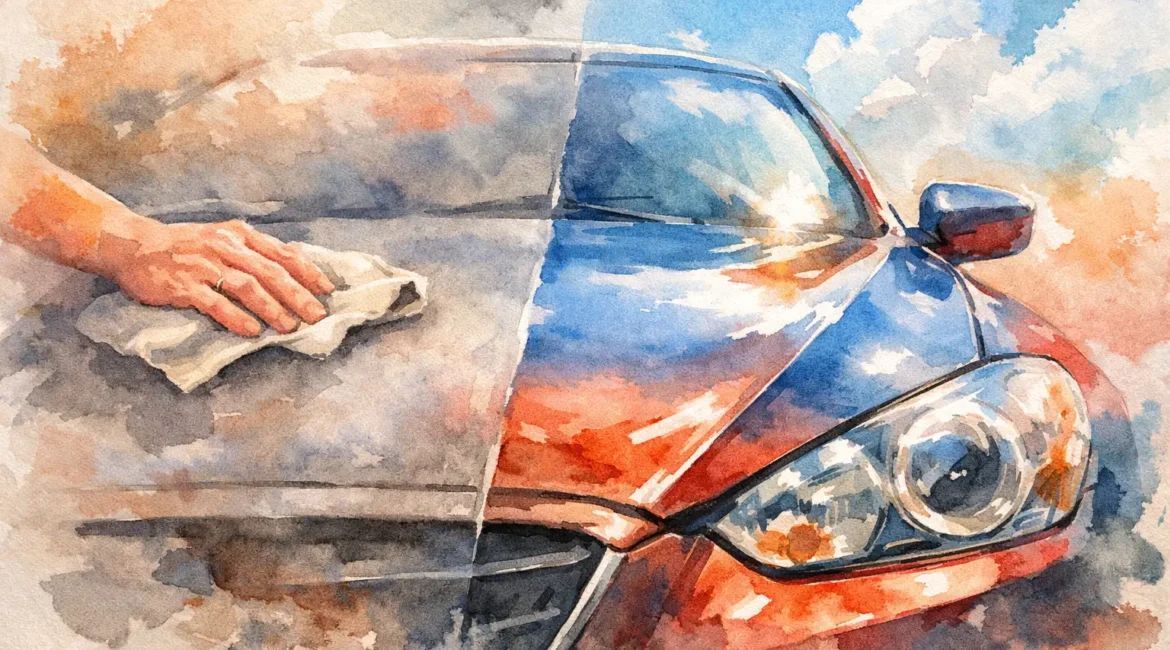
Faded paint usually starts as a cosmetic annoyance. You wash the car, stand back, and the bonnet still looks tired, chalky or patchy. Then it gets worse. The shine drops off, the colour looks flat, and the whole car starts to look older than it is. If you are wondering how to restore faded car paint, the right fix depends on one thing above all else – whether the damage sits on the surface or has gone deeper.
That matters because some paint can be brought back with careful correction, while other panels need proper refinishing to get anywhere close to showroom condition. The mistake many drivers make is trying to polish through a problem that really needs paint.
What causes car paint to fade?
Most faded paint is the result of exposure over time. UV light from the sun breaks down the top layers, road grime sits on the surface, bird droppings and traffic film eat into the finish, and poor washing habits gradually dull the lacquer. On older vehicles, especially those that have lived outdoors, the clear coat can oxidise and lose its gloss.
Red, black and darker shades tend to show fading more obviously, but any colour can suffer if the protection has gone. Flat, milky patches on the bonnet, roof and tops of the wings are common because those areas take the most weather.
There is also a difference between paint that looks faded and paint that has actually failed. If the finish is just dull, a machine polish may bring it back. If the lacquer is peeling, cracking or worn through, polishing will not solve it.
How to tell if faded paint can be restored
Before deciding how to restore faded car paint, inspect the surface properly in daylight. If the panel feels smooth but looks dull, and there is no peeling or rough, flaky lacquer, that is usually a better sign. Oxidised paint often responds well to paint correction if there is still enough healthy material left.
If, however, the clear coat is lifting at the edges, the panel looks blotchy after washing, or you can see areas where the base colour has started to break down, the damage is more advanced. In that case, a proper repaint is normally the only way to restore a deep, even finish.
A quick test is to wash and dry the car thoroughly, then look at the panel from different angles. If it briefly looks better when wet but dull again when dry, the gloss has probably gone from the surface layer. That can sometimes be corrected. If it still looks patchy when wet, the issue is often deeper.
The DIY route – when it works and when it doesn’t
If the fading is light to moderate, DIY restoration can improve the finish. Start with a proper wash, decontamination and clay treatment if needed. Once the surface is clean, a cutting compound followed by a finishing polish can remove oxidation and revive gloss.
The problem is that DIY results depend heavily on the condition of the paint and the tools being used. Hand polishing rarely does enough on badly faded panels. Machine polishing can be effective, but it also carries risk. Use the wrong pad, too much pressure or too aggressive a compound, and you can burn through the lacquer or leave swirl marks that look worse than the fading.
That is why there is a clear trade-off. DIY can save money if the paint only needs light correction, but it can also turn a manageable job into a repaint if the panel is already thin or damaged.
How to restore faded car paint with polishing
If the paint is restorable, polishing is the first proper step rather than waxes or temporary shine products. A good correction process removes the dead, oxidised top layer and reveals healthier paint underneath. Once that is done, the surface can be refined and protected.
This usually means cleaning the panel fully, measuring and assessing the paint where possible, then carrying out a staged machine polish. A heavier compound may be needed first, followed by a finer polish to restore depth and gloss. After that, the finish should be sealed with wax, sealant or ceramic protection depending on the vehicle and budget.
For everyday cars, this can make a major difference. The paint looks richer, reflections come back, and the vehicle immediately appears newer. But polishing only works if there is enough sound lacquer left to work with. It is a corrective process, not a miracle cure.
When a respray is the better option
There comes a point where chasing a faded finish with compounds stops making sense. If the lacquer has failed, if the paint has gone thin, or if one panel has oxidised far more than the rest of the vehicle, refinishing is often the smarter and more cost-effective choice.
A professional respray does more than add colour. The damaged finish is prepared properly, defects are removed, the panel is refinished to match the surrounding bodywork, and a fresh lacquer layer restores both gloss and protection. Done well, it gives a cleaner, longer-lasting result than repeated polishing ever will.
This is especially true on bonnets, roofs and boot lids where sun damage tends to be worst. These horizontal panels often take the full hit of the weather, and once the clear coat has broken down, they usually need paint rather than product.
For drivers who plan to keep the car, or who want to protect its resale value, this is often the point where calling a bodyshop makes the most sense.
Why cheap fixes rarely last
A lot of off-the-shelf products are sold as faded paint restorers. Some can improve the look for a short time, especially glazes and colour-enhancing polishes, but many simply mask the problem. After a few washes, the dullness comes back.
That is frustrating enough on a small area. On a whole bonnet or roof, it becomes wasted time and money. A lasting repair comes from dealing with the actual cause – oxidation, failed lacquer or damaged paint – not just making the panel look better for a weekend.
The same goes for spot repairs done badly. Poor colour matching, weak preparation or low-grade lacquer can leave you with a panel that stands out for the wrong reasons. Good refinishing is all about the finish you see and the prep work you do not.
What a professional paint restoration service should include
A proper assessment comes first. There is no honest way to price or recommend paint restoration without seeing whether the panel can be corrected or needs refinishing. The right repair should suit the condition of the car, not force the car into a one-size-fits-all service.
If correction is possible, the process should focus on safely reviving gloss while preserving the paint that remains. If repainting is needed, the panel should be prepared correctly, refinished to a high standard and blended where required for a natural result.
For many drivers, convenience matters just as much as the finish. If your car is a daily runner, time off the road is a genuine concern. That is why working with an experienced local repairer matters. You want clear advice, quality workmanship and a realistic turnaround, not guesswork.
In and around Glasgow, where cars deal with rain, road film, grit and long periods parked outdoors, faded paint is not unusual. The key is sorting it before the damage spreads and the repair becomes more involved.
Protecting paint after restoration
Once the paint has been corrected or refinished, maintenance makes the difference between a finish that lasts and one that starts fading again too soon. Regular washing with proper car shampoo, avoiding harsh automated brushes, and removing bird droppings quickly all help preserve the surface.
Protection also matters. A good wax or sealant adds a sacrificial layer against weather and contamination. Ceramic coatings can go further, but they are not essential for every vehicle. For many owners, simple routine care done properly is enough to keep the paint looking sharp.
If the car lives outside year-round, expect to be more proactive. The bonnet and roof will always be under more strain than sheltered panels, so checking them regularly is worthwhile.
The best approach depends on the condition, not the age
A ten-year-old car with well-kept paint may only need machine polishing. A newer vehicle with failed lacquer may need immediate refinishing. That is why there is no single answer to how to restore faded car paint.
The best results come from choosing the right repair the first time. If the finish can be corrected safely, do that. If the paint has gone beyond polishing, repaint it properly and protect it afterwards. Either way, the goal is the same – bring the car back to a finish you are proud to drive.
If your paint has lost its shine, do not wait until it turns into peeling lacquer and exposed damage. A proper assessment now can save money later and get the car looking right again without the trial and error.