
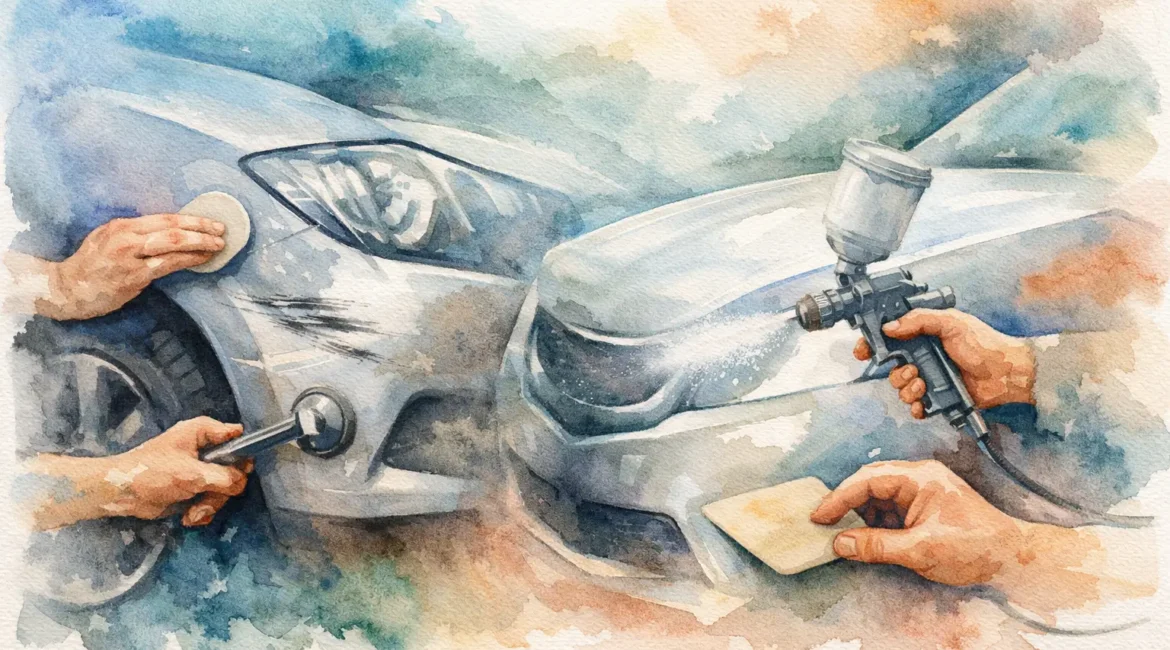
A scraped bumper in a supermarket car park or a dented door from a tight parking space does not automatically mean an expensive replacement panel. Knowing how to remove scratches and dents without replacing panels can save money, protect your vehicle’s original factory fit, and get you back on the road sooner. The right repair depends on how deep the damage is, where it sits, and whether the paint has been broken.
For many everyday marks, a skilled body repairer can restore the affected area to a high standard using targeted techniques rather than replacing an entire door, wing or bumper. This is often the most sensible route for drivers who want their car looking right again without paying for work it does not need.
Start by judging the damage properly
The difference between a quick cosmetic repair and a larger bodyshop job is not always obvious from a distance. A scratch may look severe because it has transferred paint from another vehicle, while a small dent can hide a crease or stretched metal beneath it.
A useful first check is to clean the damaged area thoroughly. Road grime can make surface marks appear deeper than they are. Once clean, look at the scratch in good light. If your fingernail does not catch in it, the damage may only be in the clear coat and may be suitable for machine polishing. If it catches, or you can see primer, bare metal or plastic underneath, it will need more than polish to achieve a lasting finish.
With dents, inspect the panel from different angles. A shallow, smooth dent with intact paint is often a good candidate for paintless dent removal. A sharp crease, damaged edge, or dent with a broken paint surface generally needs conventional repair and localised refinishing.
How to remove scratches without replacing panels
Scratches are usually repaired in stages. The goal is not simply to hide the mark for a few weeks, but to level the damaged surface, match the colour properly and protect the panel against further deterioration.
Light clear-coat scratches
Fine swirls, hedge scratches and light scuffs can often be removed by professional machine polishing. A technician uses suitable compounds and polishing pads to carefully reduce the surrounding clear coat and level the scratch. Done properly, this restores gloss without making the paint look dull or patchy.
This approach has limits. Aggressive polishing can remove too much clear coat, especially on older vehicles or panels that have been painted before. That is why a quick DIY rub with an abrasive product is not always the bargain it appears to be.
Scuffs and paint transfer
Bumper scuffs commonly involve paint transfer from a post, wall or another vehicle. If the original paint beneath is still sound, the transferred material may be removed and the area polished. Some marks that look like they need repainting can be greatly improved with careful preparation alone.
Where the bumper paint has been cut through, a repairer can sand and fill the damaged section, apply colour matched paint and blend it into the surrounding area. There is no need to replace a complete bumper simply because one corner has been scuffed.
Deep scratches through the paint
A deep key scratch or scrape that exposes metal requires prompt attention. Bare steel can rust, particularly through a wet Glasgow winter, and what starts as a cosmetic defect can become a more expensive repair.
The damaged section is prepared, any corrosion is removed, the scratch is filled where necessary, and the repair is primed before colour and clear coat are applied. A quality localised repair is then blended so the finish sits naturally with the rest of the panel. The age and condition of the existing paint matter here – faded or heavily weathered paint can make colour matching more involved, but an experienced refinisher will assess this before work begins.
How to remove dents without replacing panels
Panel replacement is usually reserved for severe impact damage, extensive corrosion, torn metal, or a panel that cannot be safely returned to shape. Most parking dents and minor collision damage do not reach that point.
Paintless dent removal for intact paintwork
Paintless dent removal, often called PDR, is one of the cleanest ways to repair a small dent. Using specialist tools, the technician gently manipulates the metal or panel material back into position from behind. In some cases, controlled pulling methods are used from the outside.
Because the original paint remains intact, there is no filling, painting or colour matching involved. PDR can be an excellent option for trolley dents, shallow door knocks and small bonnet dents. It also helps preserve the original factory finish, which is valuable when maintaining a newer car.
However, PDR is not suitable for every dent. Damage on a sharp body line, near the edge of a panel, or in an area with restricted access may need a different method. If the paint is cracked, repainting is needed even if the dent itself can be pushed out.
Conventional dent repair and local paintwork
For deeper dents, creases and areas where the paint has split, a conventional repair is often the better choice. The damaged metal is carefully pulled or reshaped, then a minimal amount of filler is used to restore the original contour. The area is sanded, primed and refinished to match the vehicle.
Modern SMART repair methods make this practical for smaller areas of damage. Rather than repainting an entire panel as a default, the repair can be contained to the affected section where the colour, finish and panel condition allow. This can reduce cost and turnaround time while still delivering a professional result.
When a panel should be replaced instead
There are times when replacement is the responsible recommendation. A badly crushed panel, major structural distortion, widespread rust, or damage around critical mounting points may not be suitable for repair. Safety comes first, particularly following an accident involving doors, bumpers, wings, suspension or structural sections.
Replacement may also be more cost-effective when a panel is extensively damaged over a large area. The important point is that replacement should follow a proper inspection, not be the automatic answer to every scratch or dent. A reputable repairer will explain the options clearly and advise what will give the best finish for your budget.
Why DIY repair kits can cause more harm than good
DIY touch-up pens, suction cups and scratch-removal kits can have a place for very minor temporary improvements. They are less reliable when the damage is visible, deep or located on a curved panel. A touch-up colour that is slightly wrong can stand out more than the original scratch, while cheap dent pullers may create high spots or stretch the panel.
A poor repair can also complicate later professional work. Thick filler, uneven lacquer and overspray all take additional time to correct. If you are preparing a vehicle for sale, returning a lease car, or simply want it back to showroom condition, a professional repair is usually the more cost-conscious decision in the long run.
Choosing the right repair for your car
A good estimate should be based on photos or, preferably, an in-person assessment. The repairer needs to see the depth of the damage, paint condition, panel material and access behind the dent before recommending PDR, a SMART repair, polishing or a larger refinishing job.
Ask whether the price includes preparation, colour matching, painting and finishing, rather than focusing only on the lowest initial figure. A repair that is rushed or poorly blended can leave visible edges, mismatched colour or an uneven shine. Quality workmanship is what makes the repair disappear.
For drivers across Glasgow and the surrounding area, Unique Bodywork can assess cosmetic damage and recommend the most practical route, from a small scratch repair to more involved accident work. Collection and drop-off options can also take the hassle out of arranging repairs around work and family commitments.
A dent or scratch does not have to become a replacement-panel bill. Get the damage looked at early, particularly if paint has broken, and choose a repair method that protects both the appearance and value of your vehicle.