
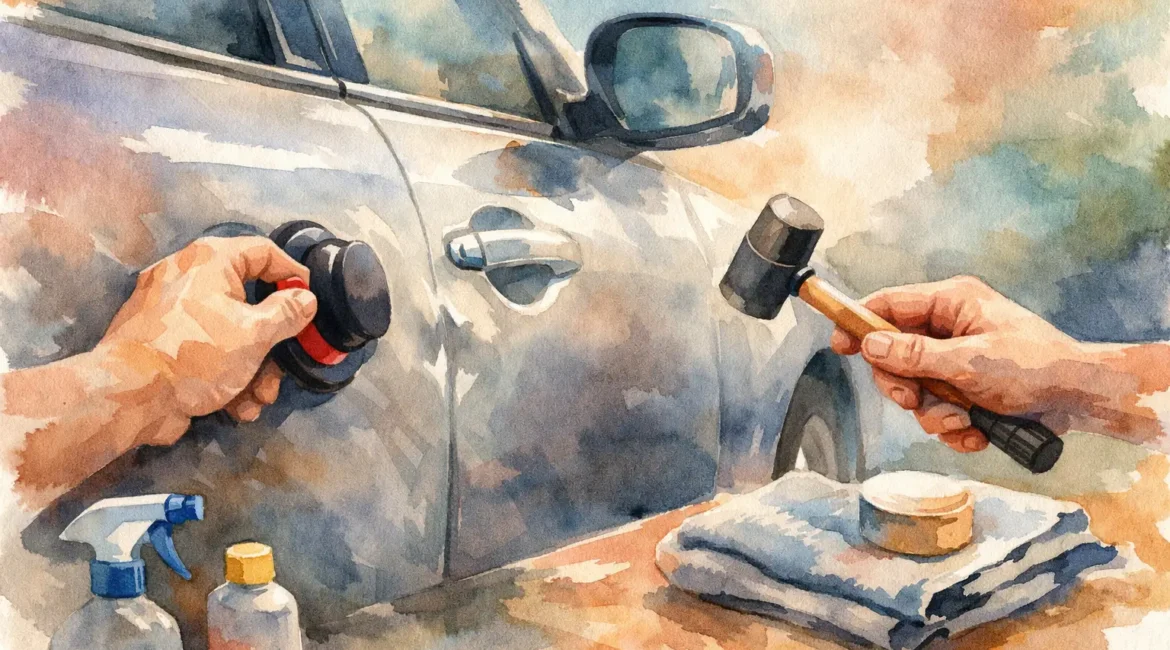
That small dent in your door or rear quarter panel might look harmless, but it has a habit of catching your eye every time you walk up to the car. If you are wondering how to fix minor dents, the real question is not just whether they can be pushed out – it is whether the repair will leave the panel looking right afterwards.
Some minor dents are genuinely straightforward. Others only seem simple until the paint cracks, the metal stretches, or the shape never quite returns. Knowing the difference can save you time, money, and the cost of putting a failed DIY repair right.
How to fix minor dents without making them worse
The first thing to check is the type of dent you are dealing with. A shallow dent on a flat panel with no paint damage is a very different job from a crease on a bodyline or a dent close to the edge of a panel. As a rule, the cleaner and softer the dent, the better the chance of a tidy repair.
If the paint is intact, paintless dent repair may be possible. This involves carefully massaging the metal back into shape from behind the panel or using specialist pulling tools from the outside. Done properly, it can restore the panel without filler or repainting.
If the paint is chipped, cracked, or the dent has stretched the metal, it usually stops being a true paintless repair. At that stage, the aim is not just to move the dent. It is to restore the surface so it looks smooth again under daylight, rain, and street lighting.
A lot of online advice makes minor dent removal sound easier than it is. Boiling water, plungers, suction cups, hairdryers and compressed air all get mentioned. Sometimes they help a little on very specific plastics or shallow metal dents, but they are unreliable on modern body panels. The risk is that you trade one dent for a warped panel, damaged paint, or a finish that looks worse from certain angles.
When DIY dent repair can work
There are cases where a careful DIY attempt is reasonable. If the dent is small, shallow, away from sharp edges, and there is no paint damage at all, a basic suction-style dent puller may improve it. The best results tend to come from dents in easy-to-reach, open areas rather than tight corners or swage lines.
Even then, manage expectations. DIY tools rarely bring a panel fully back to showroom condition. They may reduce the damage enough that it is less noticeable, which can be fine on an older daily driver. If you want an invisible finish, especially on a newer car or a leased vehicle, DIY usually falls short.
You also need to think about panel access. Some dents can only be repaired properly from behind, which may mean removing trim, lights, liners, or interior panels. That is where many simple-looking jobs stop being simple.
A sensible DIY checklist
Before touching the dent, wash and dry the area so you can see the damage clearly. Look at it from different angles and in good natural light. If you can see cracked lacquer, chipped paint, a sharp crease, or distortion along a bodyline, it is better not to experiment.
If you do try a DIY puller, use gentle pressure and stop if nothing is moving cleanly. Repeated aggressive pulling can stretch the metal and make a professional repair more involved later. That usually means more time in the bodyshop and a higher final cost.
Signs the dent needs a professional repair
The easiest way to judge a dent is by what surrounds it. If the panel gap has changed, the reflection looks twisted, or the damage sits near an arch, edge, handle, bumper corner or character line, it is usually a job for a body repair specialist.
The same applies if the paint has been damaged. Once the protective finish is broken, moisture can get in and corrosion can start. On steel panels, that can turn a cosmetic issue into something more expensive if it is left too long.
Professional repair is also the safer choice if the dent is on an aluminium panel, if the panel has previous repairs, or if the damage is part of a wider scrape or scuff. Modern cars are built with different materials and thinner panel designs than many drivers expect. What looks like a quick push-out repair can need a more controlled process to avoid marking the panel.
Why minor dents are not always minor jobs
A dent can be small in size but awkward in all the ways that matter. Bodylines have to stay crisp. Curved panels need to reflect light evenly. Metallic and pearlescent paint has to match properly if painting is required. That is why a proper repair is judged by the finish, not just by whether the dent has been moved.
For many drivers, the bigger issue is value. A poor repair is obvious when the car is clean, and it can stand out even more at resale or hand-back time. Spending less on a quick fix only makes sense if the result is good enough for the car and your expectations.
What a proper dent repair involves
A professional assessment usually starts with the depth, location and paint condition. If paintless dent repair is suitable, that is often the quickest and most cost-effective route because the original finish stays intact.
If not, the repair may involve reshaping the panel, applying filler where needed, sanding, priming and repainting the affected area. On some jobs, SMART repair techniques are enough to keep work localised. On others, blending into the surrounding area gives the best colour match.
This is where experience matters. The difference between an average repair and a strong one is often in the prep and finishing. Anyone can make a dent look flatter. Restoring the panel so it sits right under changing light takes skill.
How to choose between DIY and booking the job in
If the car is older, the dent is soft and shallow, and you would be happy with an improvement rather than a perfect result, a cautious DIY attempt may be worth it. Keep it limited, and do not force the repair.
If the car is newer, on finance, leased, or simply something you take pride in, professional repair is usually the smarter option. The same goes for anything with cracked paint, sharp folds, awkward access, or damage near panel edges. In those cases, trying to save money at the start often costs more by the end.
Drivers across Glasgow and the surrounding area often just want a straight answer – can this be sorted quickly, properly, and at a fair price? That is the value of having the car assessed by people who deal with this kind of damage every day. Unique Bodywork handles everything from light cosmetic dents to full repair and refinishing work, so you are not guessing what the car needs.
How to fix minor dents and protect the paintwork
One part that gets overlooked is the finish around the dent. Even when the panel shape can be improved, the paint surface may already be under stress. Press too hard, pull at the wrong angle, or apply uneven heat, and the lacquer can fail after the fact.
That is why quick fixes are not always as cheap as they seem. A dent that might have qualified for a lighter-touch repair can end up needing paint once the surface is compromised. Protecting the original finish is often the deciding factor between a worthwhile DIY try and a repair best left to a bodyshop.
If you are unsure, leave the dent alone until it has been inspected. A proper opinion takes the guesswork out of it and helps you avoid making a tidy repair harder than it needs to be.
A minor dent does not always need major work, but it does need the right approach. If the goal is to get your car looking clean, straight, and well cared for again, the best repair is the one that still looks right long after the dent is gone.