
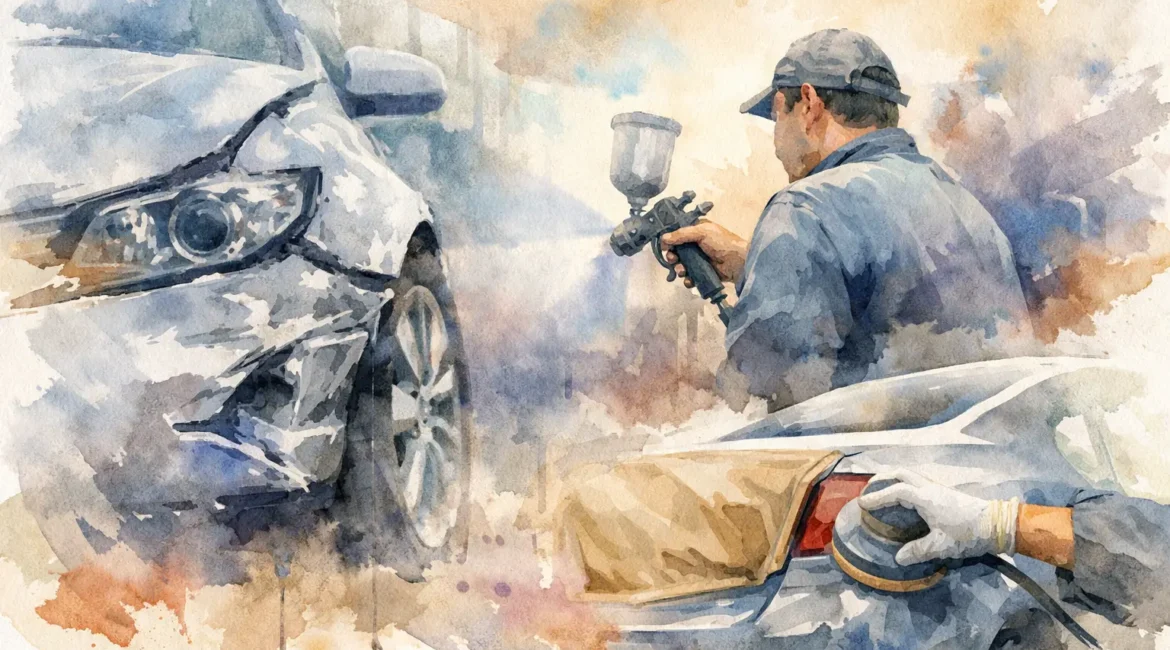
That scrape on the supermarket car park bollard may look minor in daylight, but paint damage can quickly become a bigger and more expensive problem. A dent can also hide broken clips, distorted panels or damage behind the bumper. Knowing the top signs your vehicle needs professional bodywork repairs helps you act before a small cosmetic issue affects safety, resale value or the condition of the car underneath.
For drivers across Glasgow and the surrounding area, the right repair is not always a full panel replacement. It depends on the location, depth and extent of the damage. A professional inspection gives you a clear answer and a repair plan that restores the finish properly.
Top Signs Your Vehicle Needs Professional Bodywork Repairs
Paint scratches that have cut through the clear coat
Light marks that sit on the surface can sometimes be polished out. If you can feel the scratch with a fingernail, see a different colour beneath the paint, or notice bare metal, it needs more than a quick polish. The protective paint layers have been broken, leaving the panel exposed to moisture, road salt and corrosion.
This matters particularly through a Scottish winter. Water gets into the damaged area, rust begins below the surface and paint can start lifting around the original scratch. A localised SMART repair may be enough for a contained area, while deeper or wider damage may need careful preparation and refinishing of the full panel to achieve an even colour match.
Dents with creases, sharp edges or cracked paint
Not every dent needs extensive work. A shallow dent with intact paint may be suitable for a targeted repair. The situation changes when there is a crease, a sharp impact point, stretched metal or cracked paint around the edge.
Creased panels rarely return to their original shape with a simple push from behind. Attempting a home repair can worsen the distortion, crack more paint or leave ripples that become obvious in sunlight. A bodywork specialist can assess whether the panel can be repaired and reshaped, or whether replacement is the better value option.
Rust spots, bubbling paint or flaking around wheel arches
Rust is one of the clearest signs that waiting will cost more. Small bubbles beneath the paint, brown marks at stone-chip sites and flaking paint around wheel arches or sills all suggest corrosion has already started below the visible surface.
Covering it with touch-up paint may improve the appearance briefly, but it does not remove the corrosion. Proper repair means treating the affected metal, cutting out and rebuilding damaged sections where necessary, then sealing and refinishing the area so it is protected again. Early attention can save a repairable panel from becoming a replacement job.
A bumper that is loose, split or sitting out of line
Modern bumpers do far more than improve the look of a vehicle. They contain reinforcement components, mounting points, sensors and, on many vehicles, cameras or parking systems. If your bumper is loose after a knock, has a split, or no longer lines up with the wing or headlight, it should be checked professionally.
A bumper can look mostly intact while clips, brackets or energy-absorbing parts behind it have been damaged. Warning lights, parking sensor faults and a gap that keeps getting wider are all reasons to book an inspection. A professional repairer can establish whether the bumper can be plastic-repaired and refinished or whether a replacement is required.
Panel gaps that have suddenly changed
Look along the joins between the bonnet, doors, boot, wings and headlights. Consistent gaps are usually a good sign. If one edge now sits proud, rubs against another panel or leaves an uneven gap, the vehicle may have suffered more than cosmetic damage.
This is especially relevant after even a low-speed collision. A door that catches, a bonnet that will not close cleanly or a boot that needs force to latch could point to shifted hinges, damaged mounts or distortion around the panel. These issues should not be ignored simply because the car remains driveable.
Cracked, cloudy or misaligned headlights and rear lights
A cracked lamp lens allows moisture inside, which can lead to condensation, reduced brightness and electrical faults. A light that no longer sits flush with the surrounding bodywork may also indicate that mounting tabs or nearby panels have been damaged.
Lighting problems affect visibility and can create an MOT issue. If the damage follows an impact, having the lamp and surrounding bodywork assessed together is the sensible approach. The repair should restore both the secure fit and the finished appearance of the vehicle.
Damage around wheels, arches and alloy wheels
Kerb damage to an alloy wheel can be more than an appearance issue. Deep gouges, cracks, bends or a wheel that loses pressure need prompt attention. Similarly, a damaged wheel arch liner, loose trim or a bent arch after a scrape can allow water and debris into areas that should be protected.
Alloy wheel refurbishment is ideal for many cases of cosmetic scuffing, bringing the wheel back to a clean, smart finish. However, structural wheel damage is different and must be assessed for safety. Do not assume every kerb mark is only cosmetic, particularly if you feel vibration through the steering wheel or notice a tyre pressure warning.
When Body Damage May Affect Safety
Some signs call for more than a routine booking. If the vehicle has warning lights after an accident, fluid leaks, exposed wiring, a wheel sitting at an unusual angle, steering that pulls, or a door that will not close securely, avoid driving it until it has been assessed.
The same applies after a significant impact, even if the exterior damage looks modest. Modern vehicles are designed to absorb energy in specific areas. Damage behind a bumper, around suspension mounting points or within safety systems is not always visible from the outside. A proper inspection protects you, your passengers and other road users.
Why a Professional Finish Is Worth It
DIY kits and touch-up products have a place for very small, temporary marks, but they cannot reproduce the preparation, colour matching and controlled refinishing used in a professional bodyshop. Poorly applied paint often stands out, peels early or lowers the appearance of the vehicle when it is time to sell or return it at the end of a finance agreement.
Professional bodywork repair is about more than hiding the damage. Panels need to be prepared correctly, repaired to the right shape, primed, painted and blended where required. The aim is a durable finish that looks right from every angle, not a patch that only looks acceptable from a distance.
There is also the practical side. Insurance repairs and non-fault accident claims can feel like another problem to manage when you are already dealing with the disruption of an accident. An experienced repairer can help make the process clearer, assess the damage accurately and carry out the work to a high standard without unnecessary delay.
Do Not Wait for Damage to Spread
The best time to arrange bodywork repair is usually sooner than drivers expect. A fresh scratch, small dent or chipped bumper is often simpler to repair than damage that has been exposed to months of rain, road grime and daily use. Taking a few clear photographs after an incident is useful too, particularly if another driver was involved or you may need to make an insurance claim.
At Unique Bodywork, the focus is on practical advice and workmanship that returns vehicles to pre-damage or showroom condition wherever possible. From minor scratches and dent repairs to accident damage, alloy refurbishment and full resprays, the right solution should fit the condition of your car and your budget.
If something does not look, fit or feel right after a scrape or collision, trust that instinct. Booking an inspection now can protect the vehicle you rely on every day and keep a manageable repair from becoming a much larger one.