
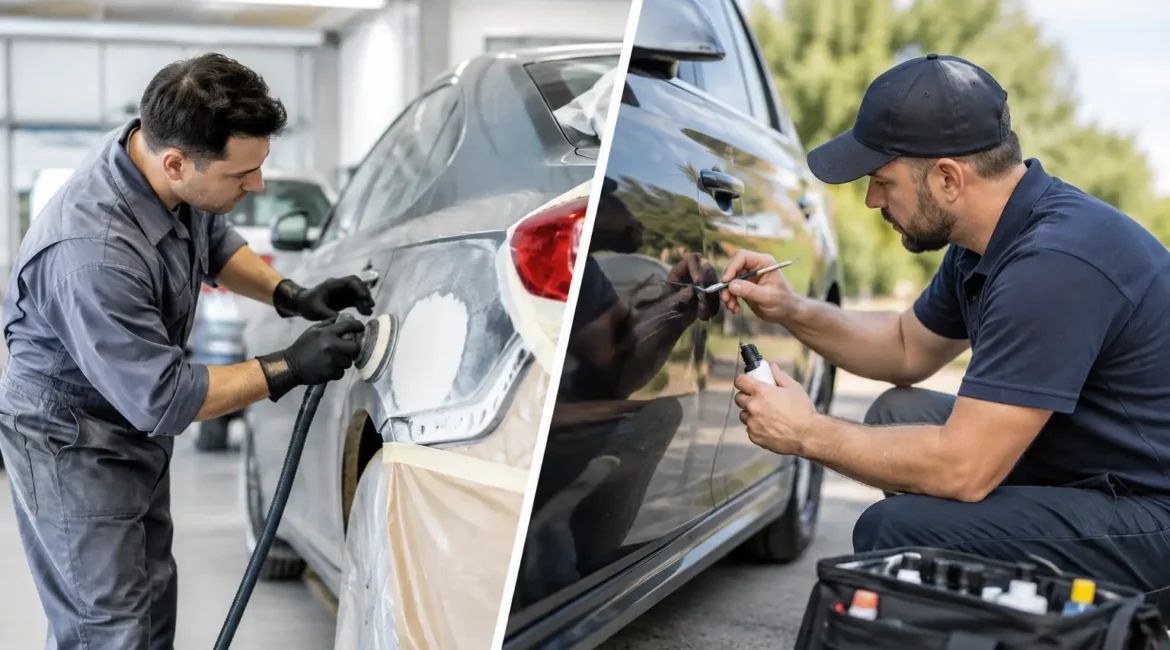
A scuffed bumper in a supermarket car park or a dent picked up on the commute can leave you with the same question: bodyshop versus mobile repair – which is the better choice? The answer is not simply about price or convenience. It depends on the damage, the finish you expect and whether the vehicle needs more than a quick cosmetic touch-up.
Mobile repair services can be useful for small jobs, particularly when getting time off work or arranging transport is difficult. But there are situations where a properly equipped bodyshop is the only sensible option if you want your car restored to pre-damage or showroom condition.
Bodyshop versus mobile repairs: the main difference
A mobile repairer travels to your home or workplace and completes suitable cosmetic repairs on site. These services are commonly used for minor scratches, small dents, bumper scuffs and alloy wheel damage. The appeal is obvious: your vehicle stays where it is, and a small repair may be completed in a matter of hours.
A bodyshop carries out repairs in a controlled workshop environment. This gives technicians access to professional paint-mixing equipment, spray booths, specialist tools, ramps and space to strip, repair and rebuild damaged panels correctly. It also allows the repair to be assessed properly before work begins.
Neither option is automatically right for every driver. A light mark on an older family car may suit a mobile SMART repair perfectly. Damage involving cracked paint, distorted metal, plastic splits, multiple panels or insurance work normally calls for a bodyshop.
When a mobile repair can be a good fit
Mobile work is most effective when the damage is localised and the surrounding panel is in good condition. For example, a shallow trolley dent with no paint damage may be removed without taking the car to a workshop. A small bumper scuff can also be repaired on site if the affected area is limited and there is enough room to blend the paint neatly.
It is often a practical choice for busy drivers who want a presentable result without being without their car for long. For minor damage, it can be cost-conscious too, as the repairer is treating a small area rather than repainting a complete panel.
The quality still depends heavily on the technician, weather conditions and the condition of the vehicle. A good mobile repairer will be honest if the job is beyond what can be repaired properly on a driveway or work car park.
Where mobile repairs have limits
Paintwork is sensitive to dust, moisture, temperature and light. Even an experienced technician cannot fully control those conditions outside. This matters when matching metallic, pearl and modern multi-layer colours, where a slight variation can be more noticeable once the car is back in daylight.
Mobile services can also be restricted by access. A busy roadside, a tight parking space, rain, poor lighting or a lack of power can all affect what is possible. More importantly, an initial dent may hide damage behind a bumper, beneath a wheel arch or around panel fixings. Without removing parts and inspecting the area, it is easy to repair the visible mark while missing the bigger issue.
For anything more than a contained cosmetic repair, choosing convenience over the right repair method can become a false economy.
Why a bodyshop gives you more control over the finish
A professional bodyshop is built for consistency. The vehicle can be inspected indoors, cleaned thoroughly and repaired with the panel prepared to the correct standard. Where necessary, technicians can remove trims, lights, bumpers and interior components rather than masking around them and hoping the edge disappears.
That preparation is what separates a repair that looks acceptable at first glance from one that continues to look right months later. Proper sanding, filling, priming and paint application all matter. So does allowing the repair to cure correctly before the vehicle is polished, rebuilt and checked.
A workshop also makes colour matching more reliable. Paint codes are a starting point, not a guarantee. Age, sunlight, previous repairs and how the paint has weathered can all change the shade on your car. A bodyshop can tint paint, spray test cards and blend into adjoining panels where needed, helping the repair sit naturally alongside the original finish.
For drivers who care about resale value, lease-return standards or simply keeping their car looking its best, that level of control is worth considering.
Better suited to larger and more complex repairs
Bodyshops are the better option for accident damage, deep scratches, cracked bumpers, creased panels, rust repairs, full resprays and vehicle rebuilds. They are also equipped to handle alloy wheel refurbishment and custom bodywork where the finish needs to be even, durable and properly protected.
If your car has been involved in a collision, there may be damage that is not obvious from the outside. A bumper can look like it has only been scraped while brackets, absorbers, sensors or mounting points behind it have been affected. A thorough inspection protects both the appearance of the vehicle and its safe operation.
At Unique Bodywork, repairs are assessed around the actual condition of the car rather than forcing every job into a one-size-fits-all service. That may mean a targeted SMART repair, or it may mean bringing the vehicle into the workshop so the repair can be completed properly.
Is a bodyshop more expensive than mobile repair?
Not always. Mobile repairs can cost less for small, straightforward damage because there is less setup and no need to repaint a larger area. If the damage genuinely qualifies for a local repair, that can be a sensible route.
However, the cheapest estimate is not necessarily the best value. If a colour match is poor, paint starts lifting at an edge or a dent reappears because it was not repaired fully, you may end up paying for the same area twice. A low initial price can quickly lose its appeal when the finish does not last.
A bodyshop quote may be higher because it includes more preparation, materials, controlled painting and time to inspect the car. It may also include work that a mobile repairer cannot safely offer, such as bumper removal, replacement parts, alignment checks or paint blending across adjacent panels.
The useful question is not simply, “What is the cheapest repair?” Ask, “What work is needed for this damage to look right and remain right?” A reputable repairer should explain that clearly before you commit.
Choosing the right option for your vehicle
Start by looking beyond the size of the mark. A small scratch that has gone through the paint can expose metal to moisture. A shallow-looking dent on a door may sit beside a body line that requires careful reshaping. Damage near parking sensors, cameras, lights or wheel arches deserves a closer inspection because those areas often involve parts behind the visible panel.
A mobile repair may be suitable if the damage is minor, contained to one small area and there is no cracking, corrosion, broken plastic or panel distortion. It is particularly useful when your priority is convenience and the vehicle does not require extensive paintwork.
A bodyshop is the stronger choice when you want a near-invisible finish, have a newer vehicle, need insurance repairs or are dealing with impact damage. It is also preferable for valuable cars, lease vehicles and cars with complex paint colours. The more you would notice an imperfect match, the less sense it makes to compromise on the repair environment.
Do not overlook collection, drop-off and insurance support
One reason drivers choose mobile repairs is that they do not want the inconvenience of travelling to a garage. That is understandable, especially after an accident or when you rely on the vehicle every day. But a bodyshop does not always mean disruption.
Vehicle collection and drop-off can make workshop repairs far easier to manage for customers across Glasgow and the surrounding areas. It gives you access to the equipment and finish quality of a bodyshop without having to reorganise your entire week around getting the car there.
If another driver was at fault, it is also worth getting advice before accepting the first repair route offered to you. Non-fault accident claims can involve insurers, recovery, replacement transport and repair approval. A repair specialist that understands the process can help make sure the damage is recorded correctly and the vehicle is repaired to the right standard, rather than rushed through the quickest available option.
The best repair is the one that suits the damage, protects the value of your car and gives you confidence every time you walk back to it. If you are unsure, arrange an inspection first. A clear assessment will tell you whether a mobile repair is enough or whether your car deserves the controlled finish of a proper bodyshop.