
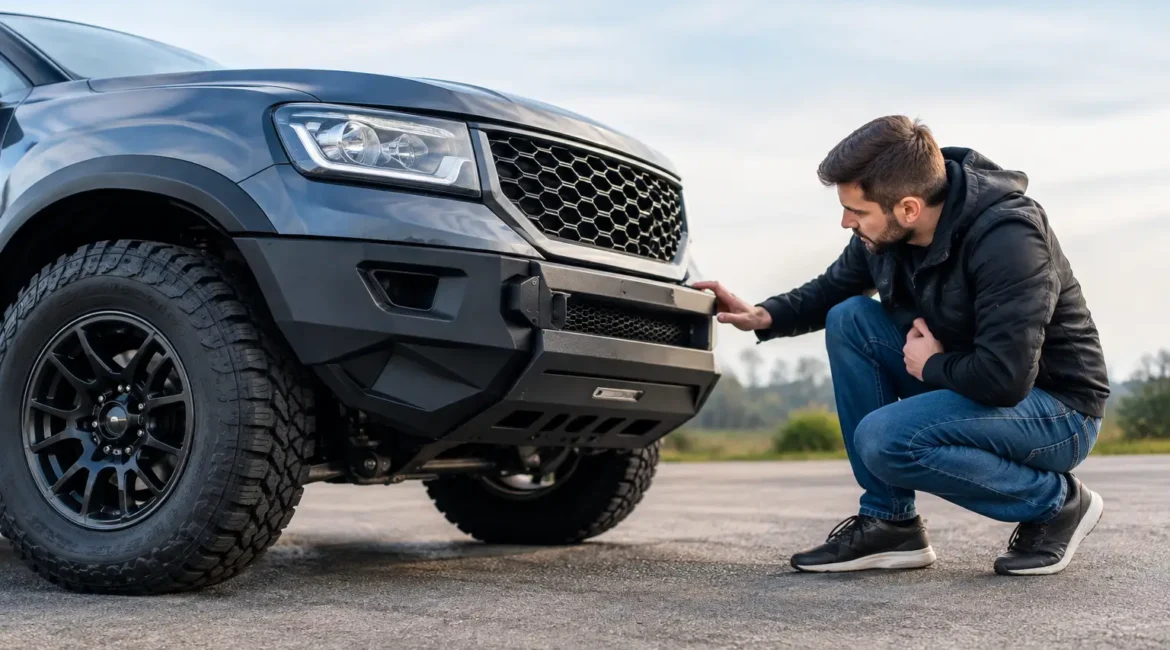
A cracked bumper after a parking knock can make a replacement seem simple. For drivers fitting a body kit, splitter or more aggressive front end, the question is more involved: are aftermarket bumpers road legal? In the UK, they can be – but only when the finished vehicle remains safe, roadworthy and compliant with the rules that apply to lights, number plates, sharp edges and vehicle condition.
The bumper itself does not need to look factory standard to be legal. What matters is how it is made, how securely it is fitted and whether it interferes with any safety-critical parts of the car. A cheap, poorly fitted bumper can turn a cosmetic upgrade into an MOT failure, an insurance problem or a genuine risk to other road users.
Are aftermarket bumpers road legal in the UK?
An aftermarket bumper can be road legal if it is securely mounted, does not create dangerous projections, keeps required lights and number plates visible, and leaves the vehicle in a safe condition. This applies whether you are replacing accident damage with a non-genuine panel or fitting a custom body kit for a different look.
There is no single sticker that automatically makes every aftermarket bumper legal. Some parts are sold as “road legal”, “MOT friendly” or “show use only”, but those descriptions are not a substitute for a proper inspection once the part is on the car. The vehicle is assessed as a whole.
A well-made replacement that follows the original bumper shape and mounting points is usually straightforward. A heavily modified bumper with protruding bars, exposed brackets, very low extensions or altered light positions needs much more care. The further a design moves from the original layout, the more likely it is to affect compliance, durability and day-to-day usability.
What makes a bumper illegal or unsafe?
The main issue is not whether a bumper is aftermarket. It is whether the installation leaves the car dangerous or fails a roadworthiness check. MOT testers inspect visible condition and security, while the police can take action if a vehicle is clearly unsafe to use on the road.
Secure fitment matters as much as the part
A bumper must be properly attached. Loose corners, missing fixings, cracked mounting tabs and panels that move excessively are not just untidy – they can cause an MOT issue where they are likely to detach or create a hazard.
A professional fitting should use suitable mounts and fixings rather than cable ties, self-tapping screws pushed into unsuitable areas or adhesive alone where the bumper was designed to be bolted in place. A bumper also needs correct panel gaps. If it rubs on a tyre at full steering lock, catches on the bonnet or boot lid, or sits proud of the wings, it is not finished properly.
Sharp edges and protrusions are a red flag
The outside of the car should not present a needless danger to pedestrians, cyclists or anyone brushing past it. Cracked fibreglass, exposed metal brackets, jagged cut-outs and unsecured trim can all be a problem.
Custom bumpers and splitters are especially vulnerable after speed bumps, steep driveways and kerbing. Even a legal installation can become unroadworthy after one hard impact if the lower edge breaks or starts hanging down. Inspect it regularly rather than waiting for MOT time.
Lights, reflectors and number plates must remain compliant
An aftermarket bumper must not cover, reposition or obscure required equipment. This commonly catches drivers out when fitting a bumper with different vents, a deeper lower lip or a smoothed-over number-plate recess.
Your front and rear number plates must remain clearly visible and securely fixed. Required lamps and reflectors must be present, visible and working correctly. If a bumper conversion changes the position of fog lamps, daytime running lights, indicators or reflectors, the replacement arrangement must still meet the relevant requirements.
Be careful with imported body kits. A bumper designed for another market may not have the right openings for UK number plates, may place reflectors differently or may be intended for a model with a different lighting arrangement. Making it fit is not the same as making it compliant.
Front bumpers, sensors and pedestrian protection
Modern front bumpers do far more than cover the front of the car. Behind the painted skin may be impact absorbers, reinforcement bars, parking sensors, radar units, cameras, headlamp washers and active grille shutters. On some models, the bumper shape and material also affect driver-assistance systems.
Replacing a damaged cover with the correct quality part is one thing. Modifying the structure behind it, removing crash components or fitting an unsuitable bumper to a car with radar-based emergency braking is another. A sensor may need recalibrating after removal or repair, even if no dashboard warning appears straight away.
Do not assume that deleting parking sensors, washers or cameras is harmless because the car still drives. If equipment required for the vehicle’s lighting system has been affected, or if a warning light shows a fault, you may face an MOT failure. You could also compromise safety features you rely on in normal traffic.
For this reason, a bodywork specialist should check what sits behind the bumper before ordering parts. A bargain bumper that cannot accommodate the original sensors and trim can become more expensive than the correct option once alterations, paintwork and rectification are included.
Rear bumpers, exhausts and towing equipment
Rear bumper modifications can create their own problems. A diffuser-style insert must not sit so close to the exhaust that heat damages the material. Exhaust tips should not melt the bumper, and any cut-outs should have a clean, secure finish.
If you have a tow bar, parking sensors or a reversing camera, check that the new bumper is compatible. Covering sensors, fitting an incorrect diffuser or leaving a tow-bar electrics socket loose can affect both practical use and roadworthiness. If the bumper has been cut around a tow bar, the cut edge should be neat and stable, not cracked or sharp.
Will an aftermarket bumper pass an MOT?
It can. An MOT is not a judgement on whether a car looks modified; it is a check of minimum roadworthiness standards. A professionally fitted aftermarket bumper will often pass without issue if it is secure, has no dangerous damage and does not interfere with required lights, plates or other relevant equipment.
However, an MOT pass does not make every modification permanently legal. The car still has to be safe whenever it is driven. Equally, an MOT tester may not dismantle the bumper to identify hidden poor workmanship. If a repair has affected crash protection, sensors or mounts, it should be put right properly rather than relying on the next test to reveal a problem.
Tell your insurer before fitting one
A bumper change can count as a vehicle modification, particularly when it changes the appearance from standard or involves a body kit. Tell your insurer before fitting it, even if the part is replacing damage and looks close to original. The insurer may simply note the change, alter the premium or ask for photographs and details of the work.
Failing to declare a modification can create difficulties if you need to claim after an accident. It may also affect the agreed value of an enthusiast car with quality custom work. Keep invoices, photographs and details of the parts used, especially where the work involves repainting, sensors or body kit fitting.
Choosing the right replacement bumper
The lowest advertised price is rarely the full cost. Poorly moulded aftermarket panels can need extensive preparation to achieve acceptable fitment, and thin or brittle material may crack sooner than a better-quality part. A panel that needs heavy modification around headlights, grilles or wheel arches can cost more in labour than a properly made alternative.
Before going ahead, confirm that the bumper is designed for your exact model, year and trim level. Check whether it supports your parking sensors, washer jets, grilles, fog lamps and trim pieces. If the car has suffered accident damage, the mounts and reinforcement behind the cover should also be inspected. A new bumper cannot hide a bent bracket or damaged crash bar safely.
For Glasgow drivers looking to repair collision damage or fit a body kit, Unique Bodywork can assess the car before work begins and advise on a finish that looks right, fits correctly and keeps the vehicle practical for the road.
A bumper should improve the car, not introduce a problem every time you meet a speed bump, book an MOT or speak to your insurer. Choose a quality part, have it fitted properly and deal with any damage quickly – that is how an aftermarket bumper can look the part while staying safe and roadworthy.