
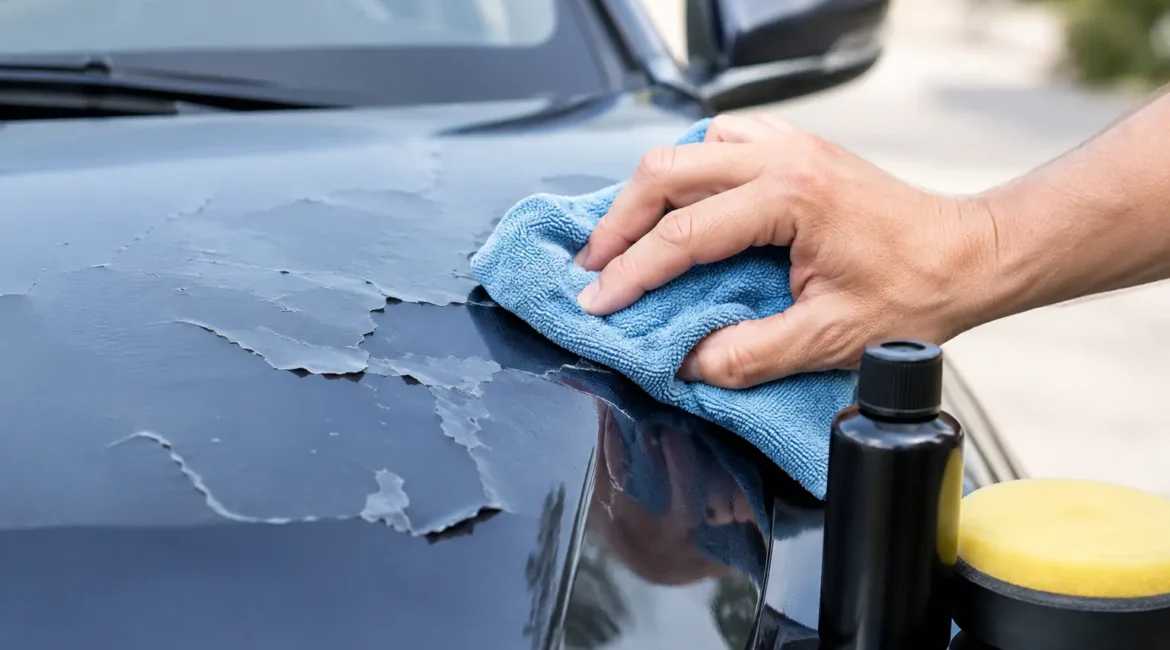
Clear coat rarely starts peeling at a convenient time. One small dull patch on the bonnet, roof or spoiler can soon turn into flaky edges and exposed paint that make an otherwise tidy car look neglected. The best remedies for peeling clear coat depend on how far the failure has spread, but the honest answer is simple: a lasting repair normally means refinishing the affected panel properly.
You may see online fixes promising a quick shine or an easy aerosol repair. Some can make a car look better briefly, while others risk trapping damage underneath or leaving a patchy finish. Knowing the difference helps you spend money once, rather than paying for the same area to be redone later.
Why clear coat starts to peel
Most modern paintwork has a coloured base coat protected by a clear lacquer layer. That clear coat gives the paint its gloss, depth and resistance to sun, rain, road salt and everyday washing. When it breaks down, it loses its bond with the colour beneath and begins lifting away.
Age and ultraviolet exposure are common causes, particularly on horizontal panels such as roofs, bonnets and boot lids. Glasgow weather brings its own challenges too: repeated wet-dry cycles, winter grime and road salt can speed up deterioration where paintwork is already weakened. Poor previous repairs, harsh cleaning chemicals, aggressive machine polishing and stone chips can also contribute.
Once clear coat is visibly lifting, it will not reattach itself. Wax, polish and sealant can improve the appearance of healthy lacquer nearby, but they cannot bond a detached layer back to the paint.
The best remedies for peeling clear coat
The right approach comes down to the condition of the panel. A professional inspection is worthwhile because what looks like a small cosmetic issue can sometimes reveal paint failure across a much wider area.
1. Protect a very small affected area
If the peeling is limited to a tiny edge, perhaps around a stone chip or on an older panel awaiting repair, gentle washing and protection may slow further deterioration for a short period. Use a pH-neutral car shampoo, avoid pressure-washing directly at the lifting edge, and apply a quality wax or paint sealant to the surrounding intact paintwork.
This is protection, not restoration. It may buy time if you are arranging a repair, but it will not stop a failed lacquer layer from continuing to lift. Avoid polishing over the damaged spot, as the pad or cloth can catch an edge and pull away more clear coat.
2. Use touch-up only for minor chips, not broad peeling
Touch-up paint can be useful where a small chip has exposed the colour or metal below. Its main job is to reduce the risk of corrosion, rather than recreate a flawless factory finish. Applied carefully, it is a sensible stop-gap on a tiny defect.
It is not a remedy for widespread lacquer peel. Brushing or spraying touch-up clear coat over loose, chalky or feathering lacquer leaves an obvious ridge and gives the new coating an unstable surface to sit on. The result often peels again, sometimes within months.
3. Sand and reclear a sound panel – only in specific cases
A panel can occasionally be sanded and re-cleared if the existing clear coat is still firmly bonded, with only superficial oxidation or isolated damage. This is a specialist judgement. The damaged area must be assessed carefully, then prepared evenly so the fresh lacquer has a stable surface.
The trade-off is that modern paint layers are thin. Sanding too heavily can cut through the remaining clear coat or even the colour coat, turning a local repair into a full repaint. If there is visible lifting in several places, reclearing alone is usually false economy because the failure underneath has not been removed.
4. Repaint the affected panel for the proper long-term fix
For clear coat that is peeling across a bonnet, roof, wing, door or boot lid, the dependable remedy is to strip back the failed material, prepare the panel correctly, apply colour where needed and finish it with fresh clear coat. This gives the new paint system the sound foundation it needs.
A good bodyshop will also blend colour into adjacent panels when necessary. Paint can fade slightly over time, so painting one panel in isolation may not always produce the best match. Blending is not automatically required, but it is often the difference between a repair that merely looks acceptable and one that looks right in daylight.
This route costs more than an aerosol can, but it protects the car’s appearance, helps retain resale value and avoids the repeated expense of temporary fixes. If peeling has reached the coloured paint or bare metal, prompt professional attention is especially worthwhile.
What not to do with peeling lacquer
The temptation is to hide the problem quickly, especially before selling a vehicle or after noticing a new patch. A few common approaches usually make matters worse:
- Do not spray fresh clear coat directly over flaking lacquer. New paint is only as secure as the layer beneath it.
- Do not use cutting compound or machine polish on peeling edges. It can remove more loose material and enlarge the damaged area.
- Do not pick at the flakes. It is difficult to stop at the failed section, and the edge can travel further than expected.
- Do not rely on vinyl wrap to conceal active paint failure. Loose lacquer can affect adhesion and may continue deteriorating underneath.
There is also a practical safety point. Aerosol paints, solvents and sanding dust require suitable protective equipment, proper ventilation and controlled preparation. A driveway repair can easily lead to overspray, contamination and a finish that looks worse once it dries.
How to tell whether a panel needs repainting
Peeling clear coat usually has a distinctive look. The surface may appear milky, cloudy or dull before it starts flaking. You may see sharp, irregular edges where glossy lacquer meets a flat, faded section. If the panel feels rough, looks white in places, or changes appearance dramatically when wet, the coating is likely failing.
A simple check is to wash and dry the panel, then view it from several angles in natural light. If the defect disappears when wet but returns as it dries, that can indicate oxidation or failing clear coat rather than surface dirt. Do not use this as a reason to keep applying products, though. It simply helps explain why polish has not solved the issue.
The repair becomes more urgent if you can see the coloured base coat fading, if bare metal is exposed, or if the damage is on a high-visibility area. Roof and bonnet failures can spread quickly because they take the most sun and weather.
Choosing a repair that suits your car
Not every car needs a full respray. If only one panel has failed, a targeted panel repair is often the sensible, cost-conscious option. For an older daily driver, the aim may be a tidy, durable finish at a competitive price. For a newer vehicle, a cherished car or one being prepared for sale, colour matching and blending may matter more.
Ask the repairer whether the panel can be saved with preparation and lacquer, or whether the base coat has deteriorated and requires repainting. You should also ask what preparation is included, whether adjacent panels may need blending, and how the repaired finish should be cared for afterwards. Clear answers are a good sign that the work is being planned properly rather than guessed at.
For drivers across Glasgow and the surrounding area, Unique Bodywork can assess peeling lacquer alongside dents, scratches and other cosmetic damage, then recommend the repair that makes sense for the vehicle and budget. Collection and drop-off can also take some of the hassle out of getting paintwork sorted.
Keeping fresh paintwork looking its best
After repainting, follow the bodyshop’s curing advice. Fresh paint needs time before it should be waxed, polished or exposed to strong chemicals. Once fully cured, regular gentle washing, prompt removal of bird droppings and tree sap, and periodic protection will help preserve the gloss.
Parking under cover where possible helps, but it is not essential for every owner. Consistent, sensible care matters more than expensive products. If you spot dullness, chips or a lifting edge early, have it checked before a small repair becomes a full-panel job.