
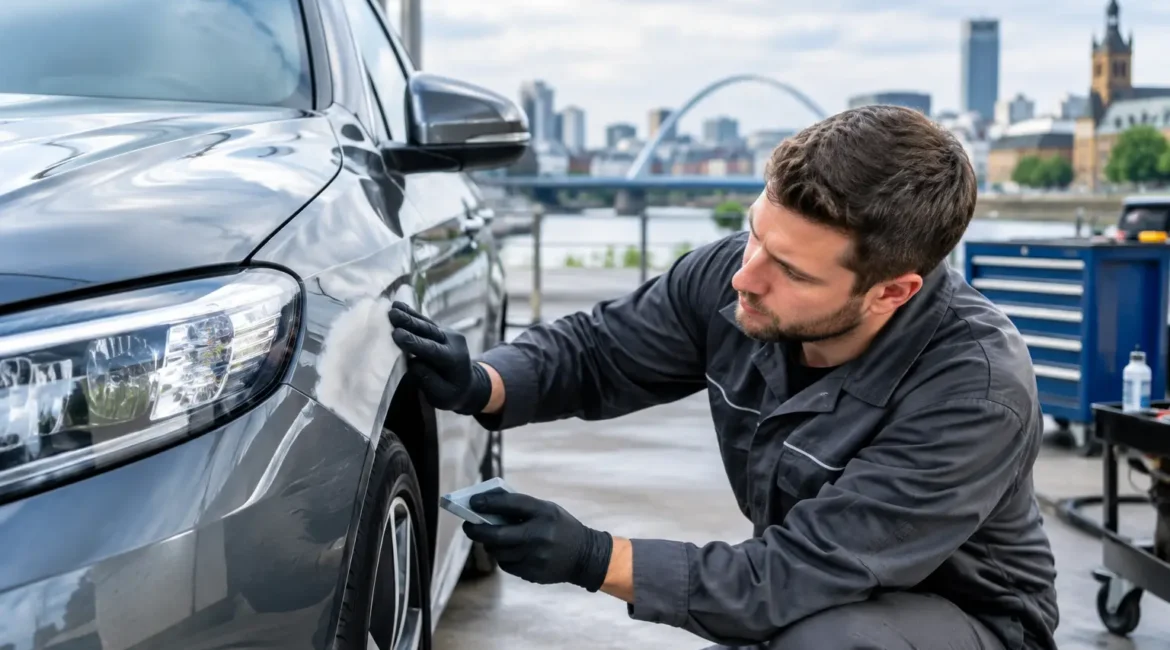
A scuffed bumper after a tight supermarket car park manoeuvre, a crease in the door, or paint damage after an accident can make an otherwise reliable car look tired fast. The best car body repair options are not always the biggest or most expensive repair. The right choice depends on the damage, where it is, the age and value of your vehicle, and whether the work needs to go through an insurer.
For drivers across Glasgow and the surrounding area, a proper inspection is the starting point. What looks like a simple scratch can have damaged paint layers underneath, while a dent that appears severe may be repaired without replacing the panel at all. Choosing the correct method protects your car’s appearance, resale value and, where relevant, its safety.
Which of the Best Car Body Repair Options Is Right for You?
Body repairs generally fall into two groups: localised cosmetic repairs for smaller areas of damage, and more extensive repairs for accident damage, corrosion or badly distorted panels. A reputable bodyshop should explain which route is suitable and why, rather than treating every mark as a full-panel repaint.
Paintless dent removal for clean dents
Paintless dent removal, often called PDR, can be an excellent option when a panel has been pushed in but the paintwork is still intact. A skilled technician carefully massages the metal back into shape from behind the panel, avoiding filler and paint wherever possible.
It works particularly well for parking dents, trolley knocks and shallow creases on doors, wings and bonnets. It is usually quicker and more cost-effective than conventional bodywork because there is no painting stage. However, PDR is not suitable when the paint has cracked, the panel edge is damaged, or the metal has been stretched too far. Aluminium panels and areas with restricted access can also need a different approach.
SMART repairs for scratches, scuffs and bumper damage
SMART repairs are designed for small, contained areas of cosmetic damage. They are commonly used for bumper scuffs, light scratches, mirror casings, small paint chips and minor damage around a wheel arch or door corner.
Instead of repainting an entire bumper or panel, the damaged section is prepared, repaired and colour-matched into the surrounding paintwork. For everyday wear and tear, this can deliver a high-quality finish with less downtime and lower cost than a full respray. It is often a sensible choice when you are preparing a car for sale, returning a lease vehicle, or simply want it looking right again without overpaying for work it does not need.
The trade-off is that local repairs rely heavily on colour matching and blending skill. Metallic, pearlescent and older faded paint can be more difficult to match perfectly. A good bodyshop will assess the colour honestly and recommend a wider repair where that is the only way to achieve a consistent finish.
Traditional dent, filler and paint repair
When paint is broken or a dent is deeper, traditional panel repair is often the best route. The damaged area is straightened as far as possible, shaped carefully, filled only where required, then primed, painted and lacquered. The surrounding paint may be blended to prevent a visible difference in shade.
This is the right option for deeper door dents, scraped wings, damaged sills and impact marks that go beyond a quick cosmetic touch-up. It takes more preparation than a SMART repair, but good preparation is what separates a repair that lasts from one that starts to show through after a few months.
Ask how the panel will be prepared and whether the repair includes proper priming, colour matching and lacquer application. Cheap repairs can look acceptable on collection day but fail when poor materials, rushed drying or inadequate corrosion protection come into play.
Panel replacement after heavier damage
Not every panel should be repaired. If a bumper has split badly, a door is folded along its strengthening bar, or a wing is badly torn or corroded, replacement may be safer and more economical than attempting to rebuild it.
Replacement can involve genuine manufacturer parts, approved aftermarket parts or quality used parts, depending on the vehicle and repair budget. There is no single right answer. Genuine parts can offer the most straightforward fit and specification, while a carefully sourced used panel can make sense on an older car where controlling the bill matters. The key is that replacement parts are fitted accurately and refinished to match the vehicle.
Full resprays and larger paintwork restoration
A full respray is a major job, not a shortcut for isolated scratches. It is best suited to vehicles with widespread lacquer peel, multiple areas of poor previous paintwork, extensive sun fade, restoration needs, or a planned colour change.
The finish can transform a car, but the cost reflects the labour involved. Trim, lights, handles and exterior fittings may need to be removed or masked correctly, panels require extensive preparation, and the paint needs controlled application. If you only have damage on one bumper or door, a targeted repair will usually be better value. If the car has tired paintwork throughout, a full respray may be the investment that brings it back towards showroom condition.
Repairs After an Accident: Quality Matters More Than Appearance
After a collision, visible scratches are not the only concern. Bumpers can hide damaged brackets, broken clips, parking sensors and impact absorbers. A knock to a wheel can affect alloy condition, tyre wear, steering alignment or suspension components. In more serious cases, the vehicle’s structure may need measuring and specialist repair before any cosmetic refinishing begins.
Do not judge accident damage solely by what you can see from the driveway. A professional assessment should identify the full scope of work before repairs start. This helps avoid unpleasant extras later and gives you a clearer basis for an insurance claim.
For non-fault accidents, support with the claim process can remove a lot of pressure at a time when you are already dealing with disruption. Keep photographs, details of the other party and any correspondence, but do not feel forced into using the first repair route offered without understanding your choices. The quality of the finished repair, the timescale and how your vehicle is handled all matter.
Do Not Forget Alloy Wheel Refurbishment
Kerbed alloys can make a well-kept car look neglected, even after the bodywork has been repaired. Wheel refurbishment can treat light kerb damage, peeling finishes and surface corrosion, bringing the wheels back into line with the rest of the vehicle.
The right method depends on the wheel finish. A standard painted alloy can often be repaired and refinished effectively, while diamond-cut wheels require a different process to restore the machined face. Severe cracks, buckles or structural damage are a separate safety issue and may mean replacement is the appropriate option. Cosmetic refurbishment should never be used to disguise a wheel that is unsafe to drive on.
How to Choose a Bodyshop Without Guesswork
Price matters, but the cheapest estimate is rarely useful if it leaves you with poor paint matching, visible repair edges or a car that spends longer off the road than promised. Look for a bodyshop that takes the time to inspect the damage, gives a clear explanation of the proposed repair, and sets realistic expectations around turnaround.
Convenience also has real value. Collection and drop-off can make a major difference if you rely on your car for work, school runs or family commitments. For smaller repairs, same-day service may be possible, but it depends on panel preparation, paint curing time and the extent of the damage. A trustworthy repairer will not promise a rushed finish simply to win the job.
Experience is equally important, especially with modern paint systems, bumper plastics, parking sensors and complex accident damage. At Unique Bodywork, the focus is on matching the repair method to the vehicle rather than selling more work than necessary. That means a localised repair when it will produce the right result, and a more thorough solution when the damage genuinely calls for it.
Before authorising work, ask whether the estimate covers all preparation and paintwork, whether replacement parts are included where needed, and what happens if further damage is found after stripping the panel. Clear answers early on make the process far less stressful.
Your car does not need to carry the evidence of every car park knock or accident. Get the damage assessed properly, choose the repair that suits the condition of the panel, and give yourself the best chance of a finish you will be happy to see every time you walk back to the car.