
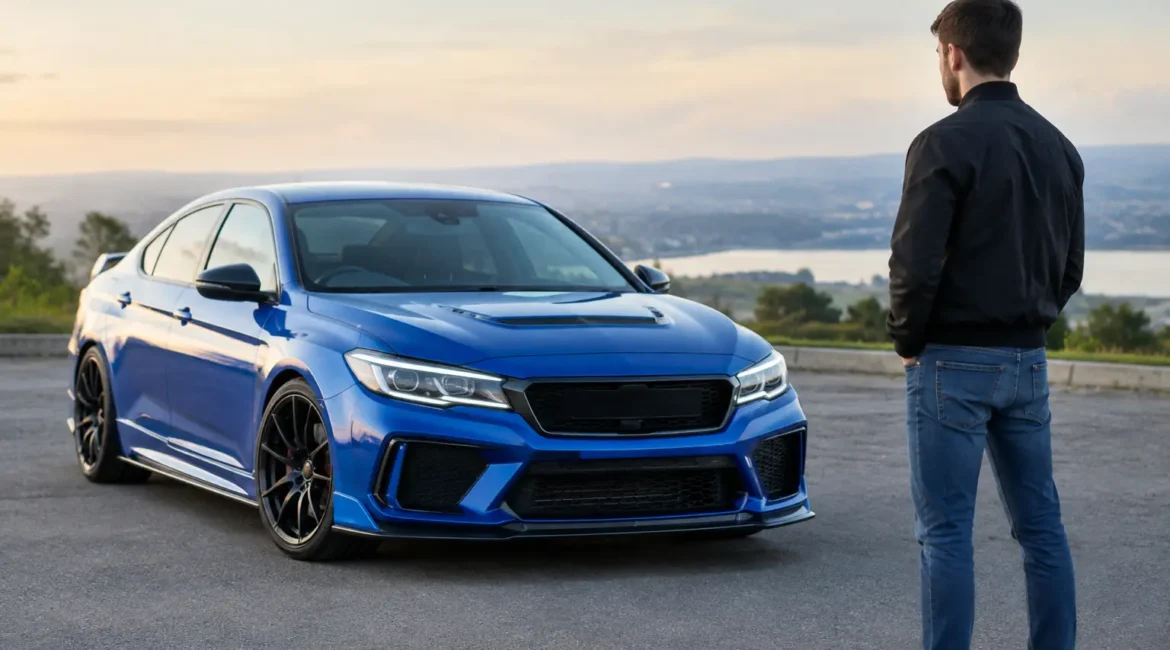
A body kit can turn a standard car into something far more personal, whether you are fitting a subtle front splitter or changing the whole look with new bumpers and side skirts. But body kit legality is not simply a question of whether the parts fit. Your car still needs to be safe on the road, pass its MOT, display its registration plates correctly and remain properly insured.
For drivers around Glasgow, the most sensible approach is to plan the styling work around the rules from the beginning. A well-fitted kit should look like it belongs on the vehicle, hold up to daily driving and avoid turning an upgrade into an MOT failure, insurance problem or expensive repair.
Is fitting a body kit legal in the UK?
In most cases, yes. There is no blanket law banning aftermarket body kits in the UK. You can change bumpers, side skirts, spoilers, splitters, diffusers and other exterior trim, provided the finished vehicle remains roadworthy and complies with the relevant construction, lighting and registration requirements.
The legal test is not usually about the brand of kit or whether it is factory supplied. It is about the condition and effect of the modification. A kit that is securely mounted, has no dangerous projections, does not obscure lights or number plates, and does not create a hazard for pedestrians or other road users is far less likely to cause trouble.
This is why professional fitting matters. A poorly aligned bumper, a splitter hanging loose or a sharp fibreglass edge can take an otherwise good-looking modification into unsafe territory. It can also make a minor kerb strike far more damaging than it needs to be.
The roadworthiness rules that matter most
Bodywork must be secure and must not have any feature likely to injure a person coming into contact with the vehicle. In practical terms, avoid sharp, unfinished edges, loose panels, exposed fixings and components that stick out beyond the car in a way that creates a risk.
A very low front splitter is not automatically illegal, but it needs realistic ground clearance for the roads you use. Glasgow’s speed bumps, steep driveways, potholes and kerbs can quickly crack a low-quality fitting. Once a part is split, loose or dragging, it is no longer just a cosmetic issue.
Width also matters. Wheel arch extensions and wide-body kits must not leave tyres protruding dangerously beyond the bodywork. The wheels need suitable coverage, and altered arches should be fitted properly rather than bonded on as an afterthought. If your wider setup affects steering, suspension travel or tyre clearance, it needs checking before the car goes back on the road.
A rear spoiler or diffuser should also be secure and positioned so it does not interfere with lights, the rear plate or the driver’s view. Large wings may be popular on show builds, but a road car has to work safely at motorway speed, in poor weather and through everyday car parks.
Bumpers, lights and number plates
Many body kit legality problems start when a new bumper changes the position of standard equipment. Headlamps, indicators, reflectors, fog lamps and registration plates must remain visible and fitted in the correct way. If a bumper design covers part of a lamp, pushes a plate into an unreadable position or removes required reflectors, the modification may fail its MOT or attract attention on the road.
Do not assume that daytime running lights, LED strips or tinted lamp covers are acceptable just because they are widely sold. Lighting regulations are specific, and fitting an accessory incorrectly can create issues with colour, brightness, positioning or operation. Tinted headlights and rear lights are particularly risky because they can reduce visibility and affect the beam pattern.
Your front and rear number plates must be clearly visible, securely fixed and illuminated where required. A plate mounted at an extreme angle, tucked into a grille opening or partly hidden by a splitter is not a clever styling detail if it cannot be read properly.
Will a body kit pass an MOT?
An MOT is not a general approval certificate for every modification. However, it does assess issues that body kits can affect, including the security and condition of bodywork, dangerous exterior projections, lights, registration plates and the overall roadworthiness of the vehicle.
A professionally fitted kit with sound fixings and smooth edges is unlikely to cause an MOT problem on its own. The concern is whether it introduces a defect. For example, a bumper that is insecure, a sharp damaged skirt, a missing reflector or a non-compliant lamp can all lead to a failure or advisory.
It is worth remembering that MOT standards are the minimum. A car may scrape through a test yet still be inconvenient to live with if its front bumper grounds constantly or the paint around a poorly fitted kit begins to crack. Good preparation protects both the appearance of the car and its resale value.
Insurance: declare the modification before fitting it
A body kit is a vehicle modification and should be declared to your insurer. Even if the kit does not increase performance, it can change the vehicle’s value, repair cost and theft risk. Insurers need an accurate record of what has been fitted.
Do this before booking the work, not after a claim. Some insurers will cover a body kit at little or no extra cost, while others may change the premium, impose conditions or decline to cover certain modifications. The answer depends on the car, your age and driving history, where it is kept, and the type and value of the parts.
Be specific when describing the work. Tell the insurer whether the kit includes replacement bumpers, skirts, a spoiler, paintwork, wider arches or lighting changes. Keep invoices, photographs and details of the parts used. If the car is damaged, this evidence makes it easier to establish what was fitted and what it is worth.
If you are buying a used car with a kit already installed, do not assume the previous owner told their insurer. Declare the modifications when arranging your own cover.
Do you need to tell DVLA?
A straightforward body kit does not normally require a DVLA update. The main change that commonly needs recording is a vehicle colour change, especially after a full respray. Major structural alterations or a conversion that genuinely changes the vehicle’s identity may also require further checks.
That said, a heavily modified car can sit in a grey area if the work goes far beyond bolt-on styling. If you are undertaking a full rebuild, radical wide-body conversion or changing major structural elements, get advice before the work begins. Keeping paperwork, photographs and receipts is sensible for insurance, future sale and any questions over the vehicle’s specification.
Choosing a kit that works on a daily driver
The cheapest kit is rarely the best value once fitting, paint, repairs and replacement parts are considered. Poorly made fibreglass can need extensive preparation to sit correctly, while thin plastic can distort with heat and vibration. A quality kit designed for your exact model gives the best starting point, but even a good kit needs careful trial fitting before paint.
Think about how you actually use the car. A deep splitter may suit a weekend show car, but it may not suit a daily commute through tight streets, multistorey car parks and uneven roads. Side skirts need enough clearance to avoid repeated kerb damage. A dramatic rear diffuser may look right with a particular exhaust setup but awkward if it obstructs access to a towing point or sits too close to the ground.
The finish matters as much as the styling. Correct panel alignment, secure mounting points and paint matched to the rest of the car make the difference between a purposeful upgrade and a kit that looks added on. If a part needs to be removed for future repairs, it should be possible without damaging surrounding paintwork or hidden fixings.
A sensible check before you commit
Before fitting a body kit, confirm that the parts are intended for your exact vehicle, ask how they will be secured and check whether they affect lights, plates, sensors or parking cameras. Discuss ground clearance and wheel clearance if the kit includes splitters, arch extensions or a wider stance. Finally, contact your insurer with the full specification and keep its confirmation.
At Unique Bodywork, custom bodywork is approached with the same attention to fit and finish as accident repair. The aim is not simply to make a car look different for a photograph. It is to create a result that is safe, properly finished and built to stand up to everyday use.
The right body kit should give you confidence every time you walk back to your car, not leave you worrying about the next MOT, insurance renewal or speed bump. Choose parts carefully, have them fitted properly and let the finished car make the statement.