
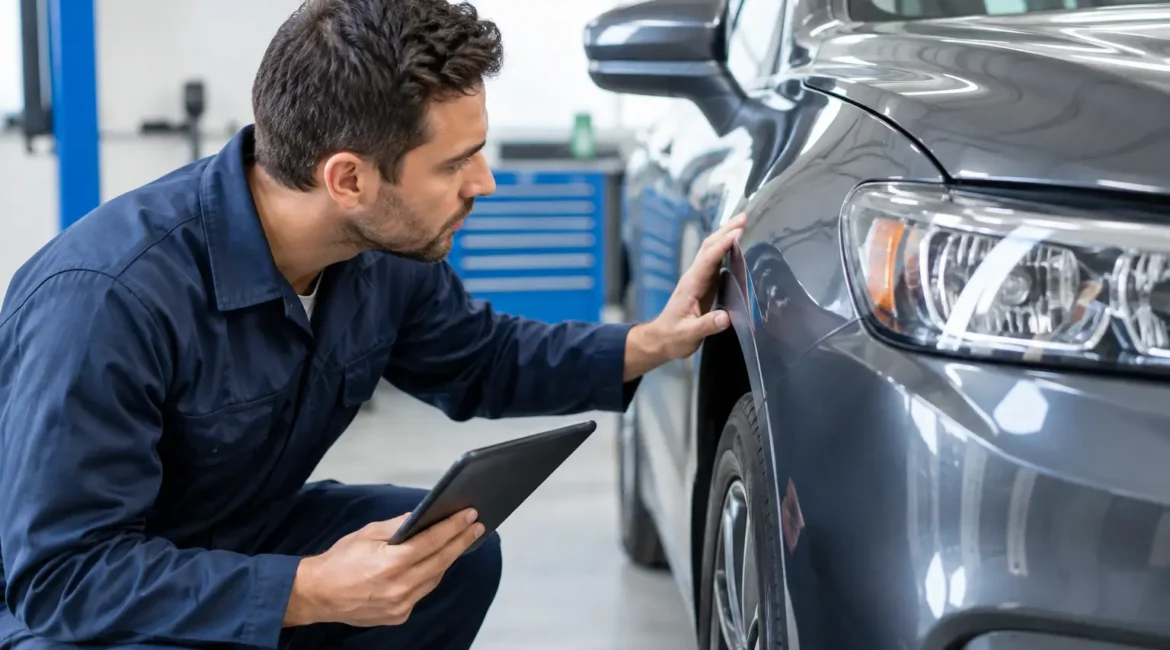
Your car may look fine at first glance when you collect it, especially if it has been washed and polished. Knowing how to inspect repair quality properly means looking beyond the shine before you drive away. A good body repair should restore the vehicle’s appearance, fit and function so well that the damaged area does not draw your eye.
You do not need to be a paint technician or mechanic to carry out a sensible handover check. Take ten unhurried minutes, inspect the car in decent light, and ask questions if anything does not look or feel right. It is far easier for a bodyshop to review a concern while the vehicle is still on site than after several days of driving.
Inspect repair quality before you leave
Try not to collect your car in the rain, at night, or in a poorly lit parking area if you can avoid it. Water, shadows and artificial light can disguise differences in paint colour, light scratches and uneven panel surfaces. If collection has to happen at an awkward time, use your phone torch and arrange to look again in daylight as soon as possible.
Start by standing a few steps back from the car. Look along each side rather than directly at it. Reflections from windows, buildings or a straight line in the car park can help you spot ripples, dents or a panel that sits slightly proud of the surrounding bodywork. Then walk around the vehicle slowly and compare the repaired section with the panels beside it.
The goal is not to search for imaginary faults. Modern paint and panel repairs involve blending, refinishing and careful refitting, so minor differences in texture can occasionally be visible under very close inspection. What you should not accept is a difference that is obvious in normal daylight or affects how the vehicle operates.
Check the paint match and finish
Paintwork is usually the first thing people notice. A quality repair should match the surrounding colour from more than one angle. Metallic, pearl and three-stage colours can appear lighter or darker depending on where you stand, which is why experienced refinishing work often includes blending into adjacent panels rather than painting one isolated area.
Look at the repair from the front, side and rear. Pay particular attention to the edge where the repaired panel meets the original paint. There should be no clear line, patchy shade or sudden change in gloss. Check this in daylight if possible, because a colour can look accurate under workshop lighting but show a difference outside.
Run a clean hand lightly over the surface. It should feel smooth and consistent. A little texture, often called orange peel, is not automatically a poor repair – factory paint itself is not always perfectly flat. The concern is a repaired panel that looks noticeably rougher, duller or wavier than the rest of the car.
Also look closely around handles, lights, trim, wheel arches and panel edges. Overspray on rubber seals, glass, badges or plastic trim is a sign that masking or finishing has not been carried out carefully. Dust particles trapped in the clear coat, paint runs, sanding marks and polish residue in gaps should also be raised.
Do not judge colour from one photo
Phone photos can make a paint match look better or worse than it is. Camera exposure, wet paint and reflected light all distort colour. Your own view outdoors is more useful. If you are uncertain, ask the repairer to bring the car into a different light or show you the panel beside an undamaged area.
Look at panel gaps, alignment and trim
After accident damage, dents or panel replacement, the fit of the vehicle matters just as much as the finish. Check the gaps around the bonnet, boot, doors, wings, bumpers and lights. They do not need to be identical to the millimetre everywhere, particularly on older vehicles, but they should look even and follow the same line as the opposite side.
Open and close each door, the boot and bonnet. They should latch securely without needing to be slammed, lifted or pushed sideways. A bumper should sit firmly against the wings and not have loose corners, large gaps or clips showing. Headlights, grilles, number plates, wheel arch liners and undertrays should all be properly secured.
If a wing mirror, parking sensor, camera or exterior trim was near the damaged area, inspect it closely. These parts are easily overlooked after a cosmetic repair, yet a loose moulding or poorly seated sensor can create a nuisance later. Ask the repairer to correct anything that looks unfinished rather than assuming it will settle into place.
Test what the repair may have affected
Bodywork repairs can involve more than paint and panels. Depending on where the damage was, a repair may affect lights, sensors, locks, windows, wheel alignment or driver-assistance systems. Check the functions that are relevant to the work carried out.
Switch on the headlights, indicators, brake lights and fog lights. Test electric windows, central locking, boot release and mirrors. If your car has parking sensors, a reversing camera, blind-spot monitoring or lane-assistance equipment, make sure there are no warning messages on the dashboard and that the systems behave normally.
For accident repairs, ask whether any safety systems were checked or calibrated. This is especially worthwhile after work around bumpers, windscreens, mirrors or suspension. A properly repaired car should not leave you with new warning lights, steering that pulls to one side, tyre rubbing or unfamiliar rattles.
A short drive is useful where practical. Listen for wind noise around a replaced door or window, vibration from a wheel repair, or a rattle from a bumper or loose trim. Keep the test simple. You are checking that the car feels as it did before the damage, not trying to diagnose every sound it has ever made.
Compare the repair with the agreed work
Before collection, look at the estimate, insurer authorisation or original job description. It should be clear which panels were repaired, painted or replaced. This helps you inspect the right areas and ask informed questions about any changes made during the job.
A good repairer will explain what was found once work began. Sometimes damage behind a bumper, beneath a wheel arch or inside a panel only becomes visible after dismantling. In those cases, extra work may be necessary, but you should understand what has been done and why.
Ask whether new, used or repaired parts were fitted where this applies. There is no single correct answer. New manufacturer parts may be preferred for some vehicles and safety-critical areas, while quality recycled parts can be a sensible, cost-conscious option for certain non-structural repairs. What matters is that the choice is appropriate, secure and agreed with you or your insurer.
Keep the invoice and any paperwork relating to the repair. It records the work completed and gives you a useful reference if a concern appears later. Many paint defects or fitting issues are obvious at handover, but some only show after the car has been through a few washes and changes in weather.
What to do if something does not look right
Raise the issue calmly before leaving. Point to the exact area, explain what you have noticed, and give the repairer the chance to inspect it with you. Clear examples work better than a general feeling that the car is not quite right: perhaps the bumper gap is wider on one side, there is lacquer on a rubber seal, or the sensor warning appeared after collection.
Do not be put off by technical language. You are entitled to understand the work carried out on your own vehicle. A professional bodyshop should explain whether what you are seeing is normal, correct a genuine finishing issue, or arrange a return visit if further checks are needed.
If you notice a problem after getting home, take clear photographs in daylight, note the date and contact the repairer promptly. Avoid attempting to polish, touch up or adjust the area yourself before it has been assessed, as this can make the cause harder to establish.
A repair should look right and feel right
The best body repairs do not simply hide damage for collection day. They restore the car so that its paintwork, panels and everyday functions feel properly looked after. For drivers across Glasgow and South Lanarkshire, a careful handover check gives peace of mind that the work meets the standard you paid for.
At Unique Bodywork, workmanship should stand up to a close look, not just a quick glance. Take your time at collection, ask the questions you need to ask, and leave only when you are happy with the result.