
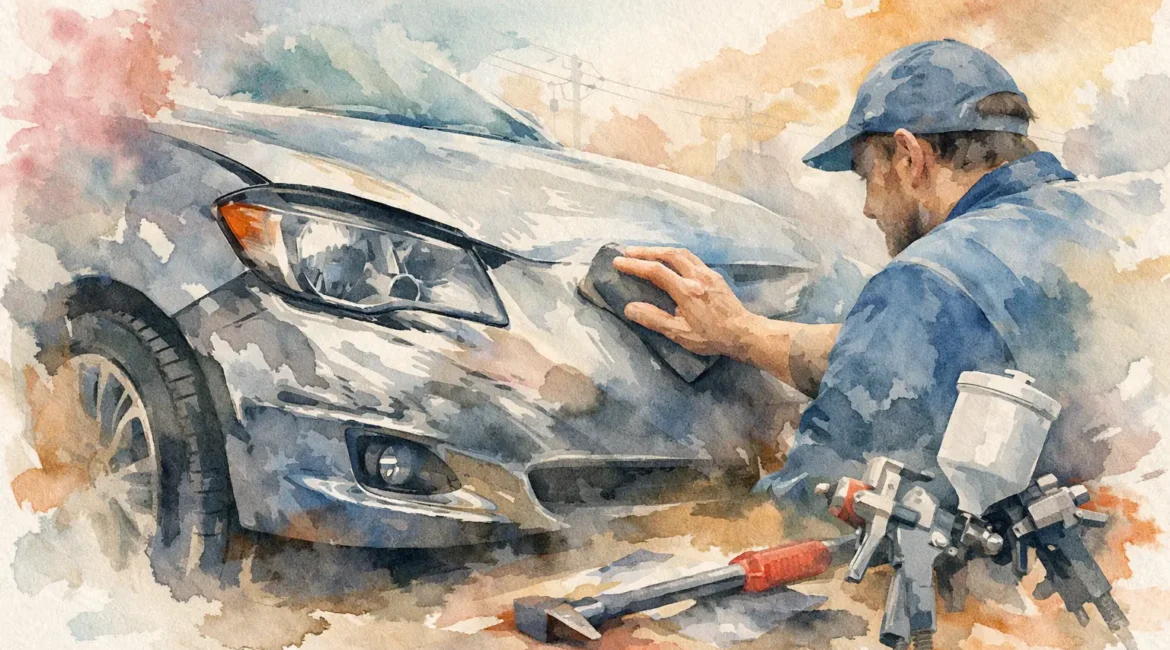
That scrape on the bumper in a supermarket car park rarely looks serious at first. Then the light catches it properly, the paint starts to lift, and suddenly your car looks older, tired and worth less than it should. This car body repair guide is here to make the process straightforward – what damage matters, what can wait, and when it makes sense to get a proper repair booked in before a small problem turns into a bigger one.
For most drivers, body damage is not about vanity. It affects resale value, protects the metal underneath, and changes how you feel about the car every time you walk up to it. The good news is that a lot of common damage can be repaired quickly and cost-effectively if it is assessed early and handled by the right bodyshop.
What this car body repair guide covers
Body repairs usually fall into two categories. The first is cosmetic damage such as light dents, scuffs, scratches, bumper marks and kerbed alloys. The second is more serious accident damage, where panels are misaligned, paint has cracked deeply, or the structure underneath may have taken an impact.
The difference matters because the repair method, timescale and cost can vary a lot. A minor bumper scuff may be sorted with a SMART repair and colour-matched refinishing. A crumpled wing or damaged quarter panel may need more extensive bodywork, repainting and checks to make sure the car is safe and correctly aligned again.
If you are not sure which category your damage falls into, that is normal. Most customers are not expected to know whether a dent can be pulled, filled, reshaped or replaced. What matters is getting a proper inspection instead of guessing from appearance alone.
The most common types of car body damage
Scratches are one of the most frequent issues we see. Some only mark the clear coat and can be corrected with localised paintwork. Others cut through the paint and expose the panel underneath, which needs attention sooner rather than later. Once the protective finish is broken, moisture and road grime have an easier way in.
Dents can be deceptively simple. A small shallow dent on a door might be repairable without major panel work if the paint surface is still intact. A sharper crease is a different story. Creased metal often needs more involved repair work to restore the panel properly and avoid visible distortion in the final finish.
Bumper scuffs are another everyday problem, especially in town driving and tight parking spaces. Because bumpers are often plastic, they need a different repair approach from metal panels. The good news is that many bumper repairs can be completed efficiently, with excellent cosmetic results, without replacing the whole part.
Then there is accident damage. Even a low-speed collision can affect more than the visible panel. Mountings, brackets, wheel alignment and structural sections can all be involved. This is where a proper bodyshop inspection becomes essential, particularly if you are making an insurance claim or need non-fault support.
When a quick fix is enough and when it is not
There are situations where a localised repair is the sensible option. If the damage is isolated, the surrounding panel is sound, and the finish can be blended well, a SMART repair can save time and money while still delivering a high-quality result. This is ideal for many bumper corners, door scuffs and small paint defects.
But not every repair should be treated as a shortcut job. Large damaged areas, multiple affected panels, heavy paint cracking or signs of underlying impact usually call for fuller repair and refinishing. Trying to keep costs down with the wrong method often leads to a patchy finish, poor paint match or repair lines that remain visible.
That is the trade-off. The cheapest repair on paper is not always the best value if it does not restore the car properly. Good bodywork should look right in daylight, from different angles, and over time – not just when the car is first handed back.
Why paint matching makes such a difference
A decent repair is not only about removing the dent or filling the scratch. The finish has to match the rest of the car. That means getting the paint colour, metallic content, gloss level and blending right so the repaired area does not stand out.
This is one of the reasons drivers are often disappointed by poor-quality repairs. The damage may be gone, but the panel still looks different in sunlight or under street lighting. A proper refinishing job takes skill, preparation and experience. On newer vehicles and premium finishes especially, there is very little room for error.
If your car has pearlescent paint, previous repair work, faded lacquer or damage across panel edges, the job becomes more exacting. That does not mean it cannot be repaired well. It means the assessment needs to be honest from the start.
Insurance claims and non-fault repairs
After an accident, many people worry about the claim process as much as the damage itself. That is understandable. Between paperwork, insurers, estimates and the inconvenience of being without your car, it can feel like a hassle before repairs have even started.
If the accident was not your fault, you may have more options than you think. Support with non-fault claims can make a real difference, especially when you want the repair managed properly and without unnecessary delays. The key is to avoid rushing into the first option offered without understanding what standard of repair you are agreeing to.
A reliable bodyshop should be able to explain the damage clearly, outline what work is actually required, and help you understand the practical next step. For local drivers around Glasgow and South Lanarkshire, convenience matters here just as much as workmanship. Collection and drop-off, quick estimating and clear communication are not extras – they make the whole process easier when life is already busy enough.
Choosing the right repairer
A good car body repair guide should say this plainly: not all bodyshops work to the same standard. The finish you get depends on preparation, repair method, paintwork quality and attention to detail. It also depends on whether the shop is honest about what can be repaired and what needs replacing.
Look for experience, but look for consistency too. Fast turnaround is useful, but only if the result is right. A bodyshop should be able to deal with everyday cosmetic work, insurance repairs and more involved restoration without making the process confusing for the customer.
This is where an established local specialist stands out. A team that handles dents, scratches, alloy refurbishment, resprays and accident damage every day is far more likely to spot issues early and recommend the most sensible repair route. That saves time, avoids repeat work and gives you a finish that actually holds up.
What to expect from the repair process
A proper repair usually starts with assessment, not assumptions. The damaged area is checked, the extent of the work is identified, and the best method is chosen based on the panel, the paint finish and the severity of the damage.
From there, the process may involve reshaping, filling, sanding, priming, paint application and refinishing, depending on what the car needs. For more serious accident work, replacement panels, alignment checks and insurance documentation may also be part of the job.
The main thing customers want is clarity. How long will it take, what will it cost, and what result should you expect? Straight answers matter. If a repair can be done same day, that is worth knowing. If a better result needs more time, that should be explained upfront too.
Is it worth repairing minor damage?
In many cases, yes. Minor body damage has a habit of building up. One scraped bumper becomes a scraped bumper and two door dings. One chipped arch becomes bubbling paint a few months later. Left alone, small issues can make a well-maintained car look neglected.
There is also the value side. If you plan to sell, part-exchange or return a leased vehicle, cosmetic condition matters. Repairing damage before it spreads or before multiple defects pile up is usually the more cost-conscious move.
And there is the everyday point people do not always say aloud – it is simply nicer driving a car that looks right. If you take pride in your vehicle, or just want it back to pre-damage condition without fuss, that is reason enough to get the repair done properly.
A good body repair is not about covering things up. It is about restoring the car so it looks right, feels looked after and holds its value. If the damage is bothering you now, it probably will not bother you less in three months. Getting it assessed early is usually the smartest move, and often the simplest one too.