
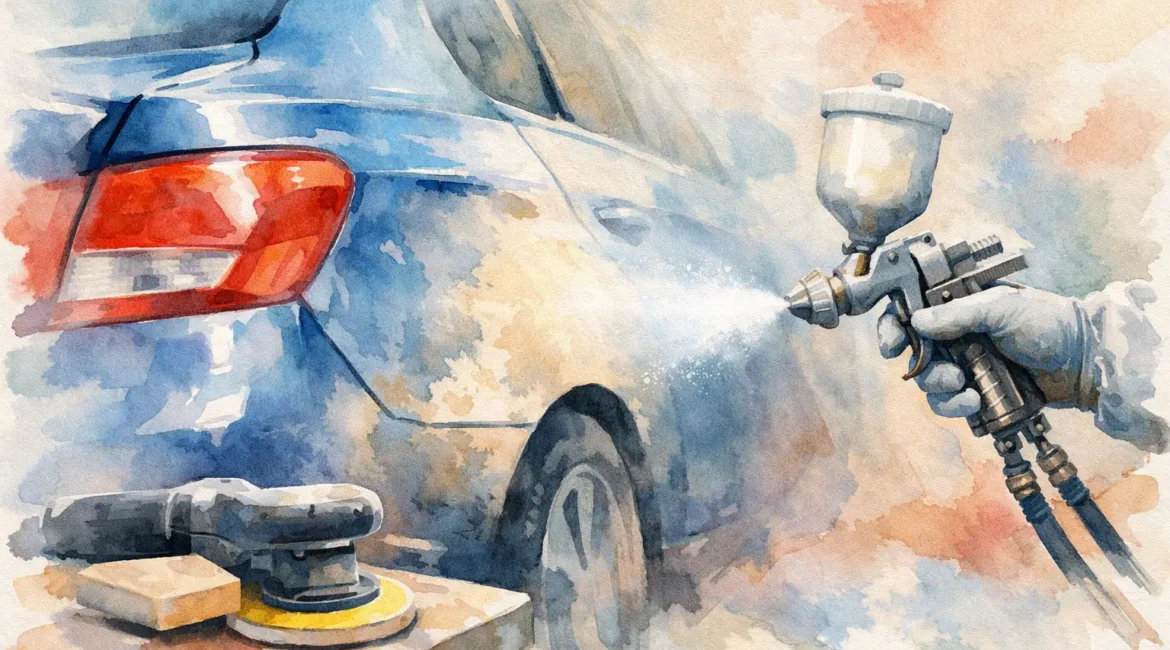
A scraped bumper or dented wing always leads to the same worry – will body repairs match paint, or will the repaired area stand out every time you walk up to the car? It is a fair question, and for most drivers it matters just as much as the repair itself. Nobody wants a tidy dent repair spoiled by mismatched paint, obvious blend lines or a panel that looks newer than the rest of the vehicle.
The short answer is yes, body repairs can match properly, but the quality of the result depends on how the repair is assessed, prepared and painted. A good bodyshop does not just find the paint code and spray the damaged panel. Proper colour matching is more skilled than that, especially on modern cars where paint fades over time, metallic finishes react differently in the light, and neighbouring panels can change how the colour is seen.
Will body repairs match paint on every car?
In most cases, yes – but not in exactly the same way on every vehicle. A nearly new car in a solid non-metallic white is usually more straightforward than an older car in a pearl red or metallic grey that has spent years outside. Paint condition, age, previous repairs and even regular washing habits all affect how close the final result can be.
This is where experience matters. A professional repairer looks beyond the paint code because factory codes only give a starting point. Two cars with the same code can still look slightly different once age, weathering and original production variations are taken into account. That is why proper bodyshops carry out colour checks and test matching rather than relying on the label alone.
If anyone promises a perfect match without even inspecting the vehicle, that should raise questions. Good repair work starts with being honest about what the car needs.
Why paint matching is more complex than people expect
Most motorists assume matching paint is a simple case of finding the right colour name and spraying it on. In practice, there is more to it.
Manufacturers produce paint in batches, and there can be small differences between one batch and another. Add a few years of sunlight, road grime, polishing and general wear, and the colour on your car today may no longer look exactly as it did when it left the factory. Lighter shades can yellow slightly, darker shades can lose depth, and metallics can appear different depending on the angle you view them from.
Then there is panel shape. A curved bumper can reflect light differently from a flat door, even when both panels carry the same paint. That is one reason why poor repairs can look fine in the workshop but obvious outside in daylight.
A proper paint match is not just about colour. It is also about finish, texture and gloss level. If the repaired panel is too shiny, too flat or has the wrong metallic lay, the eye picks it up straight away.
The role of blending in a proper repair
If you have ever been told a repair may need paint blended into the next panel, that is usually a good sign, not a bad one. Blending is one of the main ways bodyshops achieve a natural-looking result.
Rather than painting one damaged panel in isolation and risking a visible colour jump, the painter feathers the colour into the adjacent panel so the transition disappears. This is especially common on wings, doors and quarter panels where even a close match can look slightly off if it stops sharply at a panel edge.
For example, if a front wing is repaired, the best finish may involve blending into the front door. That does not mean more of the car is damaged. It means more care is being taken to make sure the repair does not stand out.
This is often the difference between a quick cosmetic job and a repair that genuinely restores the vehicle to pre-accident condition.
What affects whether body repairs match paint well?
A few factors make a real difference. The first is the quality of preparation. Even the right paint will not look right if the panel has not been repaired smoothly, primed correctly and cleaned properly before refinishing.
The second is the equipment and materials used. Professional paint systems, spray booth conditions and accurate mixing all help create a stable, consistent finish. Cheap materials or rushed drying times usually show up later.
The third is technician skill. Paint matching is part science, part judgement. Knowing when to tint a mix slightly, when to blend, and how to apply the finish evenly is not something you get from a chart alone.
The fourth is the condition of the rest of the car. On an older vehicle with faded paint, the aim is to match how the car looks now, not how it looked ten years ago. That is a better result for the owner, even if it involves more adjustment behind the scenes.
Can a paint match ever be completely invisible?
Often, yes. But it depends on the car, the damage and the repair area.
On many modern repairs, a skilled bodyshop can produce a finish that is effectively invisible to the average person and very difficult to spot even if you know where to look. That is the standard most customers should expect from quality cosmetic or accident repair work.
That said, there are situations where extra care is needed. Three-stage pearl paints, heavily weathered finishes, older red paints and previous poor-quality repairs can all make matching more challenging. In these cases, the right shop will explain the options clearly instead of pretending every job is identical.
That honesty matters. A repairer who talks through likely outcomes, blending requirements and finish expectations is usually more reliable than one offering blanket promises.
How to tell if a bodyshop takes paint matching seriously
You do not need to be an expert to spot the signs of a careful repair process. A good bodyshop will inspect the car properly, explain whether blending is required, and talk about the condition of the surrounding paint. They will not treat every repair as a one-panel respray.
It is also worth paying attention to how they speak about finish quality. If the focus is only on getting the dent out cheaply and quickly, paint match may not be the priority. If they discuss restoring the panel properly, checking colour accuracy and making the repair look natural in daylight, that is a much better sign.
For drivers around Glasgow and the surrounding areas, convenience matters too. Collection and delivery, insurance support and fast turnaround are all helpful, but they should never come at the expense of the final finish. The best service is one that combines both – practical support and workmanship that does not leave you with an obvious repair.
When a small repair can still match well
SMART repairs and localised paint repairs can work very well for minor scuffs, bumper marks and small scratches, provided the damage is suitable. On the right job, they are cost-effective, quicker than full panel work and can still give an excellent colour match.
The key phrase there is on the right job. If the damage is too large, too deep or badly placed, a larger repair with blending may be the better option. A trustworthy repairer will tell you when a smaller repair is enough and when it is not.
That is not upselling. It is about making sure you do not pay for a quick fix that leaves a visible difference a week later.
So, will body repairs match paint?
Yes – when the work is done properly. Good paint matching comes from accurate assessment, proper preparation, quality materials and the judgement to blend where needed. It is not luck, and it is not something that should be rushed.
If your car has been scraped, dented or damaged in an accident, the real question is not simply whether body repairs will match paint. It is whether the repairer you choose is willing to do what it takes to make it match well. Choose a team that takes pride in the finish, explains the process clearly and treats the appearance of your car as seriously as the damage itself. That is how you get back on the road with a repair that looks right, feels right and does not catch your eye for the wrong reasons.