
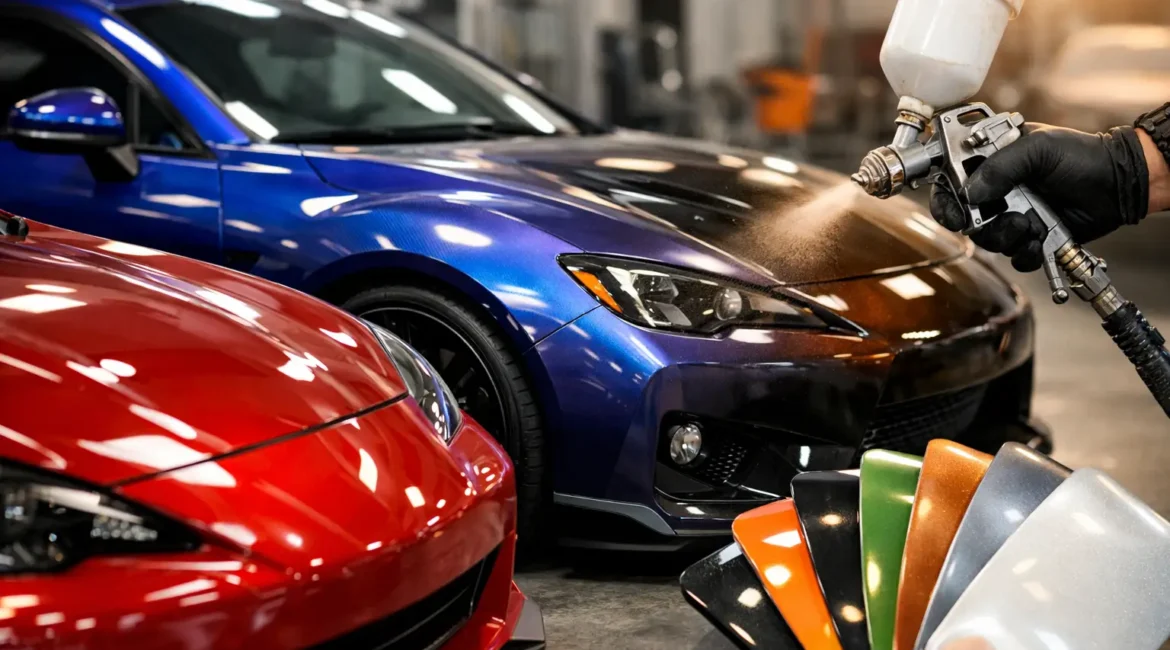
A custom paint finish can make a well-kept car look truly personal, but the wrong choice can be expensive to correct. This guide to custom car paint finishes is designed to help Glasgow drivers choose a look that suits their vehicle, budget and day-to-day use, without compromising on a quality result.
The paintwork on your car has a harder life than most people realise. Gritted winter roads, rain, tight supermarket car parks and regular motorway miles all take their toll. A finish that looks excellent under workshop lights must still look right after a wet week, a wash and a close inspection in daylight.
A guide to custom car paint finishes: choose the right look
Custom paintwork is not simply a choice of colour. The finish changes how the panels reflect light, how easily marks show and how straightforward future repairs will be. The best option depends on whether you want subtle factory-style refinement, a stronger visual statement or a full exterior transformation.
Solid gloss paint
A solid gloss finish is clean, classic and often the most cost-effective option. It gives a smooth, even colour with a reflective clear coat and works particularly well for full resprays, bumper repairs and vehicles where a tidy showroom appearance is the priority.
Black, white, red and many standard blues are commonly available as solid colours, although the exact shade varies by manufacturer. Gloss paint is generally easier to maintain than more specialist finishes, but darker shades can reveal swirl marks, dust and light scratches more quickly. A properly prepared and painted panel will still be easier to live with than tired, heavily marked original paint.
Metallic paint
Metallic finishes contain fine flakes that catch the light and give the colour extra depth. They are a popular choice because they look more premium than a flat solid colour while remaining practical for everyday use. Silver, grey, blue and darker green metallics can also hide road grime and minor imperfections better than plain black.
The trade-off is repair complexity. Metallic particles must be laid down evenly, and the colour may need blending into neighbouring panels to avoid a visible edge. That is normal professional practice, not an unnecessary extra. A good bodyshop checks the colour in different lighting before completing the job, because metallic paint can look different in the sun, shade and workshop.
Pearlescent and mica finishes
Pearlescent paint uses special pigments that create a soft colour shift as you move around the vehicle. It can make white look warmer, blue look deeper or grey appear more distinctive without becoming overly flashy. On the right car, it gives a high-end finish that stands out at close range.
This option needs skilled application and careful colour matching. Pearlescent colours can be difficult to repair invisibly if only one small panel is painted, particularly on older paintwork that has faded over time. It is an excellent choice for a full respray or a properly planned custom project, but it is worth allowing for the additional preparation and blending work.
Matte and satin finishes
Matte paint has no shine, while satin sits between matte and gloss with a gentle sheen. Both can give a modern, purposeful look, especially on performance models, body kits and selected exterior details such as mirror caps or roof panels.
They are not low-maintenance finishes. Matte and satin surfaces cannot be polished in the same way as gloss paint, because polishing can create shiny patches that spoil the uniform look. Bird droppings, fuel spills and tar should be removed promptly with products suited to matte paint. Repairs also demand care, as matching the exact texture and sheen is just as important as matching the colour.
Candy, flip and special-effect paint
For drivers who want a genuine show-car look, custom effects such as candy colours, colour-shifting finishes and heavy metallic flake offer far more drama. These finishes are built up in layers and can look exceptional when the preparation is right.
They also come with clear compromises: higher cost, longer labour time and more difficult future repairs. A panel repaint may require wider blending or repainting a larger area to keep the effect consistent. If the car is a weekend project or a long-term keeper, that may be worthwhile. If it is used daily and likely to collect the occasional parking knock, a more repair-friendly finish could be the smarter choice.
Start with the condition of the bodywork
Even the best paint cannot disguise poor preparation. Dents, corrosion, scratches, uneven filler and old paint reactions must be dealt with before colour is applied. This is where the quality of a custom paint job is won or lost.
A professional refinishing process normally starts with an inspection of the panels and an honest discussion about the result you want. Damaged areas are repaired, surfaces are shaped and primed, and the vehicle is masked carefully before colour and clear coat are applied. Where necessary, surrounding panels are blended so the repaired area does not stand out.
If your car has rust around arches, doors or sills, deal with it properly before spending money on a finish. Painting over corrosion may look acceptable for a short time, but the problem will return underneath the new paint. The same applies to poorly completed previous repairs. Correcting the foundation is better value than paying twice for paintwork.
Match the finish to how you use the car
A custom colour should suit your life, not just a photograph. A family car that is parked on the street, driven through Scottish winters and washed at a local hand wash has different needs from a garaged enthusiast vehicle.
For a practical daily driver, metallic or pearlescent finishes in mid-tone colours are often a sensible balance. They offer depth and individuality while being more forgiving of dust and light marks. A gloss finish is also a dependable choice when you want easy maintenance and straightforward future repairs.
For a vehicle built around styling upgrades, a satin roof, contrasting mirror caps, painted alloy wheels or colour-coded body kit can create impact without committing to a full special-effect respray. Smaller changes can be easier to reverse and can keep costs under control.
Think about resale as well. A high-quality full respray in an appealing colour can refresh an older vehicle and protect its appearance. A very personal colour scheme may narrow the number of future buyers. There is no single right answer, but it is worth being realistic if you expect to sell within the next year or two.
Colour changes, insurance and practical checks
If you permanently change the main exterior colour of your car, you should update the colour shown on the V5C registration document. You should also tell your insurer. Failing to declare a significant modification or colour change can create problems if you need to make a claim.
Before choosing a non-standard finish, ask to see colour samples or spray-out cards in natural light. Phone screens and online images are useful for inspiration, but they do not accurately show depth, metallic content or pearlescent shift. Looking at a real sample against your car is the safer way to decide.
It is also sensible to agree the scope of work before the job begins. Will door shuts, under-bonnet areas, handles, trim, bumpers and mirrors be included? A full colour change and a visible exterior respray are not always the same thing. Clear expectations protect the final result and prevent unexpected costs.
Keep custom paintwork looking its best
Fresh paint needs time to cure, so follow the bodyshop’s advice on washing and waxing after collection. Avoid harsh brushes, aggressive chemicals and automated car washes that can mark the surface. Regular gentle washing removes road salt and contaminants before they have time to dull the finish.
Gloss paint benefits from careful polishing when needed, while matte and satin paint need dedicated cleaners and no abrasive polish. Stone chips should be assessed early, especially on bonnets, bumpers and lower door sections. A small repair completed promptly is usually simpler and more affordable than allowing moisture to reach the panel beneath.
Whether you are repairing accident damage before a respray or planning a completely new look, the right finish should feel considered rather than complicated. A good specialist will explain the options plainly, prepare the car properly and give you a result you are proud to see on the drive. For drivers across Glasgow and the surrounding area, Unique Bodywork can help turn that plan into paintwork built to last.