
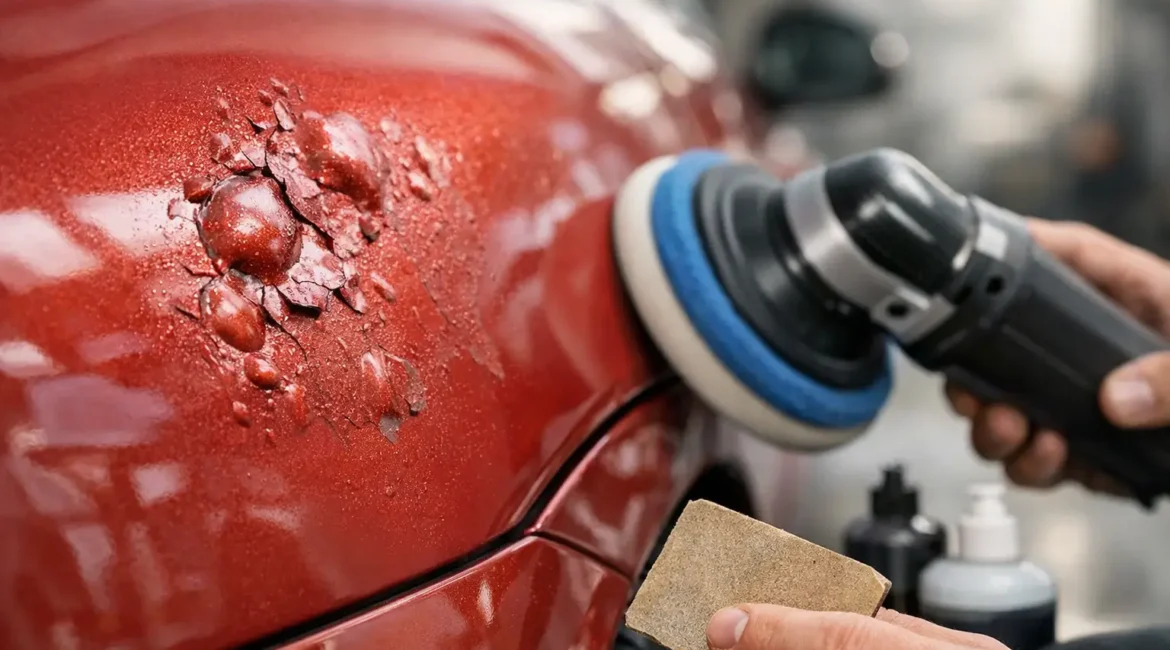
A small raised bubble in your paintwork can look harmless at first. Leave it alone through a Glasgow winter, though, and it can turn into peeling paint, exposed metal and a much bigger repair. So, why does car paint blister? Usually, something has compromised the bond between the paint and the panel beneath it – often moisture, corrosion, contamination or a previous repair that has started to fail.
Blistering is not normally a fault that improves with time. The sooner the cause is found and dealt with, the better the chance of keeping the repair local, cost-effective and invisible.
What does blistering car paint look like?
Paint blisters are small bubbles, bumps or raised areas in the finish. They may be no bigger than a pinhead or spread across a wider patch. In early stages, the paint can look slightly swollen or uneven. Later, the bubble may crack, lift or burst, exposing the primer, bare metal or rust underneath.
They are often found around wheel arches, sills, lower doors, bonnet edges, roof gutters and boot lids. These areas take the worst of road spray, stone chips and trapped dirt. You may also notice bubbling around a previous dent repair or along the edge of a replacement panel.
The important distinction is between a mark sitting on top of the paint and a problem forming underneath it. Tree sap, bird droppings and fallout can damage a surface if left too long, but true blistering generally means the paint layers are losing their grip on the panel.
Why does car paint blister? The most common causes
Moisture beneath the paint
Water is the usual culprit. It can work its way through a stone chip, scratch, cracked seam sealer or poorly protected panel edge. Once moisture reaches the metal, corrosion begins. Rust expands as it develops, pushing the paint away from below and creating the familiar bubbling effect.
This is particularly common on older vehicles and cars regularly exposed to salted winter roads. It can also happen surprisingly quickly after a deep chip if bare steel has been left uncovered.
Rust spreading from behind the panel
Not all corrosion starts where you can see it. Water can collect inside wheel arches, door bottoms, sills and seams, then rust works outward from the reverse side of the panel. By the time paint begins to bubble on the outside, there may be more corrosion hidden behind it.
That does not automatically mean a panel needs replacing. It depends on how far the metal has deteriorated and whether the affected area is structural. A proper inspection is the only reliable way to judge it.
Poor preparation during an earlier repair
A respray or local paint repair should last well when the surface is correctly prepared. But if rust was not fully removed, moisture was trapped, the panel was not properly cleaned or the paint was applied over an unstable surface, blistering can appear later.
Sometimes the issue is caused by incompatible products or insufficient curing time between paint layers. The finish may look excellent when the car leaves the workshop, then fail months later as heat, cold and moisture put it under pressure. This is why preparation matters just as much as the final polish.
Contamination on the panel
Silicone from certain polishes or dressings, oil, wax, grease and residues from cleaning products can interfere with paint adhesion. In a refinishing environment, even small traces of contamination can create defects. Some appear immediately, while others become more obvious after the vehicle has been exposed to changing weather.
Contamination-related defects can resemble tiny craters or bubbles, so an experienced bodywork specialist will look closely before deciding on the repair method.
Heat, sun and trapped solvents
Heat alone does not usually cause sound factory paint to bubble. However, sustained sun exposure can speed up failure in already weakened paint, especially on a previous repair. Excess heat may also cause trapped solvent or moisture in a poorly cured coating to expand, lifting the finish.
This is more likely to affect a repaired section than original factory paint. It is one reason a professional refinishing process needs the right materials, application conditions and curing time.
Can you keep driving with paint blisters?
You can usually drive the car, but it is not wise to ignore the problem. Once the paint has lifted, water has an easier route underneath the surrounding finish. A small bubble can widen, paint can flake away, and corrosion can spread beyond the area you first noticed.
There is also the value of the vehicle to consider. Visible bubbling makes a car look neglected and can raise questions for a buyer about hidden rust or the quality of earlier body repairs. On leased or financed vehicles, damage to paintwork may also be worth addressing before inspection or return.
If bubbling is near a sill, suspension mounting point, structural seam or door edge, arrange an inspection promptly. These areas can involve more than appearance alone.
What not to do when car paint starts bubbling
Do not pick at the blister or sand it back and cover it with touch-up paint without checking the metal first. That may temporarily hide the issue, but it will not stop active rust beneath the surface. In some cases, it can trap more moisture and make a later repair harder to blend.
Avoid aggressive pressure washing directly at lifting paint, too. A pressure washer will not cause healthy paint to fail, but it can remove already loose paint and expose a larger section of damaged panel.
You can wash and dry the vehicle normally, keep the area clean and avoid leaving salt or road grime sitting on it. If bare metal is visible, protecting it from further moisture until repair is sensible, but this should be treated as a short-term measure rather than a cure.
How a professional bodyshop repairs blistered paint
A lasting repair starts with identifying what is happening below the finish. The damaged paint is removed back to a stable edge, and the panel is assessed for corrosion, contamination or failed previous materials.
Where rust is light and localised, the affected area can often be treated properly, sealed, primed and refinished. If corrosion has penetrated deeply, the repair may require metalwork, a welded section or panel replacement before any paint is applied. The right option depends on the panel condition, the vehicle’s age and value, and whether the area is structural.
After preparation, the repaired area is primed and painted using a colour match designed to blend into the surrounding panel. The goal is not simply to cover the bubble. It is to restore a sound surface and a finish that looks right in daylight, not just under workshop lights.
For a small, isolated defect, a SMART repair may be the most practical option. If bubbling is widespread, a larger panel repair or respray is usually better value than repeatedly patching separate areas. A reputable bodyshop should explain the condition found, the work required and why a particular repair is recommended.
How to reduce the risk of future paint blistering
No car is completely protected from chips, moisture and road salt, but regular care makes a real difference. Wash winter grime from wheel arches, sills and lower panels, especially after long periods of salted roads. Check stone chips and scratches before they reach bare metal, and have them repaired rather than waiting for rust to form.
Be cautious with cheap cosmetic repairs that promise a fast result but do not deal with corrosion underneath. The lowest initial price can become expensive if the paint fails and the rust spreads. Good bodywork is built on sound preparation, not a quick cover-up.
If you have spotted bubbling paint on your vehicle, getting it checked early is the sensible next step. Unique Bodywork can assess the affected panel, explain the most suitable repair and restore the finish to a standard that protects both your car’s appearance and its value.