
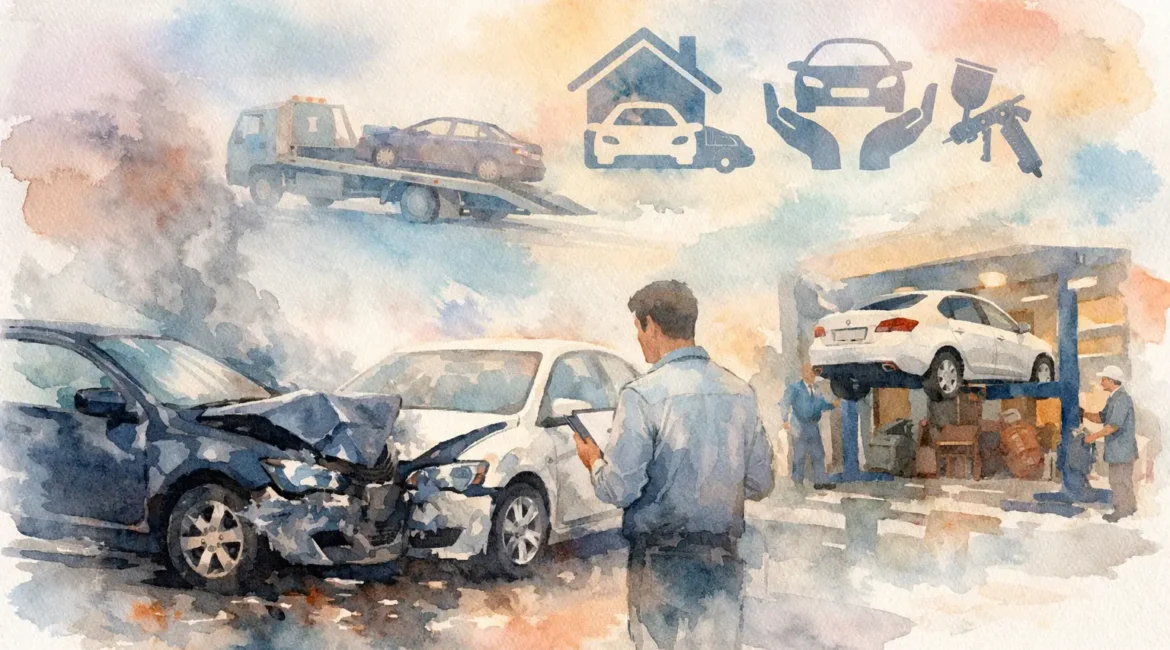
A damaged wing, cracked bumper or misaligned door can make the hours after an accident feel far more complicated than they need to be. Understanding how insurance repairs work after a road traffic accident helps you make clear decisions, protect your claim and get your vehicle restored properly rather than accepting a rushed fix.
What to do before insurance repairs begin
Your first priority is safety. Stop somewhere safe where possible, check whether anyone is injured and call the emergency services if needed. Exchange names, addresses, registration numbers and insurance details with the other driver. Take photographs of the vehicles, damage, road layout, signs, weather and anything else that may help establish what happened.
You should report the incident to your insurer as soon as you can, even if you do not intend to make a claim or believe the accident was not your fault. Most policies require this. Keep your description factual: explain what you saw and what occurred, but avoid guessing about blame at the roadside.
If the car is unsafe to drive, arrange recovery rather than risking further damage. A loose bumper, damaged light, tyre issue or wheel alignment problem can quickly turn a repairable accident into a more expensive job.
How insurance repairs work after a road traffic accident
Once the claim is logged, your insurer will give you a claim reference and explain the next step. This commonly involves sending photos, booking an inspection or taking the vehicle to an approved repairer for an estimate. In some cases, especially with visible cosmetic damage, an assessor can review clear images first. More substantial damage usually needs an in-person inspection.
The repairer prepares an estimate covering parts, labour, paint and any work needed to return the car to its pre-accident condition. The insurer then reviews the estimate. They may approve it straight away, ask for further evidence or appoint an engineer to inspect the vehicle.
Approval matters. Do not authorise chargeable repair work yourself until you know what the insurer has agreed to pay, unless you are choosing to pay privately. Once authorisation is in place, the bodyshop can order parts, schedule the repair and keep the insurer updated if hidden damage is found.
It is common for extra damage to appear after the bumper, wheel or exterior trim has been removed. A minor-looking impact can affect brackets, sensors, absorbers, inner panels or structural components behind the visible mark. This does not automatically mean there is a problem with your claim. The garage submits a supplementary estimate, and the insurer considers the additional work before repairs continue.
Can you choose your own repairer?
Often, yes. Your insurer may recommend a network garage, but you can ask whether you are free to use a repairer you trust. Check your policy wording and ask about any conditions, such as whether the insurer needs to inspect or approve the estimate before work begins.
The cheapest estimate is not always the best value. Proper accident repair can involve panel alignment, corrosion protection, colour matching, paint blending and recalibration of safety systems. Choosing a skilled bodyshop can protect the appearance, safety and resale value of your vehicle.
For drivers around Glasgow and South Lanarkshire, a local specialist can also make the process easier through collection and drop-off arrangements. Unique Bodywork can assess accident damage, carry out insurer-approved work and help remove some of the uncertainty from the repair process.
Your excess, liability and non-fault claims
Your excess is the amount you agreed to pay towards a claim. If your repair is covered under your own comprehensive policy, the insurer normally deducts this amount from the settlement or asks the repairer to collect it when you collect the vehicle. For example, with a £400 excess and a £2,000 approved repair, your insurer pays £1,600 and you pay £400.
If the other driver is found liable and their insurer accepts responsibility, you may be able to recover your excess. This can happen through your own insurer, a legal expenses provider or a non-fault claims service, depending on how the claim is handled. Recovery is not always immediate, because fault can be disputed or the other side may take time to investigate.
A non-fault claim does not simply mean you feel you were not to blame. Liability must be accepted or established with evidence. Dashcam footage, witness details, photographs and a clear incident report can all be useful. Where liability is unclear, your insurer may initially deal with the repair under your own policy while the insurers sort out responsibility.
You may be offered a courtesy car while yours is being repaired. Availability depends on your policy, the type of claim and the repairer. Ask before work starts what vehicle, if any, is included, how long it is available for and whether there are mileage or fuel conditions.
Repairing the car properly, not just making it look better
A quality repair is more than filling and painting a dent. The repairer should first check the full extent of the damage, including panels that may have shifted, damaged mounting points and components hidden behind the exterior finish.
For light scuffs, scratches and small dents, a SMART repair may be the most cost-effective option. It treats a localised area without repainting an entire panel when that is not necessary. For deeper damage, creased panels, cracked bumpers or paint damage across a larger area, a more involved repair and repaint may be required.
Modern vehicles add another consideration. Parking sensors, cameras, radar units and advanced driver assistance systems may need checking or recalibrating after an impact. Even a seemingly small knock to a bumper can affect equipment used for parking assistance, emergency braking or lane support. This work should be identified during the estimate, not left as an afterthought.
Matching paint is also skilled work. Colour can vary with age, sunlight and previous repairs. A good refinishing process includes careful preparation and, where needed, blending colour into neighbouring panels so the repair does not stand out in daylight.
When an insurer may write the vehicle off
An insurer may decide the vehicle is a total loss if the cost of repair is too high compared with its market value, or if repair is not considered economically sensible. This does not always mean the damage is impossible to fix. It means the insurer has made a financial decision based on the vehicle’s pre-accident value, repair costs and other claim expenses.
If your vehicle is written off, ask how its valuation was reached. Gather examples of similar cars for sale, taking account of mileage, specification, condition and service history. If you believe the offer is too low, you can challenge it with evidence.
You may also have the option to retain the vehicle in some circumstances, but this needs careful thought. You would normally receive a reduced settlement, arrange repairs yourself and make sure the car is safe, legal and correctly recorded before returning it to the road. It is not the right route for every vehicle or every type of damage.
Before you collect the vehicle
When the work is complete, take a few minutes to inspect the car in good light. Check that panel gaps look even, paint matches surrounding areas, trims sit correctly and doors, boot and bonnet open and close as they should. Confirm that warning lights are off and that sensors, cameras and other features operate normally.
Ask what repair guarantee is provided and keep copies of the estimate, authorisation, invoice and any calibration paperwork. If something does not look right, raise it promptly with the repairer. Reputable bodyshops want the chance to put matters right.
The best outcome after an accident is not simply getting your car back quickly. It is getting it back safe, properly finished and looking like the accident never happened.