
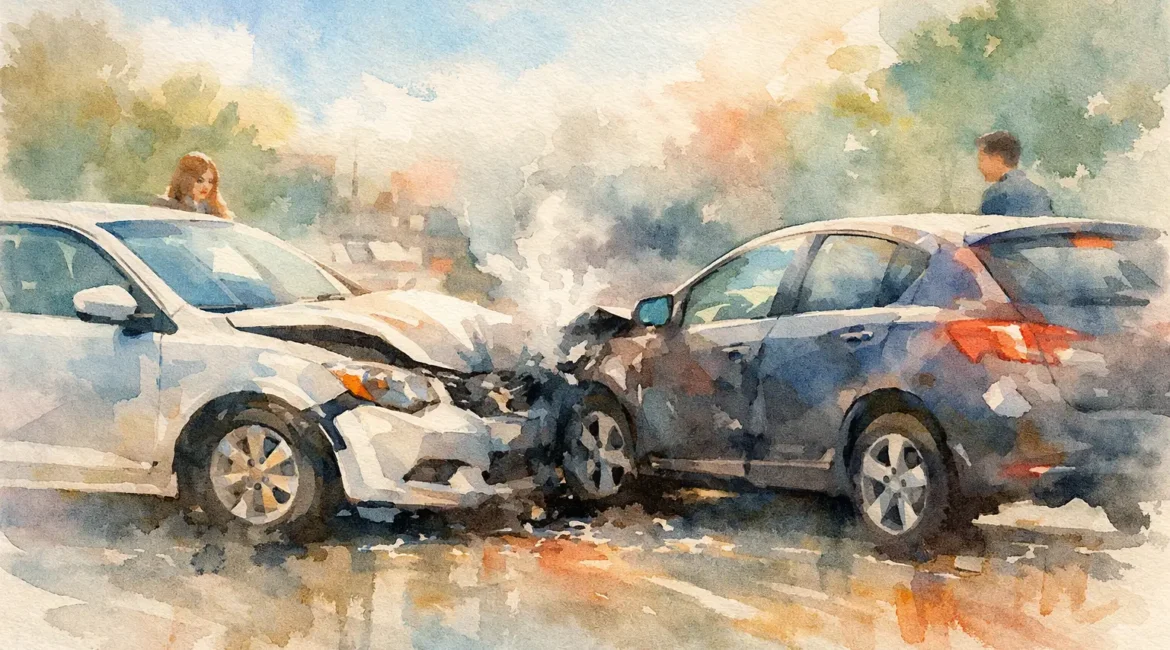
One driver rolls into the back of you at a roundabout, admits fault at the scene, and your bumper is cracked, your parking sensors are damaged, and the car is no longer safe to drive as normal. That is a straightforward non fault claim example, and it is usually the kind of situation people think will be easy. In practice, it can still become slow, confusing, and more expensive than it should be if the claim is not handled properly from the start.
If the accident was not your fault, the aim is simple. You should be put back in the position you were in before the crash. That normally means repair costs covered, a replacement vehicle if needed, and help with the paperwork so you are not left chasing updates while your car sits damaged on the drive. The detail matters, though, because not every claim stays straightforward for long.
A simple non fault claim example
Let’s use a realistic scenario. You are driving home from work in East Kilbride in slow-moving traffic. The vehicle behind you fails to stop in time and hits the rear of your car. There are no injuries, but the rear bumper is split, the boot lid is misaligned, and one rear light is cracked.
The other driver gives you their details and says they were distracted and could not brake quickly enough. You take photos of both vehicles, the registration plates, the road position, and the damage. You report the accident and arrange an inspection.
In a clean case like this, liability is often clear. The rear driver is usually held responsible because they should have left enough stopping distance. Your vehicle is assessed, the repair cost is calculated, and the at-fault insurer may cover the damage. If your car is off the road, you may also be entitled to a replacement vehicle while repairs are carried out.
That is the basic version. It sounds simple because it is simple on paper. The problem is that real claims often involve delays over liability, arguments about repair costs, or pressure to use a repair route that is quicker for the insurer rather than better for the vehicle owner.
What a non fault claim usually covers
A non-fault claim is not just about a dented panel. It can include the reasonable cost of returning the vehicle to its pre-accident condition, and that can cover far more than one obvious damaged part.
If the impact has affected paint, sensors, trims, wheel alignment, or hidden structural sections behind the visible damage, those should be included in the repair assessment. Modern vehicles often carry damage beneath the surface, especially around bumpers, brackets, parking systems, and lighting units. A bumper can look like a cosmetic repair from a distance and still need more extensive work once stripped down.
You may also be able to recover the cost of a courtesy or replacement vehicle if your own car cannot be used. If there are injuries, loss of earnings, or other direct losses, those may form part of the wider claim too. That said, every case turns on its facts. A light scrape in a car park is very different from a heavier impact that leaves the vehicle unsafe or undriveable.
Why clear evidence makes the claim easier
The strongest non fault claim example is one backed up by simple, solid evidence. You do not need to be an insurance expert, but you do need to be organised in the first hour after the accident if you can be.
Get the other driver’s name, registration, insurer details, and contact number. Take clear photos from several angles. If there are witnesses, ask for names and numbers. Make a note of the time, location, weather, and what happened while it is fresh in your mind.
These basics help when the story changes later. It happens more often than people expect. A driver who admits fault at the roadside may later say you stopped suddenly or that the damage was already there. Good photos and a clear record can stop a simple claim turning into a drawn-out argument.
Where non-fault claims often go wrong
Most people only deal with accident damage occasionally, so they assume the insurer will naturally guide them towards the best outcome. Sometimes that happens. Sometimes it does not.
One common issue is speed being prioritised over quality. An insurer may direct you towards a repair route that suits their costs and network timings. That does not always mean the repair is poor, but it can mean less flexibility over who handles the work, what parts are used, or how thoroughly the damage is assessed.
Another issue is underestimating the damage early on. A cracked bumper and scraped paint might be obvious, but the impact may also have affected brackets, sensors, boot floor alignment, or rear body panels. If that is missed at the start, the repair can stall once the car is dismantled.
There is also the practical side. If your car is needed for work, school runs, or family life, every extra day off the road matters. A claim is not just a file number. It affects your routine, your costs, and your stress levels.
Why repair choice matters more than people think
The quality of the repair has a direct effect on appearance, safety, and resale value. That is why a non-fault claim should never be treated as a box-ticking exercise.
A proper repair means accurate assessment, correct preparation, quality paint matching, and attention to the parts you cannot see once the car is back together. It also means understanding when a SMART repair is enough and when a panel, wheel, or structural section needs a more complete repair approach.
For drivers around Glasgow and South Lanarkshire, convenience matters as well. If the car needs collection, if the claim needs coordinating, or if you simply do not have time to chase bodyshops and insurers separately, having one experienced repairer involved can make the whole process less painful.
A more complicated non fault claim example
Now take a slightly messier case. You are parked legally outside a shop and return to find your front wing, bumper corner, and alloy wheel damaged. A witness has left a note with the registration number of the driver who clipped your car while trying to squeeze past. There is no dashcam footage, and the other driver later disputes it.
This is still potentially a non-fault claim, but it is no longer as clean as a rear-end collision with admission at the scene. Liability may depend on witness evidence, local CCTV, damage consistency, and how quickly the incident was reported. The claim can still succeed, but it may take longer and require stronger evidence.
That is why people should be careful with the word straightforward. Non-fault does not always mean fast. It means fault should sit with the other side, but proving that can still take work.
What to do straight after an accident
Keep it calm and practical. Check everyone is safe, exchange details, take photos, and report the accident as soon as possible. Do not guess about damage or promise to settle privately unless you are fully comfortable with the risk. Damage can be worse than it first appears, and a cheap private agreement often stops looking cheap once repair estimates come in.
If the car feels unsafe to drive, do not drive it. That includes problems with lights, wheel alignment, bumpers dragging, warning lights, or difficulty opening and closing panels after impact. Even minor-looking accidents can leave hidden issues.
It also helps to deal with a repair specialist who understands both the bodywork side and the claims process. That way, the estimate is based on what the vehicle actually needs rather than what looks acceptable in a quick photo.
The practical benefit of support with a non-fault claim
The biggest advantage is not just paperwork. It is having someone in your corner who understands how accident damage and claims fit together.
A good repairer can identify hidden issues, explain what the vehicle needs in plain English, and help keep the process moving so you are not left making repeated calls for updates. That matters whether the damage is a scraped bumper, a dented quarter panel, or something more substantial after a heavier collision.
For many motorists, that support is the difference between a manageable situation and a frustrating one. You are already dealing with disruption. You should not also have to become an expert in accident handling overnight.
If you have been hit and the accident was not your fault, the right next step is simple – get the damage assessed properly, keep your evidence, and do not rush into a repair route that does not feel right. A good non-fault claim starts with clear facts, but a better result comes from having the right people handle the repair from the beginning.