
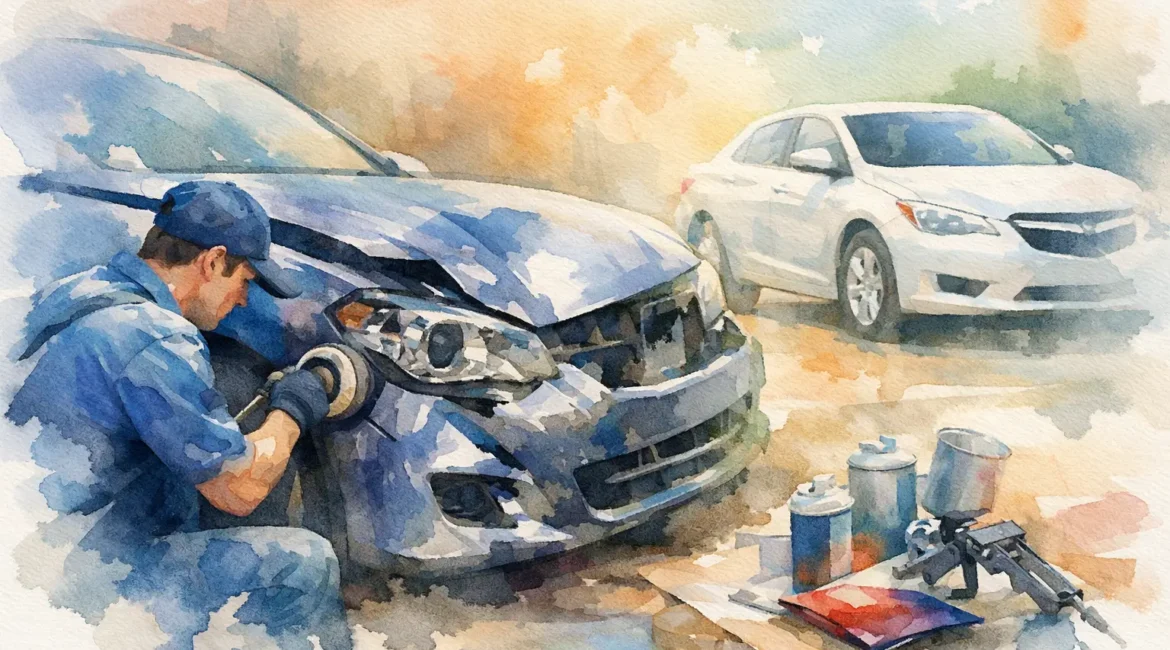
A scuffed bumper, dented door or damaged alloy can look like a minor problem after an accident. To a potential buyer, however, it can suggest a vehicle that has not been cared for properly. That is how professional accident repairs help maintain your vehicle’s value: they restore the appearance, safety and finish buyers expect, while giving you confidence that damage has been dealt with correctly rather than simply covered up.
For drivers around Glasgow, the difference is often felt twice. You get to enjoy a car that looks right again now, and you are in a stronger position when it is time to sell, part-exchange or hand the vehicle back at the end of a finance agreement.
Why accident damage affects more than appearance
A buyer will notice panel damage before they ask about service history or tyre condition. Scratches, uneven gaps between panels, flaking paint and poorly matched colours all make a car feel less desirable. Even when the mechanical side is sound, visible damage gives buyers a reason to negotiate harder or walk away.
There is also a practical concern behind that reaction. A dent can hide weakened mounting points, damaged brackets or corrosion beginning beneath broken paint. A cracked bumper may affect how securely it sits on the car. When damage is left untreated, water and road salt can get into exposed metal, turning a relatively contained repair into a larger bill later on.
Professional repair work deals with both the visible result and the condition beneath it. The aim is not to make a damaged area look acceptable from a few metres away. It is to return the vehicle as closely as possible to its pre-accident or showroom condition.
How professional accident repairs maintain your vehicle’s value
The first benefit is an accurate assessment. A quality body repairer looks beyond the obvious scrape or crease to establish what has moved, cracked or been affected around it. This matters particularly after low-speed impacts, where bumper covers can look modestly damaged but absorbers, brackets, lights, sensors or inner panels may also need attention.
Proper repairs help preserve panel alignment. Bonnet, door, boot and bumper gaps should be even, and lights should sit correctly in their housings. These details are easy to spot on a viewing and can strongly influence a buyer’s impression of whether a car has been repaired to a high standard.
Where structural or safety-related areas have been affected, the work needs to follow the correct repair process rather than rely on a cosmetic fix. Modern vehicles are built with specific crumple zones, high-strength materials and safety systems. Repairing them properly protects more than resale value – it helps ensure the vehicle performs as intended if it is ever involved in another collision.
Paintwork that does not give the repair away
Paint quality is one of the clearest signs of a professional job. A poor repair may have a slightly different shade, visible masking lines, dust in the finish, dull patches or paint that begins to peel after a season of Scottish weather. Those flaws reduce confidence quickly, particularly on newer vehicles and prestige models.
A professional refinishing process matches the colour carefully, prepares the panel correctly and blends paint into adjoining areas where needed. The right preparation is what allows the finish to look consistent in daylight, rain and under forecourt lighting – not only in the bodyshop.
This is especially valuable with metallic, pearlescent and modern solid colours, where even a small variation can be obvious. It may cost more than a quick local touch-up, but it can prevent the damaged area from becoming the first thing every future buyer sees.
Protection against corrosion and further deterioration
A scratch through the paint or a crease along an arch is not always urgent in the sense that the car will stop running. It can still be costly to ignore. Once bare metal is exposed, moisture can begin working underneath the paint edge. Rust rarely stays in one tidy spot.
Professional repairs include preparing, sealing and refinishing the affected area so it is protected again. On plastic bumpers, the concern is less about corrosion but no less relevant to value: cracks, loose trim and poor previous repairs can worsen with vibration, weather and everyday use.
Addressing damage early is usually the more cost-conscious option. It keeps the repair focused on the original issue rather than allowing corrosion, peeling paint or spreading cracks to create additional work.
Repair records and buyer confidence
Accident history does not automatically make a car difficult to sell. What matters is the nature of the damage and whether it was repaired properly. A well-documented professional repair is far more reassuring than a car with obvious signs of work but no explanation of where or how it was completed.
Keep invoices, estimates, photographs and any insurance paperwork with the vehicle records. If a buyer asks about a repair, being straightforward and able to show that the car was assessed and restored professionally demonstrates that you have looked after it responsibly.
For non-fault accidents, getting support with the claim can also help make sure the correct work is authorised rather than settling for the cheapest possible outcome. The priority should be a repair that returns the vehicle to the condition it was in before the incident, not one that leaves you living with a compromised finish.
Why the cheapest repair can become expensive
There is a place for SMART repairs and localised cosmetic work. For a small scuff or minor dent, they can be an efficient, affordable way to restore a vehicle without repainting a larger area. The key is choosing the method that suits the damage.
Problems arise when a repair is priced low because necessary preparation, blending, parts or safety checks have been left out. Filler can crack, colour mismatch can become more obvious over time, and a poorly repaired alloy can let the overall appearance of the car down. Rectifying substandard work often costs more than doing it properly first time.
That does not mean every accident requires a full respray or extensive replacement parts. A trusted repairer should explain what is genuinely required, what is optional, and what result you can expect. Honest advice is part of protecting the value of your vehicle as well as your budget.
Choosing the right repair after an accident
Before authorising work, ask whether the repairer has inspected for hidden damage, how the paint will be matched, and whether replacement parts are needed for a safe, lasting result. You should also be clear on timescales, collection and drop-off options, and whether the work can be handled through your insurer or non-fault claim.
For cosmetic dents, scratches, bumper damage, alloy refurbishment and more involved accident repairs, experienced craftsmanship makes a visible difference. Unique Bodywork combines practical repair advice with refinishing work designed to bring vehicles back to a clean, well-presented standard, without making the process harder than it needs to be.
If your car has been damaged, do not judge the repair only by how quickly the mark disappears. Choose a repair that protects the panels, paintwork and confidence behind the sale. A properly restored vehicle is easier to enjoy today and easier to value fairly when the time comes to move it on.