
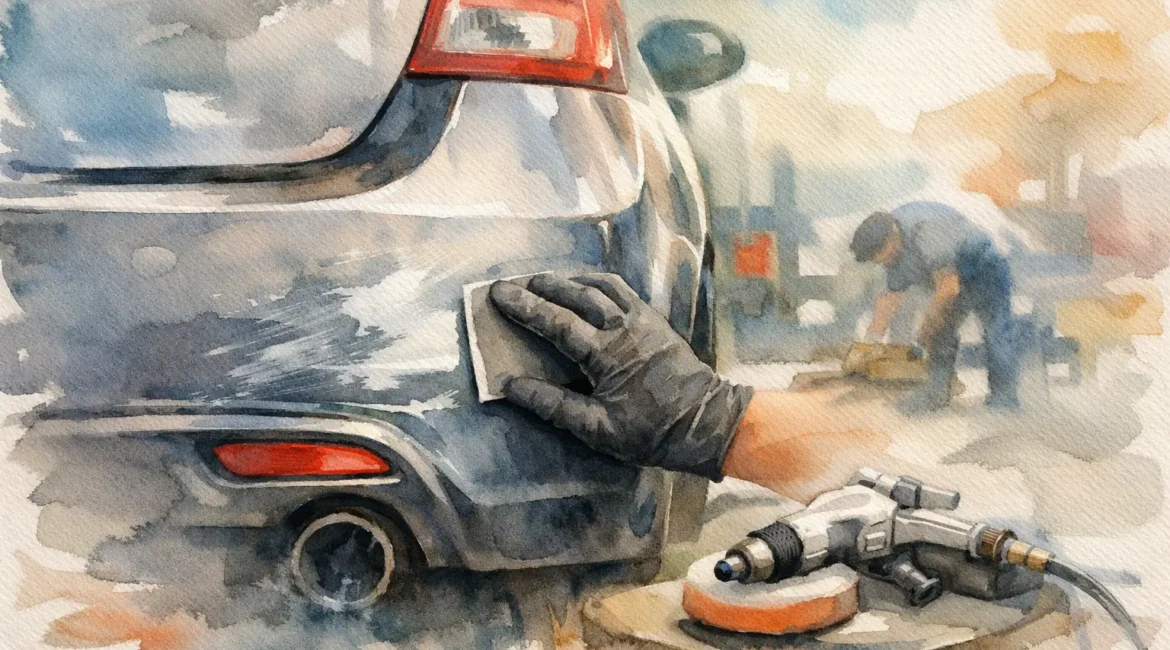
A bumper scuff can make an otherwise well-kept car look tired in seconds. Whether it came from a tight supermarket bay, a low wall, a careless trolley or a slow-speed knock, bumper scuff repair Cambuslang drivers arrange quickly can stop minor cosmetic damage becoming a bigger frustration every time they walk back to the car.
The good news is that many scuffs, scratches and paint transfers do not require a full bumper replacement or an expensive bodyshop bill. The right repair depends on how deep the damage is, where it sits on the bumper and whether the plastic underneath has been marked, split or distorted. A proper inspection gives you a clear answer before any work begins.
When a bumper scuff needs professional repair
Not every mark needs the same level of attention. Light paint transfer from another vehicle, a bollard or a wall may sometimes polish away. But if the clear coat has been cut through, the colour has been removed or the bumper surface feels rough, polishing alone will not restore the finish.
A professional repair is normally the sensible option when the scuff is visible from a few steps away, catches your fingernail, exposes the darker plastic below the paint, or has left a crease in the bumper. These marks can make a car look neglected and may be picked up when you come to sell, return or part-exchange it.
Modern bumpers are designed to flex during small impacts. That is useful in a knock, but it also means the paint can crack while the bumper itself appears largely intact. Treating only the surface without preparing and repairing the damaged area properly can leave an obvious patch, peeling paint or a crack that reappears later.
Bumper Scuff Repair in Cambuslang: the right method matters
For localised damage, a SMART repair is often the most cost-effective route. SMART stands for Small to Medium Area Repair Technique. Instead of repainting a whole panel unnecessarily, the technician repairs and refinishes the affected section, carefully blending the colour into the surrounding paintwork.
This approach can be ideal for corner scuffs, scratches around parking sensors and damage low down on the bumper. It saves time and material while still producing a clean, consistent finish when carried out by an experienced refinisher.
There are occasions when a larger repair is the better choice. A full bumper respray may be recommended if damage covers a wide area, the paint colour is particularly difficult to blend, there are several scuffs in different places, or previous poor repairs have left uneven paintwork. It can cost more than a small local repair, but it gives the whole bumper a uniform finish rather than trying to disguise damage across too much of the panel.
If the bumper is cracked, torn, badly misshapen or has broken mounting points, it may need plastic welding, reshaping or replacement. In those cases, the priority is not just appearance. The bumper must fit correctly and sit securely against the vehicle again.
What happens during a quality repair
A good repair is about more than applying paint over a scratch. The damaged section is first assessed to identify whether the mark is paint transfer, a shallow scratch, damage through to the plastic, or evidence of an underlying impact.
The area is then cleaned and prepared so the new materials can bond properly. Any damaged paint is feathered back, and scratches or low spots are repaired to create a smooth surface. On plastic bumpers, the correct preparation products are essential because paint needs to flex with the bumper rather than becoming brittle and cracking.
Once the surface is ready, primer is applied where needed and the colour is matched to your vehicle. Paint code is only part of the job. Age, sunlight, previous repairs and the angle of the panel can all affect how a colour appears. An experienced painter adjusts the process to achieve a finish that blends naturally with the surrounding paintwork.
Finally, lacquer is applied to restore protection and gloss, then the repaired area is checked under proper lighting. The result should look right in daylight as well as under workshop lights – not simply look acceptable from one angle.
What affects the cost of bumper scuff repair?
There is no honest one-price answer without seeing the vehicle. A small surface scuff on a plain solid-colour bumper is a very different job from a deep scrape across a metallic bumper corner with parking sensors nearby.
The main factors are the size and depth of the damage, the bumper material, the paint finish, access around trims and sensors, and whether there is cracking or distortion. Pearlescent, metallic and matte paint finishes can require more careful matching. Damage near grilles, reflectors, sensor housings or body lines can also add preparation time.
The cheapest quote is not always the best value. A rushed repair may leave visible masking lines, poor colour matching, dust in the lacquer or paint that begins to lift at the edge. Choosing a specialist who explains the repair route and stands behind the workmanship is usually the better decision for your car and its future value.
Same-day repairs and collection options
For many minor scuffs, a same-day repair may be possible once the vehicle has been inspected and booked in. That is particularly useful when you rely on your car for work, school runs or getting around Cambuslang and the wider Glasgow area.
Timing does depend on the extent of the damage, parts availability and the type of finish required. A bodyshop should be straight with you about that. Promising an unrealistic turnaround helps nobody if the job needs more drying time or a replacement part to be fitted correctly.
At Unique Bodywork, vehicle collection and drop-off can also take some of the hassle out of arranging cosmetic repairs. It is a practical option when a damaged bumper is not stopping the car from driving, but finding time to leave it at a repairer is the real problem.
Should you claim through insurance?
For a small scuff where no other vehicle is involved, paying for the repair yourself is often worth considering. An insurance excess can be close to, or higher than, the cost of a localised repair. Making a claim may also affect your no-claims discount depending on your policy.
The situation changes if the bumper damage followed a non-fault accident or another driver is responsible. In that case, it is worth getting clear advice before accepting a quick cash offer or allowing a third party to dictate where the repair is carried out. Damage that looks minor at first can sometimes include broken brackets, sensor faults or hidden impact damage.
Take photographs as soon as it is safe to do so, keep the other driver’s details and arrange an inspection. A repair specialist experienced with insurance work can help you understand the visible damage and the likely repair process.
Do not let a small scuff become the car’s first impression
A bumper is one of the first things people notice when they look at a vehicle, especially on a clean car. A fresh, properly blended repair protects the appearance you have paid for and helps maintain confidence when it is time to sell or trade in.
If you are unsure whether your bumper needs polishing, a SMART repair or more substantial work, get it assessed before trying a DIY touch-up kit. The right repair is not always the biggest one – it is the one that restores the finish properly, fits your budget and lets you get back on the road proud of how your car looks.