
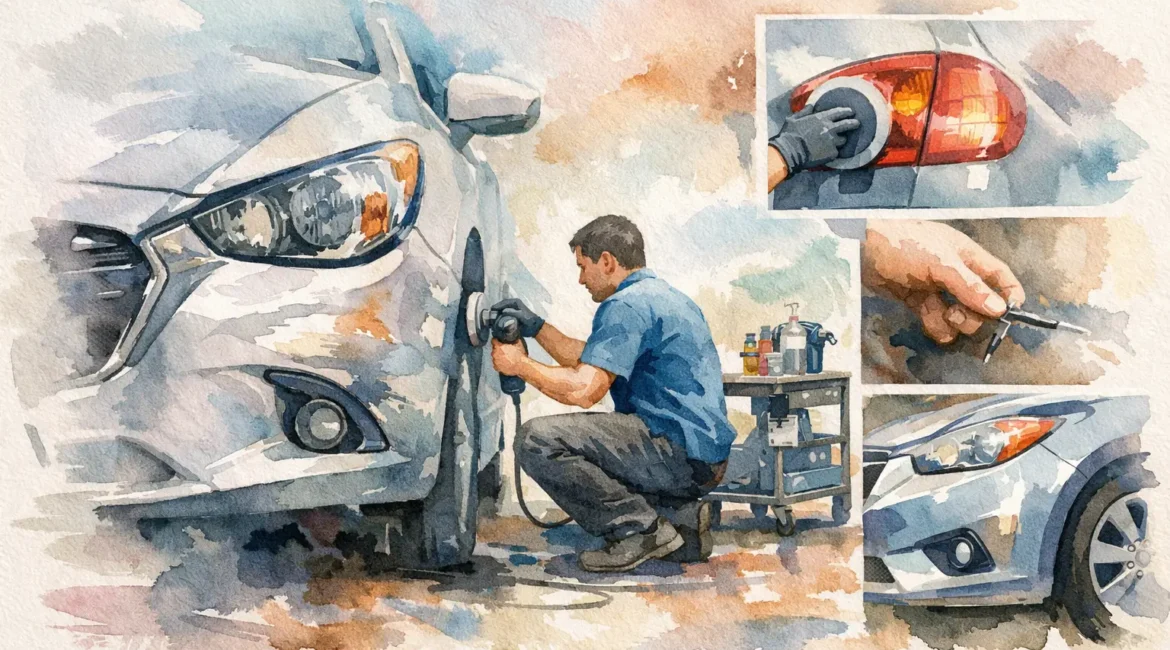
A scraped bumper in the supermarket car park or a scuffed alloy after a tight kerb can make a good car look tired fast. That is usually when people start asking how SMART repairs work, whether the finish will last, and if they are genuinely better value than booking a larger bodyshop job.
SMART stands for Small to Medium Area Repair Technology. In plain terms, it is a repair method designed for localised damage rather than full panel or full vehicle repainting. Instead of stripping and repainting more of the car than necessary, the technician focuses on the damaged area, blends the repair into the surrounding finish, and restores the appearance without turning a minor issue into a major job.
For everyday drivers, that matters because most cosmetic damage is local. Light bumper scuffs, small dents, scratches, paint chips and kerbed alloys usually do not need a full respray. A proper SMART repair can deal with the affected section, keep costs sensible, and get the vehicle back looking right much sooner.
How SMART repairs work in practice
The process starts with an inspection. A technician checks the size, depth and position of the damage, along with the panel material and paint condition. This first step is where experience really counts, because not every mark is a SMART repair job. If the damage is too extensive, if the paint has failed across a large area, or if the panel is badly creased, a more conventional repair may be the better option.
If the damage is suitable, the area is cleaned and prepared. That might involve removing dirt, road film, wax or loose paint so the repair can be carried out on a sound surface. For scratches, this often means sanding back the damaged section. For minor dents, the surface may need reshaping first. On plastic bumpers, filler and repair compounds can be used where needed to restore the contour before refinishing.
Once the shape is corrected, the technician primes the area if required and then colour matches the paint. This is one of the parts customers worry about most, and fairly so. A poor colour match stands out immediately. A good repairer will mix and test the paint carefully so it blends with the existing finish, taking into account the age of the vehicle, the paint code and how the original paint has weathered over time.
The paint is then applied only where needed, with careful blending into the surrounding area. After that, clear coat is added for gloss and protection if the paint system requires it. Once cured, the area is refined and polished so the repaired section sits naturally with the rest of the panel. Done properly, the aim is simple – you should notice the repair because the damage is gone, not because the finish looks different.
What SMART repairs are best at fixing
SMART repairs are ideal for cosmetic damage that is small to medium in size and confined to a specific area. That includes bumper scuffs, light scratches, stone chips, minor dents, wing mirror damage and alloy wheel kerbing. These are the jobs where a targeted repair often makes more sense than replacing parts or repainting entire sections.
They are especially useful on modern bumpers, because bumper damage is often more visible than it is serious. A low-speed scrape can leave paint transfer, scratches and local surface damage without affecting the structure underneath. In those cases, a SMART repair can restore the finish quickly and neatly.
Alloy wheel refurbishment is another common example. If the wheel has picked up cosmetic kerb damage but is otherwise sound, the damaged edge can often be repaired and refinished instead of replacing the wheel altogether. That saves money and keeps the car looking cared for.
When a SMART repair is not the right choice
This is where honesty matters. SMART repairs are not a fix for everything, and a decent repairer will tell you when a larger repair is the smarter route.
If the damage extends across a large part of the panel, if metal is sharply creased, if rust has set in, or if there is structural damage underneath, a localised cosmetic repair may not give the standard the car needs. The same applies if previous poor-quality work has left the paint unstable. In those cases, a full panel repair, a replacement part or more involved bodyshop work may be necessary to restore the car properly.
It also depends on where the damage is. A small mark in the middle of a flat panel is one thing. Damage on a hard body line, panel edge or awkward curve can be more demanding. It may still be repairable, but it needs the right judgement and skill.
Why SMART repairs are often quicker and more cost-effective
The main reason SMART repairs can be more affordable is simple – less labour, less material and less disruption. If the technician only needs to repair one localised area instead of removing, stripping and repainting a full panel, the job is usually faster from start to finish.
That shorter process also makes it easier for busy drivers to get repairs done before the damage gets ignored for months. For commuters, families and anyone who relies on the car daily, that matters. A fast turnaround can be the difference between getting the job sorted now and putting it off until the damage gets worse or starts affecting the vehicle’s value.
That said, cheaper should never mean rushed. A SMART repair still depends on proper preparation, accurate colour matching and careful finishing. If a quote seems suspiciously low, it is worth asking what corners are being cut.
How long the repair usually takes
Many SMART repairs can be completed on the same day, depending on the type of damage and how many areas need work. A single bumper scuff or a localised scratch may take only a few hours. More than one damaged area, a more difficult paint match or extra preparation work will naturally add time.
Weather and workshop conditions can also make a difference, especially for paint curing and finishing. That is one reason a professional setup matters. Speed is useful, but only if the repair is being carried out under the right conditions and checked properly before the vehicle is handed back.
Will the finish last?
If the repair is done properly, yes, it should. The durability comes down to the same fundamentals as any quality paint repair – sound preparation, correct materials, proper paint application and a clean finish. A SMART repair is not temporary by definition. It is a targeted repair, not a lesser one.
What customers sometimes see online are poor examples where the prep was rushed or the colour match was off. That is not a problem with the method itself. It is a problem with workmanship. A well-executed SMART repair should hold up in everyday use and restore the appearance of the vehicle to a standard you can be happy with.
How SMART repairs work for resale value and appearance
Most drivers do not want every small mark fixed purely for vanity. They want the car to look well kept and avoid obvious damage dragging down its value. That is another area where SMART repairs make sense.
A car with scuffed bumpers, chipped paint or damaged alloys can look neglected, even if it is mechanically sound. Tidying those issues helps the vehicle present better, whether you are handing it back at the end of a finance term, selling it privately or simply taking pride in how it looks on the road.
For local drivers across Glasgow and surrounding areas, where daily use, tight parking spaces and poor weather all take their toll, these repairs are often the most practical way to keep a car in strong cosmetic condition without committing to a bigger bodyshop bill.
Choosing the right repairer
The real question is not only how SMART repairs work, but who is doing them. The best results come from technicians who know when a SMART repair is appropriate and when it is not. They should be able to assess the damage clearly, explain what finish you can expect and recommend a larger repair if that is what the car genuinely needs.
That straightforward approach matters more than sales talk. At Unique Bodywork, the focus is on getting vehicles back to pre-damage or showroom condition where possible, with the kind of finish customers can trust and the convenience that makes the process easier to manage.
If you are looking at a scratch, dent or scuff and wondering whether it is worth sorting, it usually is. Small damage has a habit of making the whole car feel more worn than it really is, and the right repair can put that right without turning into a bigger job than necessary.