
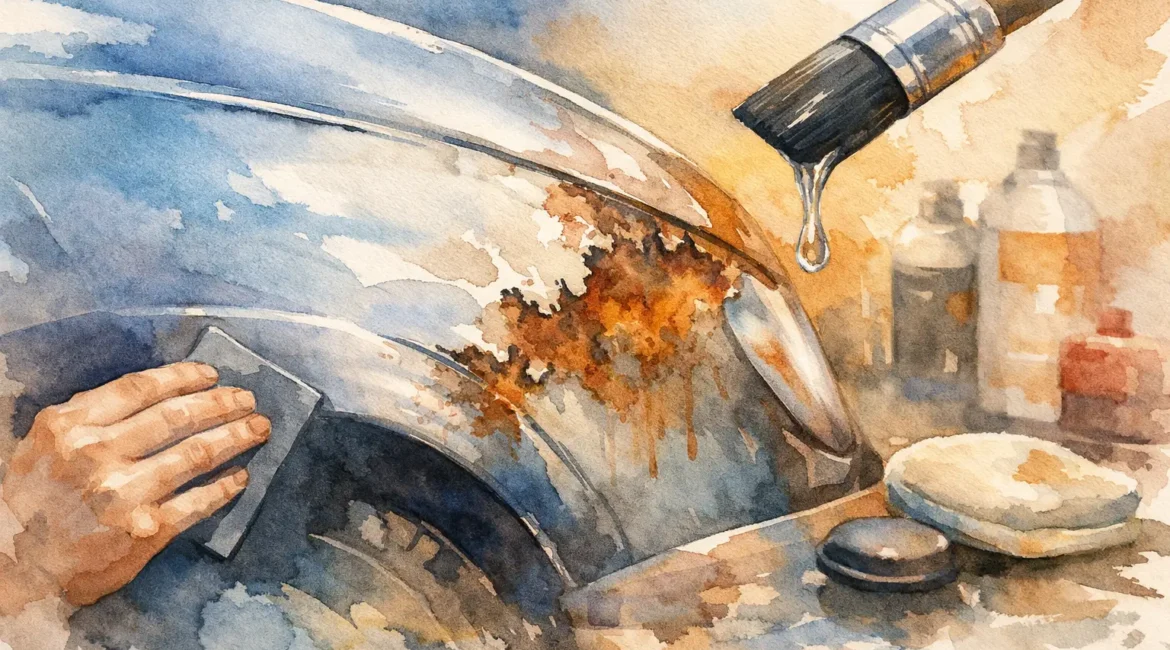
A dull patch on a bonnet, a white edge around a scratch, or clear coating lifting from a bumper can make an otherwise tidy car look neglected. Knowing how to fix car lacquer early can prevent a small cosmetic issue becoming faded paint, exposed panels and, in some cases, corrosion.
Car lacquer is the clear protective layer over the colour coat. It gives modern paintwork its gloss, depth and resistance to rain, road salt, sunlight and everyday grime. Once that layer is damaged, simply washing or polishing the area rarely solves the real problem. The right repair depends on whether the lacquer is lightly marked, scratched through, cloudy, or actively peeling away.
What car lacquer damage looks like
Lacquer failure does not always look dramatic at first. It may begin as a loss of shine on the roof, bonnet or top edges of the doors, particularly on cars that spend a lot of time outdoors. You might also notice a milky or grey appearance, fine cracks, or a rough patch that does not improve after cleaning.
More advanced damage is easier to spot. The clear coat may peel in flakes, lift around stone chips, or leave the coloured paint underneath looking dry and unprotected. On metallic and pearlescent finishes, the difference can be especially obvious because the lacquer is what creates the smooth, even gloss.
A scratch is slightly different. If it has only marked the lacquer, it may be possible to improve or remove it by machine polishing. If you can feel the scratch clearly with a fingernail, or can see primer, bare metal or plastic beneath it, the repair will need more than polish.
Can you fix car lacquer without repainting?
Sometimes, yes. Light surface scratches, oxidation and minor hazing can often be corrected without repainting the panel. A professional assessment is worthwhile because paint can only be polished safely when there is enough clear coat remaining to work with.
Machine polishing carefully removes a very fine layer of damaged lacquer, levelling the surface so light reflects evenly again. This can make swirl marks, light scratches and dullness far less visible. It is an excellent option for sound paintwork that has lost its finish, but it cannot replace lacquer that has peeled away.
If the lacquer is cracked, lifting or missing, polishing can actually make the area worse. It may smooth the edge temporarily, but it will not bond a failing clear coat back to the paint. At that stage, the affected area usually needs to be prepared and refinished properly.
When a small repair can work
A localised repair may be suitable for a stone chip, a small scuff, or a short scratch where the surrounding paint is still in good condition. The damaged section is cleaned, sanded and prepared before matching the colour and applying fresh lacquer. Once cured and polished, a well-completed repair should blend naturally with the surrounding finish.
This is often a more cost-conscious answer than painting a whole panel, especially for minor bumper damage or marks around door edges. The trade-off is that a local repair has to be judged carefully. Large flat panels, awkward metallic colours and damage in a highly visible area may require a wider blend for the best match.
A SMART repair is often ideal where the damage is contained. It is designed to restore a small area efficiently while avoiding unnecessary work elsewhere on the vehicle. For busy drivers, that can mean less time off the road and a finish that protects the appearance and value of the car.
When full panel refinishing is the better choice
Peeling lacquer is normally a panel-painting job. Once clear coat has started to fail over a wide area, applying new lacquer on top will not produce a lasting repair. The loose and damaged layers need to be removed, the surface needs to be properly prepared, and the colour and clear coat have to be rebuilt in the correct order.
This is common on bonnets, roofs and boot lids that have suffered years of UV exposure. It can also happen after a poor previous paint repair, where incompatible materials or poor preparation have affected adhesion. A quick aerosol coating may make the panel look better for a short time, but it often leaves visible edges, uneven gloss or further peeling later.
Professional refinishing also matters on newer vehicles with complex paint colours. Metallic, pearl and tri-coat finishes can look noticeably different depending on spray technique, panel angle and lacquer application. A proper bodyshop repair is about more than getting close to the right colour – it is about restoring a consistent finish across the visible area.
How to fix car lacquer: the sensible route
For very light damage, start with a thorough wash and inspect the panel in daylight. Dirt, traffic film and old polish can make paintwork look worse than it is. If the mark disappears when wet or feels smooth, it may be a surface issue rather than a deep defect.
Avoid attacking the area with heavy-cut compounds, abrasive pads or household products. Over-polishing can thin healthy lacquer around the damage, while harsh cleaners can leave staining or further dullness. Touch-up products can be useful for tiny chips, but they are unlikely to give a showroom-standard result on a visible scratch or a peeling section.
For anything beyond a small chip, a bodyshop inspection is usually the most economical next step. It establishes whether the panel can be polished, repaired locally or needs full refinishing before money is spent on products that will not solve the problem.
It is particularly important to seek advice promptly if the damage has reached bare metal. Water can get beneath the paint film and corrosion can begin around the exposed area. What starts as a small lacquer or paint defect can then require rust treatment, filling and a more extensive repair.
Why DIY lacquer spraying often disappoints
DIY kits can look tempting because the initial cost is low. They can have a place for an older car, a hidden area, or a very small touch-up where perfection is not the aim. But visible paintwork demands clean preparation, accurate colour matching, controlled spraying conditions and careful finishing.
The most common problems are overspray, dry spray, runs, dusty surfaces and a hard edge between old and new lacquer. Temperature and moisture also affect how the coating cures. Glasgow weather is not kind to outdoor paint repairs, and spraying in a garage without the right ventilation, extraction and safety equipment carries its own risks.
Modern professional coatings can contain harmful chemicals, so spraying should not be treated like a simple weekend job. A quality repair uses the correct materials and controlled processes to create adhesion, gloss and durability – not just a temporary shine.
Protecting the new finish
Once repaired, give the paintwork a little help. Regular washing removes road salt, grit and bird droppings that can damage the surface if left sitting. Use a pH-neutral car shampoo where possible, dry the car with a clean microfibre towel, and avoid abrasive automated wash brushes if preserving the finish matters to you.
A good wax or paint sealant adds a sacrificial protective layer and makes cleaning easier. It will not repair failed lacquer, but it can reduce the impact of grime and UV exposure on sound paint. If your car has just been painted, follow the bodyshop’s aftercare advice before applying any protection, as fresh coatings need time to cure fully.
For drivers across Glasgow and the surrounding area, Unique Bodywork can assess lacquer damage and recommend the repair that makes sense for the condition of your vehicle – from a targeted cosmetic repair to full panel refinishing. The aim is straightforward: a clean, durable finish without paying for work your car does not need.
A small loss of gloss is easy to put off, but paint defects rarely improve on their own. Getting the panel checked while the damage is contained gives you the best chance of restoring that showroom finish quickly, neatly and at a competitive price.