
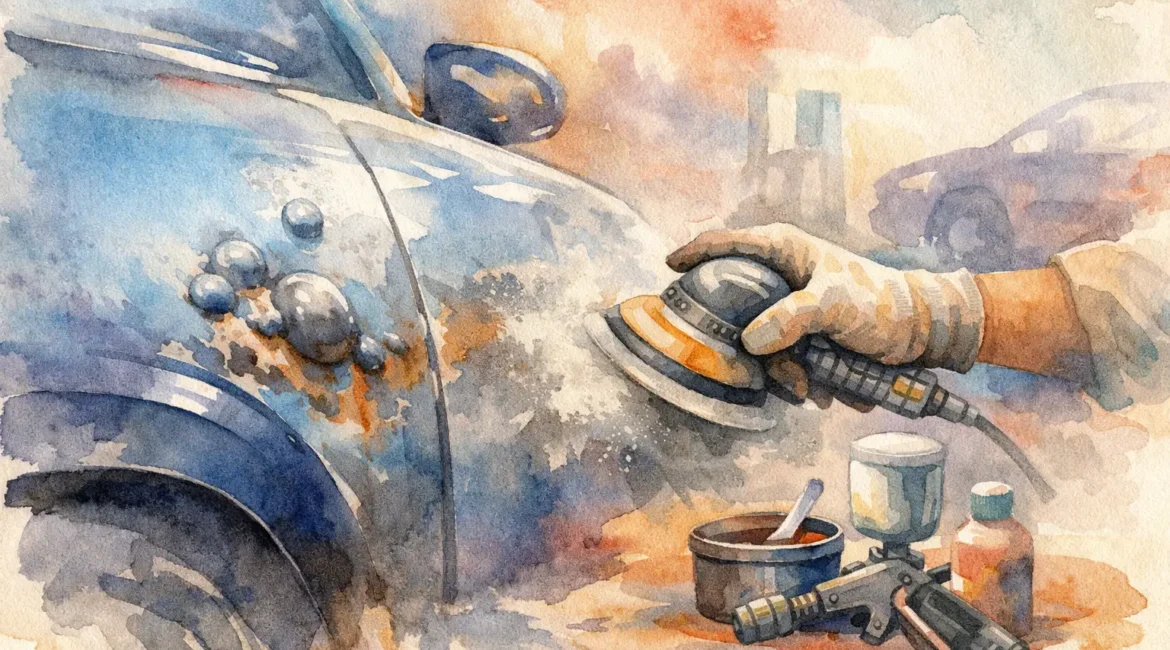
A small raised blister can look like a minor cosmetic issue, but car paint bubbling is often the first visible sign that moisture has got beneath the finish. Left alone, that tiny patch can spread across a panel, expose bare metal and turn a straightforward paint repair into a more involved rust restoration job.
For drivers, the key is not to judge the damage by the size of the bubble. The real question is what is happening underneath it. A proper inspection identifies the cause, removes it fully and restores the panel with a finish that looks right alongside the rest of the vehicle.
What causes car paint bubbling?
Paint is designed to protect the bodywork from water, salt, road grime and everyday wear. When the protective layers are damaged or fail to bond correctly, moisture can creep underneath. The paint then lifts away from the panel, creating blisters or bubbles.
The most common cause is corrosion. A stone chip, scratch, dent or worn panel edge allows water to reach the metal. Once rust starts, it expands beneath the paintwork and pushes the coating upward. This is particularly common around wheel arches, sills, doors, boot lids, bonnet edges and lower sections of panels, where spray from wet roads collects.
In and around Glasgow, winter salt, standing water and regular rain give corrosion plenty of opportunity to develop. It is not only older cars that are affected either. A modern vehicle with a deep scratch or poorly completed previous repair can develop bubbling surprisingly quickly.
Bubbling can also result from a previous respray or repair. If a panel was painted over existing rust, insufficiently prepared, contaminated with silicone or grease, or exposed to moisture before the paint fully cured, the finish may fail later. In those cases, simply repainting over the visible bubbles will not solve the problem. The underlying issue has to be removed first.
Is it always rust?
Not always, although rust is the most serious and common explanation on steel panels. Sometimes the paint has reacted because of contamination, trapped solvents, poor adhesion between paint layers or an earlier repair that has begun to fail. These faults can appear as small blisters, craters or lifted patches, particularly after a respray.
Aluminium and plastic panels do not rust in the same way as steel, but they can still suffer paint adhesion problems, corrosion around fittings or damage beneath the coating. This is why an experienced bodywork inspection matters. The repair method depends on the panel material, the location of the damage and whether the issue is localised or spreading from behind.
A useful rule is to treat every bubble as a warning rather than a surface blemish. Pressing it, picking at it or covering it with touch-up paint may make it look temporarily less obvious, but it will not stop deterioration below the surface.
How to spot a developing paint problem
Early paint bubbling can be easy to miss, especially on darker colours or along the lower edge of the vehicle. Check your bodywork after washing the car, when dirt is not hiding small defects. Look closely around arches, door bottoms, sills, fuel filler areas, panel seams and behind mud flaps.
Pay attention to paint that feels uneven, looks slightly swollen or has a rough edge around a chip. Brown staining, flaking lacquer and paint that lifts at a seam are stronger signs that corrosion is already present. If a panel has previously been repaired, inspect the blend line and any areas close to the repair for lifting or dull patches.
You do not need to diagnose the cause yourself. What matters is arranging an assessment before water reaches a wider area of metal. Catching the issue early can preserve more of the original panel and keep the repair more cost-effective.
Why a quick cosmetic cover-up rarely works
It is tempting to sand the visible bubble, apply a little filler and use a touch-up pen. That approach can be useful for the smallest fresh stone chip, provided there is no rust beneath it. Once paint has already bubbled, however, the problem usually runs beyond what can be seen.
Rust spreads sideways as well as outward. Sanding only the raised area may leave corrosion at the edges, where it continues to grow under the new coating. A touch-up repair can then crack or blister again within months, particularly through a wet Scottish winter.
The same applies to aerosol paint applied without proper preparation. Colour may be close, but matching the vehicle’s shade, metallic effect, gloss level and lacquer finish takes the right materials and controlled application. A poor repair can stand out more than the original damage and affect the car’s appearance and resale value.
The right way to repair bubbling paint
A lasting repair starts with finding the full extent of the defect. The affected paint is removed back to a sound edge, and the panel is assessed for corrosion, contamination or failed previous materials. If rust is present, it must be removed rather than covered.
Surface corrosion and local repairs
Where corrosion is confined to the surface, the damaged area can often be stripped back, treated and prepared before refinishing. The repair is then primed, colour matched and lacquered to produce an even finish. Depending on the location and colour, the paint may be blended into the surrounding panel so there is no obvious hard edge.
This is often the best outcome for a small early-stage bubble. The panel remains structurally sound, the affected area is dealt with properly and the vehicle retains a clean, well-kept appearance.
Deeper rust and panel damage
If corrosion has eaten into the metal, the repair becomes more involved. The weakened section may need to be cut out and rebuilt, or the panel may require replacement if that is safer and more economical. Body lines, seams and drainage points must also be considered, because these areas can allow moisture back in if they are not correctly sealed.
There is a trade-off here. A low-cost surface repair may seem attractive, but it is poor value if corrosion returns soon afterwards. A proper repair costs more where additional preparation or metalwork is needed, yet it addresses the cause and protects the condition of the car for longer.
Failed paintwork after a previous repair
When bubbling is caused by poor adhesion or a paint reaction, the failed material needs to be removed until the repair reaches stable layers. The panel is then prepared carefully, using compatible products and correct drying times before it is refinished.
This work is not just about applying new paint. Clean preparation, accurate masking, colour matching and controlled curing are what separate a durable result from one that starts to lift again.
Can you keep driving with paint bubbles?
Usually, a small bubble will not stop the vehicle being safe to drive immediately. But delaying the repair is a gamble with the panel underneath. Water, salt and road debris will continue to work through the damaged coating, especially around exposed lower bodywork.
If the bubbling is close to a structural area, a door edge, sill or wheel arch, arrange an inspection promptly. These sections are frequently exposed to moisture and can deteriorate out of sight. A car that otherwise drives perfectly can still lose value and need much more expensive bodywork if corrosion is ignored.
Wash the area regularly, remove road salt when possible and avoid aggressive pressure washing directly at lifting paint edges. These steps may limit further contamination while you arrange a repair, but they are not a substitute for removing the cause.
Choosing a bodyshop for car paint bubbling repairs
Ask the bodyshop to explain what they expect to find beneath the paint and how far the repair will extend if corrosion is uncovered. A clear assessment is more useful than a vague promise to sand and repaint the affected spot.
You should also expect attention to colour matching and finish quality. A repair needs to protect the panel, but it should also look right in daylight from different angles. On metallic, pearlescent and older faded paintwork, blending may be necessary for a showroom-quality result.
At Unique Bodywork, repairs are assessed with the full condition of the panel in mind, not just the visible bubble. That means giving drivers a straightforward view of the work required, whether it is a localised SMART repair, more extensive rust treatment or refinishing after previous paintwork has failed.
A bubble in the paint is rarely going to improve on its own. Deal with it while it is small, and you give your vehicle the best chance of keeping both its protection and its finish for years to come.