
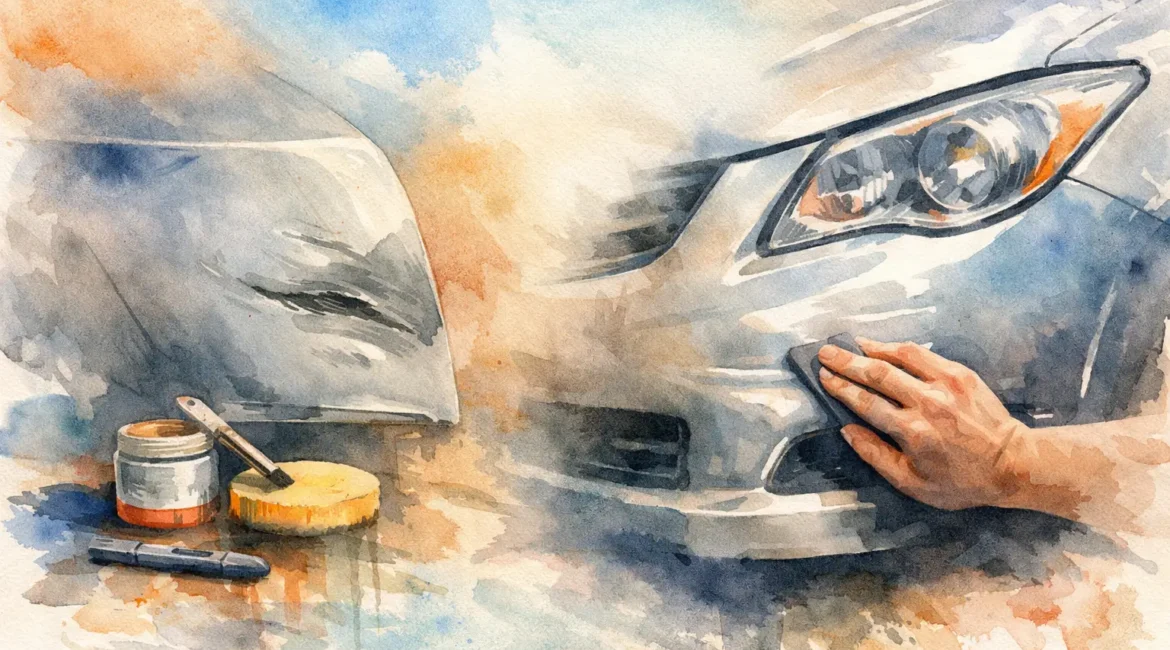
A scrape on the bumper in a tight car park or a dent picked up outside the supermarket can leave you asking the same thing straight away – what is the scratch and dent removal cost going to be? The honest answer is that it depends on the damage, the panel, the paint finish and whether a localised repair will do the job properly. What matters most is getting the damage assessed by a body repair specialist who can tell you what actually needs done, not what can be sold.
For most drivers, the concern is not just price. It is whether the repair will be visible afterwards, how long the car will be off the road, and whether a cheaper fix now will lead to a bigger bill later. That is where good advice makes a difference.
What affects scratch and dent removal cost?
The biggest factor is the extent of the damage. A light surface scratch in the clear coat is a very different job from a deep scratch that has gone through the paint and into the primer or metal. The same goes for dents. A small, shallow dent on a door may be straightforward to repair, while a dent on a panel edge, body line or bumper corner usually takes more time and more skill.
Panel location also changes the price. Bonnets, doors and wings are generally easier to work on than awkward areas around wheel arches, bumper contours or swage lines. If the damage sits in a place where blending paint into the surrounding area is more difficult, the repair cost tends to rise.
Paint type is another major part of the quote. Solid colours are often simpler to match than metallic, pearlescent or specialist finishes. If your vehicle has a more complex paint system, the time spent colour matching and refinishing increases. That matters if you want the repair to disappear properly in daylight, not just look acceptable from a distance.
Then there is the question of whether the damage is cosmetic only. If a dent has stretched the metal, cracked the paint or affected fixings behind the panel, the repair becomes more involved. On plastic bumpers, even a small impact can leave distortion or broken clips that need attention before refinishing starts.
Typical price ranges for minor cosmetic repairs
While every vehicle needs to be inspected properly, there are broad price ranges that help set expectations. A very light scratch that can be polished out may cost far less than a painted repair. A localised SMART repair for a minor scratch or small dent is usually the most cost-effective route when the damage is limited to one area and the surrounding panel is still sound.
For minor scratches and small dents, many customers are often looking at a few hundred pounds rather than a full-panel bodyshop bill. Once damage is deeper, spread across a larger area or involves multiple panels, the cost moves up. If a bumper needs repaired and painted, or a door requires dent removal plus colour blending, the quote will reflect the extra labour and materials.
That is why rough internet pricing only goes so far. Two scratches that look similar in a photo can require very different repair methods in person.
When a lower quote is not always the better quote
Everyone wants a fair price, and rightly so. But with bodywork, the cheapest option is not always the best value. If the repairer skips proper preparation, uses poor colour matching or rushes the finish, the damage may still catch the eye every time you walk up to the car. Worse still, the repair can fail early, leaving you paying twice.
A proper repair is about more than filling a mark and adding paint. Surface preparation, panel shaping, paint mixing and finishing all affect the end result. A low quote may be based on doing the minimum. A sensible quote should reflect what is needed to restore the vehicle to a proper standard.
For drivers thinking about resale value, this matters even more. Obvious cosmetic damage puts buyers off, but poor repairs can do the same. A clean, well-executed repair protects both the appearance of the car and its value.
Scratch and dent removal cost vs SMART repair pricing
SMART repairs are often the right answer for minor cosmetic damage because they target the affected area instead of repainting more of the vehicle than necessary. That usually keeps the scratch and dent removal cost lower and shortens turnaround times as well.
This approach works best for small to medium scratches, bumper scuffs, minor dents and localised paint damage. It is especially useful for everyday knocks that have not caused structural issues. For commuters, families and anyone who needs their vehicle back quickly, it can be a very practical option.
That said, SMART repair is not a catch-all solution. If the damage is large, if the paint has failed over a wider section, or if panel alignment is affected, a more traditional body repair may be the better route. A good repairer will tell you when a localised fix is suitable and when it is not worth forcing it.
Why some dents are quick to fix and others are not
Dents look simple from the outside, but repair time can vary a lot. A shallow dent in the middle of a flat section is often easier to reshape cleanly. A sharp crease, a dent on an edge or damage close to a reinforcement behind the panel is usually more labour-intensive.
Access matters as well. If trim, lights, liners or interior panels need removed to reach the damaged area, the job takes longer. On some vehicles, what seems like a minor dent can involve a fair bit of dismantling before the repair even begins.
Material matters too. Steel, aluminium and plastic panels do not behave the same way. Some dents can be eased out with minimal filler. Others need more refinishing work to achieve a smooth, lasting result.
How to keep repair costs sensible
If you catch the damage early, you usually give yourself more options. A fresh scratch or small dent is often easier to repair neatly before corrosion starts, paint lifts further, or the damaged area gets knocked again. Leaving it for months can turn a modest repair into a more expensive one.
It also helps to get the vehicle seen in person rather than relying on guesswork. Photos can be useful for an initial idea, but lighting, angles and reflections hide a lot. A proper inspection allows the repairer to recommend the most cost-effective method without compromising the finish.
If the damage happened in an accident and another driver was at fault, you may not need to cover the repair yourself at all. In those cases, support with non-fault claims can be just as valuable as the repair work itself, especially if it saves you time, hassle and unnecessary expense.
Choosing a repairer in the Glasgow area
For local drivers, convenience matters nearly as much as price. If your car is used for work, school runs or everyday travel, a long wait or awkward booking process quickly becomes a problem. That is why it makes sense to use a repairer that can assess the damage properly, explain the options in plain language and complete the work without dragging it out.
Experience matters here. So does honesty. You want a bodyshop that knows when a same-day cosmetic repair is realistic and when a more involved repair is needed for a proper result. At Unique Bodywork, that means looking at the damage, recommending the right repair for the condition of the panel, and keeping the process straightforward from start to finish.
The other thing worth looking for is consistency in finish. Anyone can promise a repair. The real question is whether the vehicle comes back looking right, with the paint matched properly and the damaged area restored to the standard you expected.
Is scratch and dent removal worth it?
In most cases, yes. Even minor damage affects how your vehicle looks and can chip away at its value. A well-done repair makes the car easier to live with, easier to sell and easier to take pride in. For leased vehicles or cars due back to finance companies, repairing scratches and dents before inspection can also help avoid higher end-of-term charges.
The key is not to guess based on the worst-case scenario. Some damage is simpler and more affordable to sort than drivers expect, especially when localised repair methods are suitable. Other damage needs a more involved approach to get the finish right. Either way, a clear assessment gives you the information you need to make the right call.
If your car has picked up damage and you are weighing up the scratch and dent removal cost, the best next step is a proper inspection from a trusted body repair specialist. A fair quote, honest advice and a quality finish will always take you further than a quick patch-up. And when the job is done properly, you stop noticing the damage because it is no longer there to notice.