
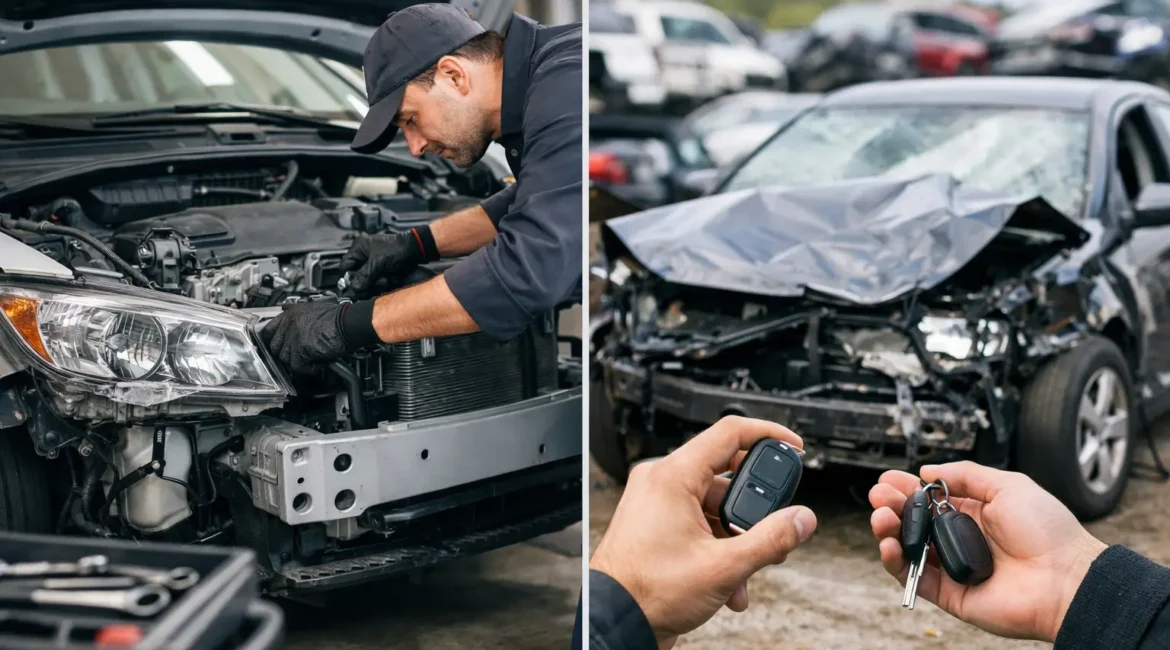
A damaged bumper, crumpled wing or deployed airbag can make any driver fear the worst. Yet repair versus writeoff is not simply a question of how bad the car looks. It comes down to the true cost of putting it right, the vehicle’s value, its safety, and the options available to you through your insurer.
For drivers across Glasgow and the surrounding area, the key point is simple: an insurer calling a vehicle a write-off does not always mean it cannot be repaired. It means the insurer has decided that settling the claim may cost less than funding the repair. Those are two very different things.
Repair Versus Writeoff: What Is the Difference?
A repair is exactly what most people expect: damaged panels, paintwork, wheels or mechanical parts are restored so the vehicle is safe, presentable and fit for the road. Depending on the impact, that might mean a local SMART repair, paintless dent removal, replacement parts, chassis measuring, panel work or a full respray.
A write-off, more accurately called a total loss, is an insurance decision. The insurer compares the expected repair bill with the car’s market value before the accident. If repairs, courtesy-car costs, administration and potential hidden damage make the claim uneconomical, they may categorise the vehicle as a write-off.
This can happen even where the visible damage appears fairly minor. A ten-year-old car with a low market value can be written off after a dented door, damaged alloy and scraped bumper if the cost of proper parts, preparation and refinishing is high. Equally, a newer car with substantial-looking cosmetic damage may be a straightforward repair because its value supports the work.
The condition of the car before the accident also matters. Low mileage, service history, desirable specification and recent maintenance can all affect its fair pre-accident value. If you believe an insurer’s valuation does not reflect the vehicle you owned, ask for the evidence behind it and provide comparable local adverts, invoices and service records where relevant.
Why Insurers Write Off Repairable Cars
Insurers are required to consider safety, but they also make a financial calculation. Modern cars are packed with sensors, cameras, radar units, advanced lighting and safety systems behind what used to be simple exterior panels. A small front-end impact can damage a bumper cover, grille, brackets, parking sensors, radar calibration equipment and paintwork in one go.
There is also the risk of damage that is not obvious until strip-down. Behind a marked bumper, there may be broken mounting points, a distorted reinforcement bar or damage to the cooling system. A professional estimate accounts for the work that can be seen, but a repairer must also allow for the possibility of further necessary repairs once the vehicle is dismantled.
That does not mean you should accept a write-off decision without questions. It means you should understand what it represents. A write-off category is not a verdict on whether a skilled bodyshop could repair the vehicle. It is a decision about whether the insurer considers repair the best financial route for that particular claim.
The Write-Off Categories in Plain English
The category assigned to a vehicle tells you more about its future. These categories are set by the insurance industry and are especially useful if you are considering retaining a vehicle after settlement.
Category A vehicles must be crushed in full. The damage is so severe that no parts should be salvaged.
Category B vehicles cannot return to the road, but some undamaged parts may be removed for reuse. The body shell must be crushed.
Category S means the car has sustained structural damage. It can be repaired and returned to the road if the work is completed properly, but the write-off history will remain on record.
Category N means there is no structural damage recorded. The vehicle may still have significant faults involving bodywork, electrics, suspension, safety equipment or mechanical components. Category N does not mean minor damage, so it still needs a careful inspection before repair or purchase.
Older terms such as Cat C and Cat D are sometimes still used in adverts or conversation, but Category S and Category N are the current classifications most drivers will encounter. A reputable repairer can explain what the damage means in practical terms, rather than relying on the category letter alone.
When Repair Is Usually the Better Choice
Repair is often the sensible route when the structure is sound and the damage is limited to replaceable or refinishable areas. Bumper scuffs, parking dents, scratched doors, kerbed alloys and small paint defects can frequently be resolved without replacing large sections of the car.
It can also make good financial sense where the vehicle is newer, well maintained or difficult to replace at its current market value. The cost of buying another car is more than the asking price. You may face higher finance costs, unknown history, servicing needs and the inconvenience of starting again. A properly completed repair lets you keep the vehicle you know.
Quality matters here. A cheap cosmetic fix that leaves poor paint matching, overspray, uneven panel gaps or warning lights is false economy. The aim should be to return the vehicle as closely as possible to its pre-accident or showroom condition, with safe repairs and a finish you are happy to see every time you walk up to the car.
For non-fault accidents, you may also have a different route available. If another driver was responsible, it may be possible to pursue the claim against their insurer rather than immediately claiming on your own policy. This can affect excess payments, no-claims discount concerns and access to a suitable replacement vehicle, depending on the circumstances.
When Accepting a Write-Off May Make Sense
Sometimes accepting the settlement is the cleanest option. This is particularly true where the car has major structural damage, serious flood or fire damage, multiple airbags deployed, or a repair cost that is genuinely far beyond the vehicle’s value.
A write-off can also be sensible if you do not want the responsibility of retaining and repairing a Category S or Category N vehicle. Even after an excellent repair, the marker can affect resale value, buyer confidence and insurance quotations. There is no single right answer – it depends on the vehicle, the category, the repair standard and how long you plan to keep it.
If you choose to retain a write-off, the insurer will normally deduct its salvage value from your settlement. Before agreeing, get a realistic repair assessment. Do not base the decision on surface damage alone, social-media estimates or the hope that a quick polish will solve the problem. You need to know the full scope of work, the likely final cost and whether the vehicle can be returned safely to the road.
Get the Facts Before You Decide
The best first step after an accident is an honest inspection from a body repair specialist. Photographs are useful for an initial conversation, but they cannot always show damage beneath trims, bumpers or panels. A proper assessment identifies what can be repaired, what must be replaced and whether there are safety or alignment issues to address.
Ask clear questions. Is the damage cosmetic, mechanical or structural? Will sensors or driver-assistance systems need recalibrated? Are genuine, approved or alternative parts being considered? What finish can you expect once the work is complete? A good repairer will explain the answers in plain language and give you a realistic timescale.
If your insurer has already proposed a write-off, do not feel pressured to make an immediate decision. Check the valuation, understand the category, and weigh the settlement against the cost and practicality of replacing your vehicle. Keep copies of inspection reports, repair estimates and any evidence that supports a higher pre-accident value.
Unique Bodywork helps drivers make that decision with a practical view of the damage, not a guess based on a single photograph. From minor cosmetic work to more involved accident repairs, the priority is always a safe repair, a high-quality finish and a straightforward process.
A write-off decision can feel final when you first hear it, but it is often the start of a better conversation. Get the vehicle assessed properly, understand the numbers, and choose the route that gives you confidence in both the car and the outcome.