
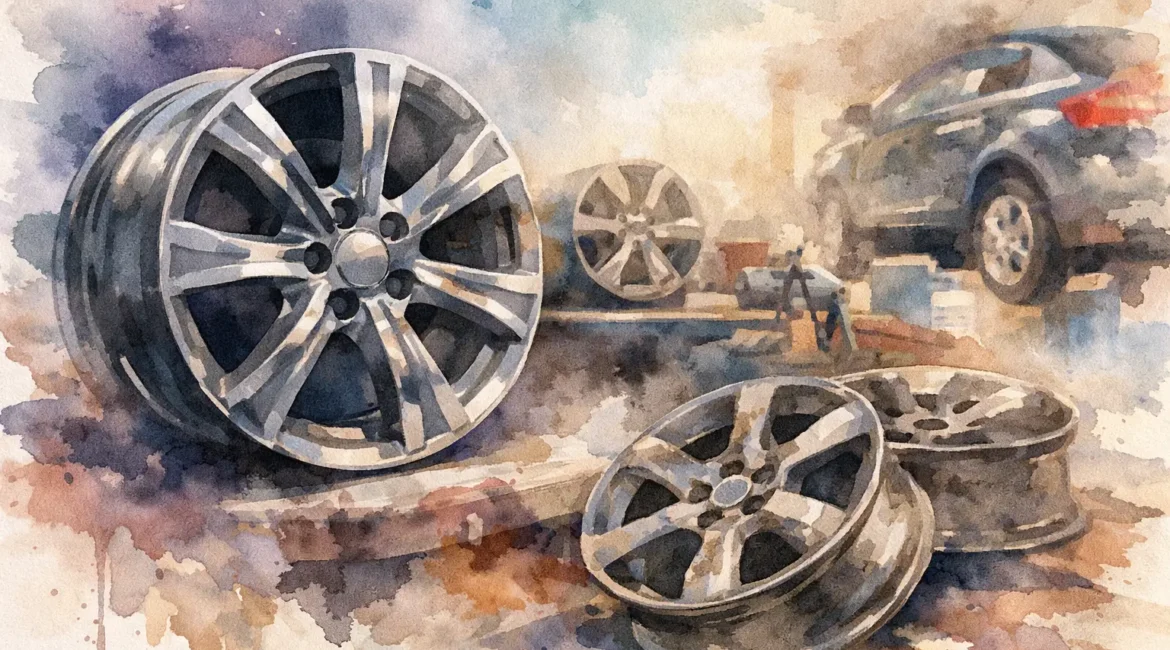
A kerbed alloy can make an otherwise well-kept car look tired, but the decision is not always as simple as fitting a new wheel. Alloy refurbishment or replacement depends on where the damage is, how deep it goes and whether the wheel is still structurally sound. Getting that call right protects the look, safety and value of your car.
Alloy refurbishment or replacement: what is the difference?
Alloy wheel refurbishment restores the existing wheel. It is normally the right approach for cosmetic damage such as kerb scuffs, surface corrosion, flaking lacquer, paint chips and light scratches. A specialist repairs the damaged area, prepares the wheel correctly and applies a colour-matched finish or a full repaint where needed.
Replacement means fitting another wheel in place of the damaged one. That could be a genuine manufacturer wheel, an approved equivalent or, in some cases, a used matching alloy in good condition. It is usually the safer choice where there is cracking, serious distortion or damage that cannot be repaired to a proper standard.
The key difference is that refurbishment deals with the finish and minor imperfections, while replacement deals with a wheel that is no longer suitable to stay in service. A wheel can look badly marked yet be an excellent candidate for refurbishment. Equally, a small-looking crack near the rim or spokes can make replacement the only sensible option.
When alloy refurbishment is the better choice
Most everyday kerb damage does not mean you need a new alloy. Parking scrapes, abrasion around the outer rim and tired-looking paint are common on Glasgow roads and car parks, particularly on low-profile tyres where the wheel sits close to the kerb.
Refurbishment is often a cost-conscious way to bring the wheel back towards showroom condition without changing the original specification of the car. It can also be the best option when the wheel is hard to source, discontinued or part of a set that you want to keep matching.
A proper refurbishment is more than touching up a scratch. The wheel should be assessed, cleaned and prepared so the new finish adheres correctly. Depending on the design, the process may involve sanding, filling minor cosmetic marks, priming, painting and lacquering. The result should look even from across the car, not simply hide the damage at close range.
Painted, powder-coated and diamond-cut alloys
The finish on your wheel matters. Painted alloys are generally more straightforward to refinish, and a full, colour-matched repair can give a clean, durable result. Powder coating is also widely used for a hard-wearing finish, especially when refurbishing a full set.
Diamond-cut alloys need more consideration. Their bright, machined face is created by cutting a very fine layer from the wheel, then protecting it with lacquer. They can be refurbished, but repeated cutting is limited because material cannot be removed indefinitely. If corrosion has spread beneath the lacquer, or the wheel has already been cut several times, replacement may be a more durable answer.
This is why the cheapest quote is not always the best value. A quick cosmetic cover-up may look acceptable for a short time, but poor preparation can lead to peeling paint, bubbling or visible edges around the repair. Good workmanship is what keeps the finish looking right after rain, road salt and regular washing.
When replacement is the safer option
Alloys carry the weight of the vehicle and deal with continual impacts from potholes, speed bumps and uneven roads. Cosmetic damage is one thing. Structural damage is another.
Replacement should be strongly considered if the wheel is cracked, severely buckled, has a distorted rim, repeatedly loses tyre pressure, or causes vibration that cannot be resolved through balancing. Damage around the spokes, bolt holes or inner barrel deserves particular care, as these areas are central to the wheel’s strength and fitment.
A bent wheel is not always obvious when it is fitted to the car. You may notice steering wheel vibration at speed, an unexplained loss of pressure, a tyre that will not balance properly or a knocking sensation after a hard pothole strike. These symptoms need checking rather than assuming the tyre is the problem.
Some wheels can be professionally straightened where the deformation is minor and in an appropriate area. However, that decision must come after inspection. It is not a repair to choose on appearance alone, and a reputable body repair specialist will not recommend cosmetic work where a wheel’s safety is in doubt.
Do not ignore tyre damage
A hard kerb strike or pothole impact can damage more than the alloy. Check the tyre sidewall for cuts, bulges and deep scuffs, and look for pressure warnings on the dashboard. A tyre with sidewall damage may need replacing even if the alloy can be refurbished.
It is also worth having the alignment checked after a substantial impact. A car that pulls to one side, wears tyres unevenly or no longer feels settled on the road may have suffered suspension or steering damage. Sorting the wheel but overlooking the cause can lead to another damaged tyre and more expense later.
How to compare the cost properly
A refurbishment is normally less expensive than replacing an alloy, especially on larger wheels or premium vehicle models. But the price should be compared against the full picture, not just the first figure you are given.
Ask whether the quote covers removal and refitting, tyre handling, valve replacement where required, wheel balancing and the finish needed for your specific alloy. If only one wheel is being repaired, consider whether its colour and sheen will match the other three. On older cars, a full set refurbishment can sometimes produce the most consistent result and make a noticeable difference to resale appeal.
Replacement costs vary widely. A genuine new wheel may be the best match but can be costly. A quality used original wheel can be a sensible alternative if its size, width, offset, centre bore and part number are correct. Buying an alloy simply because it looks similar can create problems with clearance, handling, tyre fitment or insurance requirements.
Cheap non-genuine wheels are not automatically poor, but they should be correctly rated and properly matched to the vehicle. Your car manufacturer specifies wheel dimensions for a reason. If you are changing size or style as part of a custom look, get advice before spending money.
Questions to ask before approving the work
Before deciding, ask the repairer whether the damage is cosmetic, repairable structural damage or replacement-only damage. You should also ask what finish will be used, whether the tyre will be inspected, and whether the wheel will be balanced after refitting.
If your vehicle is being repaired through insurance after an accident, make sure the alloy is included in the assessment. Photograph the damage before work starts, particularly if there is a scuff, crack or tyre issue linked to the incident. For non-fault accidents, clear evidence can help support the repair process.
For motorists who want a colour change, black gloss, satin finish or a smarter factory-style refresh, refurbishment can be an opportunity rather than simply a repair. Just keep the practical details in mind. Highly polished and diamond-cut finishes can look excellent, but may need more care through winter than a straightforward painted wheel.
Choose the repair that keeps your car right
The best decision is not always the lowest-cost one or the quickest-looking fix. Refurbish an alloy when the damage is limited to the surface and the wheel passes inspection. Replace it when cracks, major distortion or repeated pressure loss raise doubts about its condition.
At Unique Bodywork, wheels can be assessed alongside any related bodywork, tyre or accident damage, so you are not left guessing what needs done. A clear inspection gives you a practical route forward – whether that is a high-quality refurbishment or a correctly matched replacement that gets your car looking right and driving safely again.