
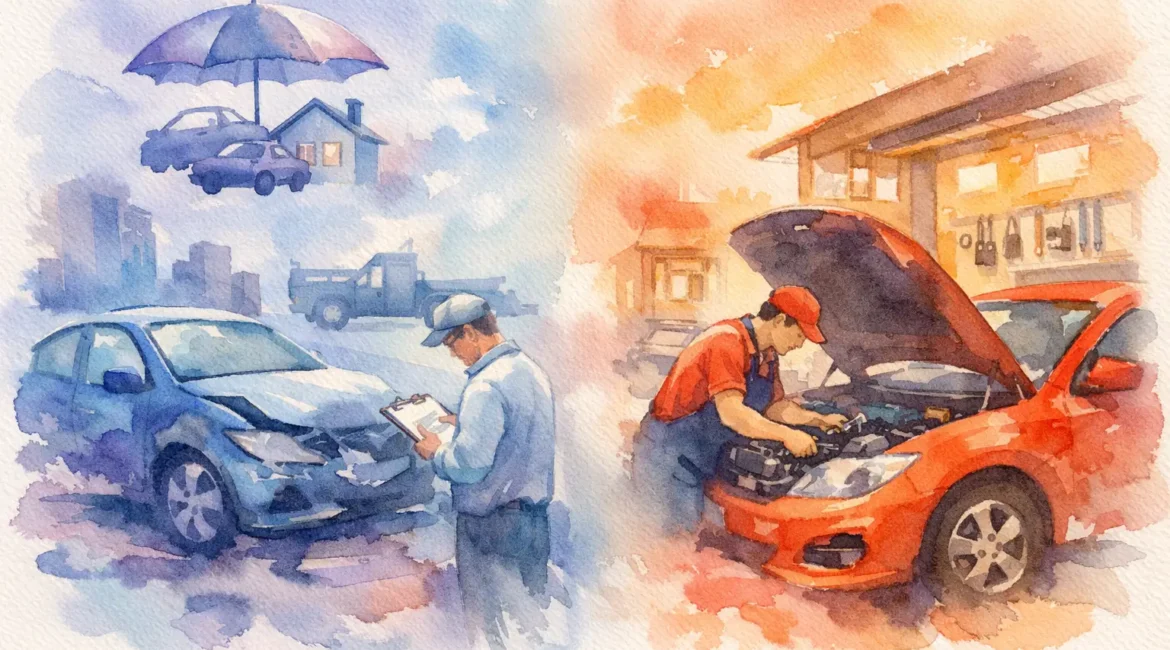
The first question most drivers ask after a bump is simple: should I go through my insurer or pay for it myself? When it comes to insurance repair vs private repair, the right answer depends on the damage, your policy, your excess, and how quickly you want your car back on the road.
A lot of people assume insurance is always the sensible route because that is what cover is for. In reality, smaller repairs can sometimes cost less privately than the combined hit of your excess and any effect on future premiums. On the other hand, larger accident damage usually makes far more sense as an insurance job, especially when safety, structural work or third-party involvement comes into play.
Insurance repair vs private repair – what is the difference?
An insurance repair means the work is carried out as part of a claim under your motor policy. The insurer approves the repair, may appoint or authorise a repairer, and settles the cost according to the terms of your cover. You will usually pay your excess, and the claim is then recorded against your policy.
A private repair means you pay directly for the work without making an insurance claim. The job is quoted, agreed and completed like any other paid service. This is often the route drivers take for dents, scratches, bumper scuffs, alloy damage and other cosmetic issues where the repair cost is manageable.
That sounds straightforward, but the choice is not just about who pays the invoice. It also affects timescales, paperwork, control over the repair process and, in some cases, your longer-term insurance costs.
When insurance repair makes more sense
If your vehicle has suffered heavy accident damage, insurance is usually the practical option. Structural repairs, multiple damaged panels, airbag deployment, suspension damage and anything affecting roadworthiness can quickly become expensive. In these cases, using your policy can protect you from a bill that would be difficult to justify privately.
Insurance repair is also often the right route when another party is involved. If fault is disputed, another driver is claiming, or your insurer needs to assess the circumstances of the accident, it is better to keep everything recorded properly from the start. Trying to sort larger incidents informally can become messy very quickly.
There is also the issue of finance and lease agreements. If your car is on finance or lease, the provider may expect accident damage to be repaired to an approved standard and documented correctly. Going through insurance can help create a clearer paper trail.
For many drivers, convenience matters too. With an insurance-backed repair, much of the process is handled for you once the claim is open. That can be a relief if you have already had the stress of an accident and simply want the job sorted by professionals.
When private repair can be the better option
Private repair often makes sense when the damage is cosmetic and localised. A scraped bumper in a car park, a shallow dent in a wing, minor paint damage or kerbed alloys are common examples. If the repair cost is lower than, or not much more than, your excess, claiming through insurance may not offer much benefit.
This is where drivers sometimes get caught out. They assume a small repair will be cheap through insurance because the insurer is paying, but you still pay the excess, and the claim can sit on your record. Depending on your insurer and circumstances, that may affect your premium at renewal.
Private repair can also be faster. Insurance claims often involve assessments, authorisations and admin before the work starts. If you are paying directly, the process is usually simpler. You get a quote, book the job and move forward. For busy drivers who need the car turned around quickly, that matters.
There is more flexibility as well. You can decide how far you want to go with the repair. Some customers want only the visible damage corrected. Others use the opportunity to tidy up nearby chips, refurbish alloys or improve the overall finish while the car is already in the workshop.
The real cost – not just the invoice
The most sensible way to compare insurance repair vs private repair is to look beyond the headline number.
With insurance repair, your immediate cost is often your excess. But that is not necessarily the full financial picture. If the claim affects your premium later, the true cost may be higher over time. That does not mean you should avoid claiming when you need to. It simply means the cheapest option today is not always the cheapest option overall.
With private repair, you pay the full amount yourself, but that can still work out better on smaller jobs. If a bumper scuff can be repaired at a competitive price and your excess is already close to that figure, paying privately may be the cleaner decision.
It also depends on the standard of repair required. A proper body repair is not just a case of touching in paint and hoping for the best. Matching paint, preparing the panel correctly and restoring the finish properly all matter if you care about appearance and resale value. Cheap, rushed work can cost more in the long run if it needs redone.
Control, choice and repair quality
One of the biggest differences between insurance and private work is how much control you have over the process.
With a private repair, you are free to choose the repairer, agree the scope of work and decide what matters most to you, whether that is speed, budget or showroom-level finish. That direct relationship often gives drivers more confidence because they know exactly what has been quoted and why.
With insurance repair, the process can be more restricted depending on your policy. Some insurers prefer you to use their approved network. Others allow more freedom, but there may still be conditions around estimates and authorisation. That does not automatically mean lower quality, but it can mean less flexibility.
For owners who care about how the car looks after repair, that point matters. A bodyshop focused on visible finish, panel alignment and proper paintwork can make the difference between a repair that simply passes inspection and one that genuinely restores the vehicle.
Time matters more than most people expect
After an accident or even a simple parking knock, most drivers want one thing: their normal routine back. That is why timescale should be part of the decision.
Private work is often quicker to organise because there are fewer steps. There is no waiting for claim approval or insurer instruction before booking begins. For minor to moderate damage, that can mean less disruption.
Insurance repair can still be efficient, especially when handled by an experienced repairer used to dealing with claims. But there are more moving parts, and that can slow things down. If your car is off the road, that delay feels longer than it sounds.
This is one reason many local motorists choose a repairer who can handle both sides of the process. If the damage should go through insurance, they want support with that. If it is better dealt with privately, they want an honest quote and a straightforward booking.
How to decide which route is right for your car
Start with the damage itself. If the vehicle may have structural issues, safety concerns or major panel damage, treat it as an insurance matter unless you have a very specific reason not to. If the issue is mainly cosmetic, ask for a private estimate before deciding.
Then check your policy excess and think realistically about future premiums. A claim for a small repair is not always the smart financial move. At the same time, do not avoid insurance just to save your no claims bonus if the car needs substantial work. Big repairs done properly matter more than short-term savings.
It also helps to consider how long you can be without the vehicle and how involved you want to be in the process. Some drivers want the least paperwork possible. Others want maximum control over the finish and schedule. Neither approach is wrong. It depends on your priorities.
A trusted bodyshop should be able to look at the car, explain the likely repair method, and tell you plainly whether private or insurance repair looks more sensible. That honest advice is often what saves customers money and hassle.
Insurance repair vs private repair – the best option is the one that fits the damage
There is no blanket rule that insurance is best, and there is no blanket rule that private repair saves money. The smart choice depends on the size of the repair, the type of claim, your policy terms and how much value you place on speed, convenience and finish.
For drivers across Glasgow and the surrounding areas, the best approach is usually to get the damage assessed early and make the decision based on facts, not guesswork. A small scrape should not automatically become an insurance claim, and a serious accident should not be treated like a quick cash job.
If you are unsure, get proper advice before you commit. A good repair starts with the right route, and that alone can save you time, money and a lot of frustration.