
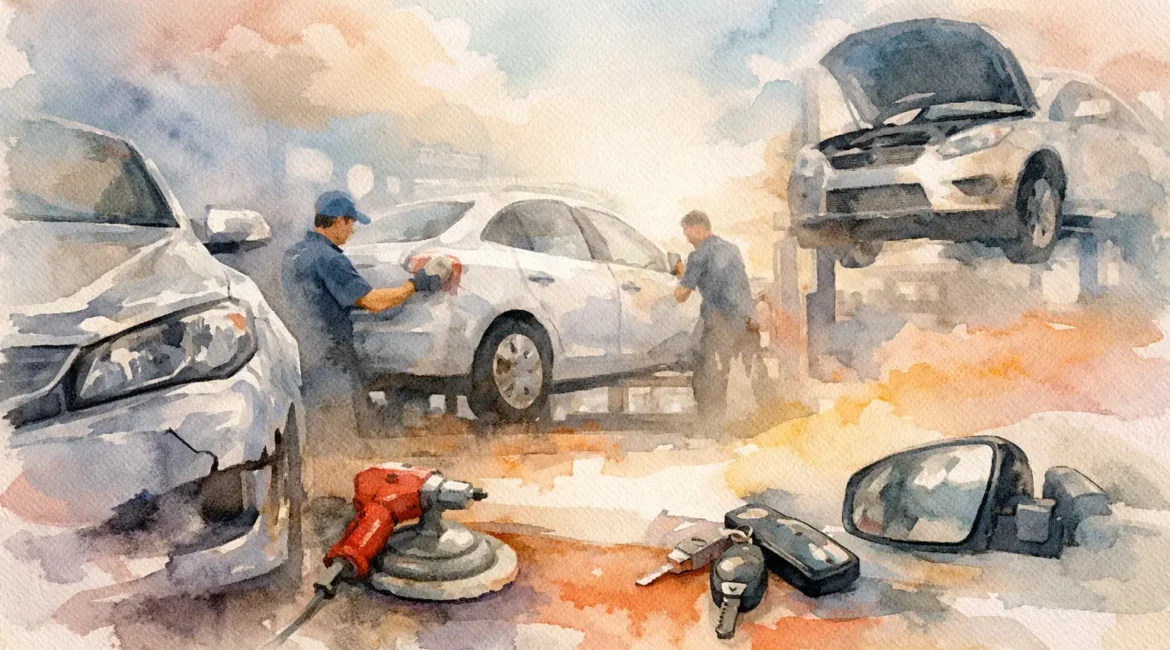
A quality repair should still look right long after you have collected your car. That is where a bodyshop warranty matters. It gives you confidence that the repairer stands behind their workmanship, whether your vehicle has had a bumper repair, scratch removal, paintwork, alloy refurbishment or more substantial accident damage repaired.
The wording matters, though. Not every warranty covers the same things, and a good repairer should explain the terms clearly before work begins. For drivers across Glasgow and the surrounding areas, the aim is simple: you should know what is covered, what is not, and who to speak to if something does not look right.
What is a bodyshop warranty?
A bodyshop warranty is a promise from the repairer relating to the quality of the work they have carried out. It commonly applies to workmanship, paint finish and the materials used as part of that specific repair. If there is a fault caused by the repair process, such as paint lifting due to poor preparation or a repaired panel developing an issue because it was not fitted correctly, the bodyshop should assess it and put it right in line with its terms.
It is not the same as a manufacturer warranty on the car, an insurance policy or a guarantee that no part of the vehicle will ever fail. A warranty is tied to the work completed. If a repaired bumper is later damaged in another parking knock, for example, that would be new damage rather than a warranty issue.
The best approach is to ask for the warranty details in writing. That gives you a clear record of the repair, the covered areas and the time period involved.
What should a bodyshop warranty cover?
The exact cover depends on the type of repair, the condition of the vehicle beforehand and the materials required. However, a professional warranty will normally focus on faults that arise from the bodyshop’s own workmanship.
Paint finish and preparation
Paintwork is one of the most visible parts of any repair. A properly prepared and refinished panel should have an even colour, a consistent gloss and a clean finish. A warranty may cover defects such as peeling, blistering, flaking or loss of adhesion where these have resulted from the repair process.
Colour matching deserves a sensible conversation. Modern vehicles can have metallic, pearl or multi-layer paints, and age, weather exposure and previous repairs can alter the appearance of surrounding panels. A skilled technician will blend paint where necessary to achieve the closest possible match. That is different from promising that an older, weathered panel will look identical from every angle in every light.
Repair workmanship
For dent repairs, bumper repairs, panel replacement and accident work, the warranty should relate to how the job was completed. Panels should be secure, gaps should be correctly aligned and repaired surfaces should be properly finished.
On structural repairs, the process can involve more than what you can see from the outside. It may include alignment checks, replacement components and repairs to mounting points. If your car has been involved in a collision, use a bodyshop that explains the repair plan rather than simply quoting for a cosmetic cover-up.
Parts and materials
Some replacement parts and paint products have their own supplier or manufacturer guarantees. These may sit alongside the bodyshop’s workmanship cover, but they are not always identical. It is worth asking whether a fitted part is genuine, original-equipment quality, aftermarket or used, particularly on an insurance repair or a cost-conscious job.
There is no single right answer. A genuine part may be preferred for certain vehicles, while a quality aftermarket alternative can be a sensible way to manage costs. What matters is that you understand what is being fitted and how any warranty applies.
What a bodyshop warranty does not usually cover
Clear exclusions are not a bad sign. They help separate a genuine workmanship issue from damage or wear that happens after the repair. Most bodyshop warranties will not cover a new accident, vandalism, stone chips, poor washing practices, corrosion that was already present, or normal wear and tear.
For example, a SMART repair can make a local scuff or scratch disappear without repainting a whole panel. It is a highly effective and affordable solution where the damage is contained, but it cannot prevent the next supermarket trolley or kerb strike. Likewise, refurbished alloy wheels can be protected by proper preparation and coating, but fresh kerb damage is not a failure of the original refurbishment.
A repairer may also exclude problems caused by unrepaired damage nearby. If corrosion is spreading from an untreated section of a panel, it can affect an adjacent repair over time. This should be discussed at estimate stage, especially on older cars where the visible damage may not tell the full story.
Why the repair process matters as much as the warranty
A warranty is reassurance, not a substitute for doing the job properly in the first place. The quality of a body repair is largely decided before the final coat of paint goes on. Correct assessment, careful preparation, suitable materials, curing time and proper refitting all make a difference to how well the repair lasts.
Fast turnaround can be useful when you rely on your vehicle for work, family commitments or the daily commute. But speed should not mean rushing essential preparation or paint curing. Same-day work can be suitable for certain minor repairs, while more involved accident damage, resprays or rebuilds need the right amount of time to achieve a finish worth standing behind.
At Unique Bodywork, the focus is on restoring vehicles to pre-damage or showroom condition wherever the repair allows. That means assessing the actual damage, recommending the right repair route and being straight with customers where a lower-cost option has limitations.
Questions to ask before approving a repair
You do not need to be a motor trade expert to make a confident decision. Before authorising work, ask how the damage will be repaired and whether the quotation includes paint, materials, parts and VAT. If you are using insurance, confirm whether there is an excess to pay and whether the work will be managed directly with the insurer.
It also helps to ask what warranty is offered, how long it lasts, whether it covers both paint and workmanship, and what you should do if you spot a problem. A reputable bodyshop will be comfortable answering these questions in plain language.
If your car has been damaged in a non-fault accident, do not assume you have to accept the first repair route suggested to you. You can seek advice on the claim and on getting the vehicle repaired to the correct standard. Keep photographs of the damage, copies of estimates and any repair paperwork until the claim is fully resolved.
Looking after your repair once the car is returned
When collecting your vehicle, take a few minutes to inspect the repaired area in good light. Check the panel lines, paint finish and trim around the work. If you have any concerns, raise them promptly. A professional repairer would rather inspect a question early than let you worry about it.
For newly painted areas, follow any aftercare guidance you are given. Avoid harsh chemicals, abrasive polishing and automatic car washes for the recommended period while the finish settles. Regular gentle washing, particularly during winter when road salt builds up, helps protect paintwork and refurbished wheels.
Keep your invoice and warranty documentation somewhere safe. If you sell the vehicle later, a record of professional repairs can also give a buyer more confidence than an unexplained patch of fresh paint.
When to return to the bodyshop
Return to the repairer if you notice paint lifting, unusual bubbling, a loose trim piece, poor panel alignment or another issue that appears connected to the repaired area. Take a few clear photos, note when you first noticed it and contact the bodyshop as soon as you can.
Do not try to polish, touch up or dismantle the area first. That can make it harder to establish the cause and may affect the warranty assessment. In most cases, an inspection is the quickest way to determine whether it is related to the original repair, normal wear or new damage.
A bodyshop warranty is ultimately about accountability. Choose a repairer that explains the work, uses the appropriate repair method and remains available after collection. Your car should not only look better when it leaves the workshop – you should feel confident driving it away.