
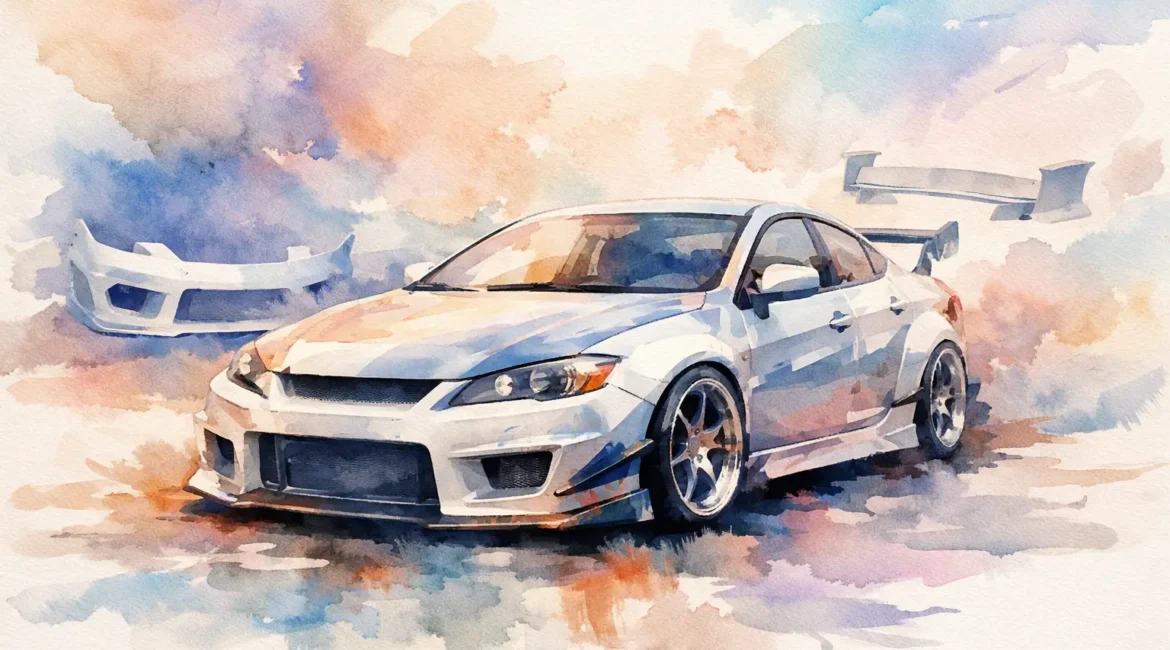
A body kit should make your car look sharper, not like it has been hurriedly altered in a driveway. The difference comes down to more than the design you choose. Proper fitment, suitable materials, careful preparation and a paint finish that matches the rest of the vehicle are what turn body kits from an expensive gamble into a worthwhile upgrade.
For drivers who want a more individual look, the appeal is obvious. A subtle front splitter, side skirts or rear diffuser can give a standard car a lower, more purposeful stance. A full kit can completely change its character. But before buying parts or committing to a style, it pays to understand what is involved and where cutting corners usually shows.
What a body kit can include
The term covers a wide range of exterior styling parts. Some owners only want one addition, such as a front lip or boot spoiler. Others choose matching bumpers, side skirts, arches, diffusers and grilles to create a complete look.
A well-chosen kit should suit the shape, ride height and intended use of the car. On a daily driver travelling through Glasgow traffic, speed humps and uneven roads, an extremely low front splitter may quickly become a nuisance. A more discreet factory-style kit can still improve the appearance while remaining practical for everyday use.
There is no single right answer. The best choice depends on the vehicle, your budget and how you use it. A performance-inspired style may suit a hot hatch, while a cleaner, colour-coded finish often works better on an executive saloon or family SUV.
Choosing the right body kit material
Material affects the price, finish, durability and how easily a part can be repaired. It also affects how accurately the component fits the car in the first place.
ABS plastic
ABS is common on quality aftermarket and original-equipment-style parts. It has a degree of flexibility, which helps it cope with minor knocks and daily use. When made properly, it can provide a consistent fit and a smart painted finish. It is often a sensible option for drivers who want a lasting upgrade without going to the highest end of the market.
Polyurethane
Polyurethane is also flexible and resilient, making it useful for lower sections of bumpers and lips that are more likely to meet kerbs or steep entrances. The trade-off is that it can be more difficult to paint and fit if the preparation is poor. It needs the correct products and experienced handling to avoid problems later.
Fibreglass
Fibreglass kits are widely available and can offer bold designs at a lower purchase price. However, quality varies enormously. Cheap fibreglass parts may need extensive adjustment before they sit correctly, and they are more prone to cracking if struck. They can work well when properly fitted and finished, but the initial saving can disappear if a part needs significant modification or repeat repair.
Carbon fibre
Carbon fibre has a distinctive appearance and can be lightweight, but it is not automatically the best option for every car. Genuine quality parts are costly, while imitation finishes often lack the depth and durability people expect. Exposed carbon also needs protection from weather and UV damage. For many owners, a painted component with a precise fit gives a cleaner result and better value.
Fitment matters more than the catalogue photo
A kit may look excellent in a supplier’s photos yet fit poorly on your car. Manufacturing tolerances, previous accident repairs, modified suspension and even differences between model years can all affect alignment.
Panels should follow the car’s natural lines. Gaps around lights, wheel arches, doors and bumpers need to be even. Fastenings should be secure but not forced into place, as tension can lead to stress cracks in the paint or the panel itself. If a bumper needs to be pulled into position to make the bolts meet, it is unlikely to stay looking right for long.
This is where professional fitting makes a visible difference. A bodywork specialist can assess the parts before paint, test-fit them, make sensible adjustments and identify issues while they can still be corrected. Painting first and discovering a poor fit afterwards creates unnecessary cost and delay.
Paintwork is where a good kit becomes part of the car
The goal is not simply to apply paint to a new panel. The finish should look consistent with the vehicle’s existing colour, gloss and texture. That takes careful preparation, correct primers and colour matching, especially on metallic, pearl and older paintwork that may have faded slightly over time.
A body kit component also needs suitable flexibility additives where required, along with a durable lacquer finish. Without the right process, paint can chip, lift or crack around edges and fixing points. Preparation is not the glamorous part of the job, but it is usually the reason one finish still looks fresh years later while another starts failing after a season.
If the car has scratches, stone chips, dents or tired paint on nearby panels, it can make sense to deal with those at the same time. There is little value in fitting perfectly painted side skirts beside a damaged door or a badly scuffed bumper. A full visual assessment helps create a result that looks intentional from every angle.
Think about clearance, wheels and the finished stance
Body kits change the visual balance of a vehicle. Fitting wide arches with standard wheels set far inside them can look unfinished. Lowering a car without considering splitter clearance can cause constant damage. Equally, fitting large wheels without checking tyre clearance may lead to rubbing over bumps or when turning.
You do not need to modify everything at once. In many cases, colour-coded trim, refurbished alloy wheels and a restrained front or rear styling upgrade deliver a more polished look than an overly aggressive full conversion. The strongest builds tend to have a clear plan rather than a collection of parts added over time.
Ask to see how the proposed changes will work together. Consider the car at normal driving height, not only in photographs taken from ground level. It should still be practical to park, carry passengers and use the roads you travel every week.
Safety, insurance and legal checks
Any exterior modification must be fitted securely and must not create sharp edges or obstruct lights, number plates, cameras, parking sensors or airflow to essential components. If a new bumper changes the position of sensors or fog lights, those systems need to be properly refitted and checked.
You should also tell your insurer about bodywork modifications. Failing to declare them can cause difficulties if you need to make a claim. The premium may change, but being clear about the work protects you from a far more costly dispute later.
For MOT purposes, condition and safety matter. Loose panels, insecure bumpers, dangerous projections or obscured registration plates can all create problems. A professional installation gives you confidence that the car looks the part without compromising its roadworthiness.
Avoid the false economy of cheap fitting
The cost of a body kit is not just the price of the parts. Allow for test fitting, preparation, paint materials, fitting hardware and labour. A quote that seems very cheap may exclude the work needed to make an imperfect part fit correctly, or it may rely on a finish that will not stand up to use and Scottish weather.
That does not mean every upgrade has to be expensive. It means being realistic about the standard you want. A smaller, well-fitted modification can add more value and enjoyment than a full kit fitted with uneven gaps and mismatched paint.
At Unique Bodywork, custom exterior work is approached with the same attention to finish as accident and cosmetic repairs. Before committing, bring the car and the parts in for an assessment. You will get straightforward advice on whether the kit suits the vehicle, what preparation it needs and how to achieve a result that still looks right long after the first photo has been posted.