
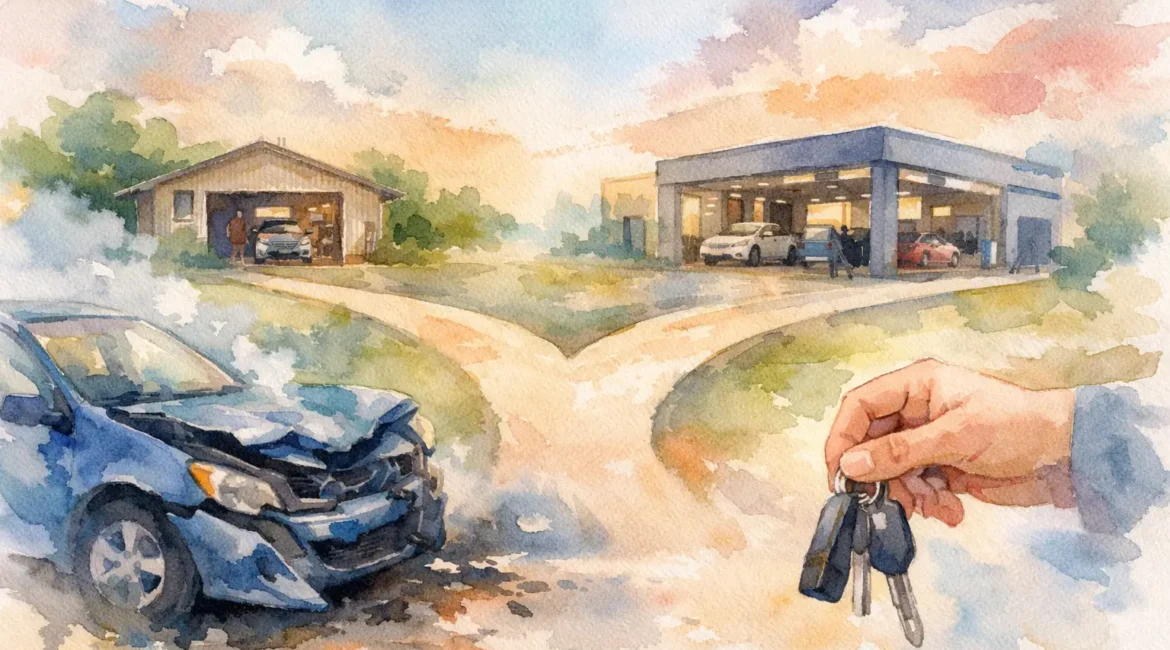
The first phone call after an accident often creates more stress than the damage itself. Your insurer may start talking about approved networks, assessors and next steps before you have even worked out where your car should go. That is usually when the question comes up – can I choose repairer, or do I have to use the one they suggest?
The short answer is often yes, you can choose your repairer, but the real answer depends on how the claim is being handled, who is paying, and what your policy says. If you are in Glasgow or the surrounding areas and you rely on your car every day, that choice matters. It affects the quality of the repair, how long your vehicle is off the road, and how straightforward the whole process feels from start to finish.
Can I choose repairer if I am claiming on insurance?
In many cases, yes. You are not always forced to use the bodyshop your insurer recommends. Insurers often have approved repair networks because it helps them control costs, timescales and administration. That does not automatically mean their nominated repairer is the only option available to you.
What usually happens is this. The insurer offers a repairer they work with regularly and presents it as the standard route. If you are happy with that, the process may move quickly. If you would rather use a repairer you trust, you can ask whether the insurer will authorise that choice.
This is where the detail matters. Some insurers will agree without much fuss. Others may say they will only cover repairs up to their assessed rate, or they may not offer the same extras, such as a courtesy car for as long as they would through their own network. So yes, you may be able to choose, but there can be conditions attached.
That is why it is worth slowing the process down just enough to ask the right questions before your car is moved anywhere.
Why insurers prefer their own repair network
There is nothing mysterious about this. Approved repairers are part of a commercial arrangement. The insurer knows what labour rates they charge, how estimates are submitted, and what service levels are expected. For the insurer, it creates a predictable claims process.
For the customer, though, predictable does not always mean best. A network repairer may be perfectly good, but it may also be further away, less convenient, or focused on insurer targets rather than your priorities. If you care about paint finish, panel alignment, preserving your car’s appearance and getting practical support throughout the claim, you may want more say in where the work is done.
A good repair is not just about replacing damaged parts. It is about colour matching, prep work, refinishing quality and making sure the car comes back looking right, not just technically repaired.
When choosing your own repairer makes sense
There are plenty of situations where choosing your own repairer is the smarter move. If you already know a trusted local bodyshop, that alone can be reason enough. Familiarity counts when you are handing over a vehicle you rely on.
It also makes sense if your car has high-value paintwork, previous customisation, alloy wheel damage alongside body damage, or cosmetic issues that need a careful finish rather than a rushed insurance-standard job. The same applies if convenience matters. Collection and drop-off, quick turnaround and clear communication can make a big difference when life does not stop just because your car is in for repair.
For many drivers, local matters too. If your vehicle is being repaired near home or work, it is easier to stay in touch and easier to trust the process.
Can I choose repairer if the accident was not my fault?
This is often where you have more flexibility. In a non-fault accident claim, the at-fault party’s insurer may ultimately pay the costs, but your claim can be managed in different ways. Depending on the circumstances, you may be able to use a repairer of your choice and have the work handled through a non-fault claims process.
That can be helpful if you want more control over repair quality and support. It may also allow for extras such as replacement vehicle arrangements while your own car is being repaired. As ever, the exact route depends on the facts of the accident and who is managing the claim, but non-fault cases often give motorists more room to choose a bodyshop that works for them rather than one chosen purely for insurer convenience.
What to ask before agreeing to any repairer
If you are trying to decide whether to accept the insurer’s nominated garage or use your own, focus on practical questions. Ask who guarantees the repair, whether genuine or equivalent parts will be used where relevant, how long the work is expected to take, and what happens if further damage is found once the car is stripped down.
You should also ask about transport and communication. Will your vehicle be collected? Will you get updates? If the repair is delayed, who tells you? These are simple points, but they have a direct effect on how stressful the experience becomes.
Most importantly, ask whether using your own repairer changes what the insurer will pay for. That is the part many drivers do not clarify soon enough.
The trade-off between cost control and repair quality
This is where honesty matters. Not every insurer-approved repairer does poor work, and not every independent bodyshop is automatically better. The issue is not approved versus independent in a simplistic sense. The issue is whether the repairer is set up to deliver the level of finish and service you expect.
Some drivers just want the cheapest route and the fastest paperwork. Others want their vehicle restored to pre-damage condition with proper care taken over every stage. Those priorities are not always the same.
If your car is leased, newer, prestige, or important to resale value, quality matters more than ever. Poor paint matching, overspray, weak refinishing or badly aligned panels can leave you with a car that never looks quite right again. Saving the insurer money is not much comfort if the finish disappoints you every time you walk up to the vehicle.
Can I choose repairer for cosmetic damage only?
Yes, and in many cosmetic repair situations insurance may not even be the best route. For dents, bumper scuffs, scratches, wheel kerbing or SMART repairs, many drivers choose to deal directly with a bodyshop rather than claim and risk affecting future premiums.
That gives you complete control over who carries out the work, how quickly it is booked in, and what level of repair you want. It can also be more cost-effective than people expect, especially for localised damage.
If the damage is minor, it is often worth getting a direct estimate before involving your insurer at all. That way you can compare the cost of repair against your excess and the possible longer-term impact of making a claim.
Choosing a repairer locally
If you are based in Glasgow, East Kilbride, Rutherglen, Cambuslang or nearby, choosing a local repairer is about more than convenience. It means dealing with people who understand that you need a realistic timescale, clear answers and a car returned in the right condition. It also makes collection and drop-off much simpler, which is a real benefit when you are juggling work, school runs or commuting.
A strong local bodyshop should be able to handle more than the visible damage. That includes paint refinishing, wheel refurbishment, insurance coordination and the sort of honest advice that helps you decide whether to claim or pay privately.
That is why many motorists prefer working with an established specialist rather than simply accepting the first option offered over the phone. Unique Bodywork, for example, supports drivers with both repair quality and the practical side of the process, which is often just as valuable after an accident.
How to protect yourself when making the choice
If you want to choose your own repairer, be clear and early about it. Do not assume the insurer’s first suggestion is your only route. Ask for confirmation of your options, keep notes of what you are told, and make sure any approval is recorded before work begins.
It also helps to choose a repairer that is used to dealing with insurance work. A bodyshop with experience in accident repair and claims support will understand how to prepare estimates, deal with assessments and keep things moving without leaving you caught in the middle.
The right repairer should not just fix panels. They should make the whole job easier.
If you are asking can I choose repairer, the answer is usually less about permission and more about knowing your position before someone else makes the decision for you. A careful choice now can save you a lot of frustration later – and give you a car that looks right when the work is done.