
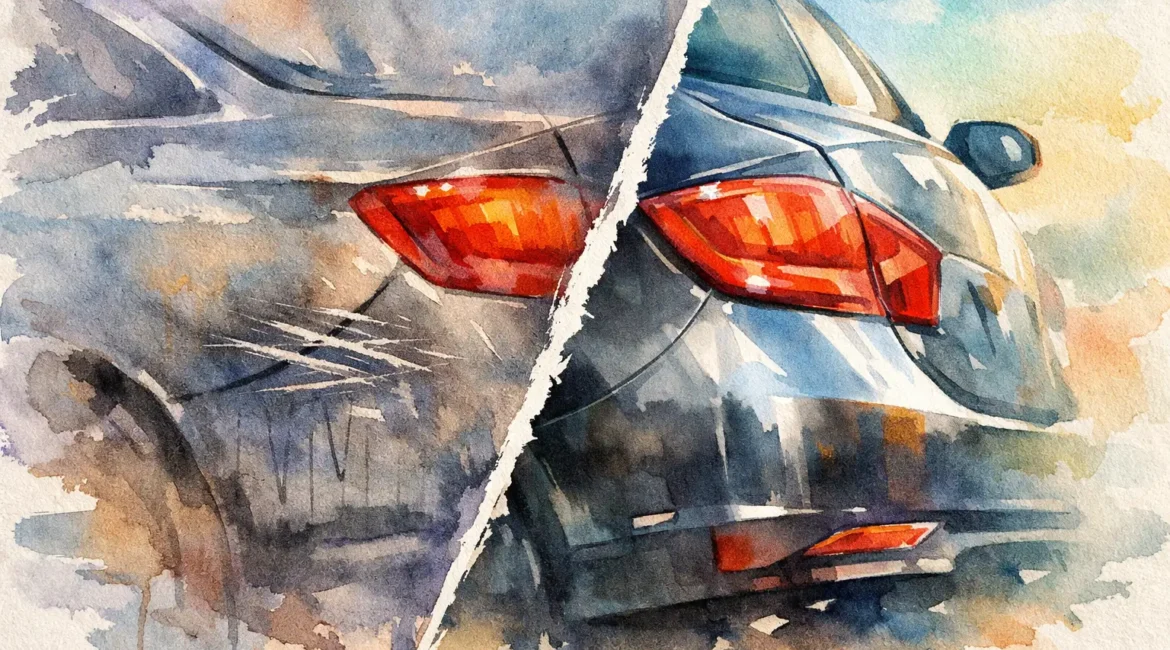
A scratch always looks worse in daylight. What seemed minor under a streetlamp suddenly stands out across the door, bumper or wheel arch, and once you see it, you cannot unsee it. That is why so many drivers search for car scratch repair before after examples first – they want to know whether the mark can genuinely disappear or if the car will always show signs of damage.
The honest answer is that a good repair can make a dramatic difference, but the final result depends on the depth of the scratch, the panel affected, the paint finish and the standard of workmanship. Some scratches polish out. Others need filling, repainting and blending. The best before and after results come from matching the repair method to the damage rather than guessing with a quick fix.
What car scratch repair before after really shows
Before and after photos are useful because they show more than the scratch itself. They reveal whether the paint match is right, whether the repaired area still catches the light differently, and whether the finish blends into the surrounding panel. A proper repair should not just hide the line of damage. It should restore the overall look of the vehicle so the panel no longer draws attention.
That matters if you are driving a newer car, returning a leased vehicle, preparing for sale, or simply fed up looking at a scuff every morning. Even a small mark can make an otherwise tidy car feel neglected. A strong repair changes that immediately.
There is also a difference between a repair that looks good in a close-up photo and one that looks right from every angle. On metallic or pearlescent paint especially, poor matching becomes obvious outdoors. That is why experience matters more than a cheap promise.
The difference between light scratches and deeper damage
Not every scratch needs the same approach. If the damage sits in the clear coat only, machine polishing may be enough to remove or reduce it significantly. These are usually the marks that look white or dull on the surface but have not cut through the paint layers underneath.
Once a scratch breaks through the colour coat, the repair becomes more involved. If primer or bare metal is visible, it needs proper treatment. Leaving that kind of damage too long can lead to corrosion, especially in the Scottish weather where road salt, rain and grime do the car no favours.
Plastic bumpers are slightly different again. They will not rust, but they can still show ugly scuffs, gouges and paint transfer. In many cases, bumper scratch repairs deliver some of the most satisfying before and after results because the damaged area often looks far worse than it is, and a skilled refinishing job can restore the panel cleanly.
Where the biggest before and after improvements happen
Some areas of a car pick up damage more often than others. Door edges, bumper corners, rear quarters and lower sills are common trouble spots. Supermarket car parks, tight driveways and low walls do plenty of damage without ever causing a major accident.
The strongest visual transformation usually comes from repairs on panels that sit at eye level. A scratch across a door or wing catches the light constantly, so once repaired, the whole side of the car looks sharper. Bumper corner repairs also make a big difference because they tidy up the most obvious scuffs from parking knocks.
Dark colours often show the biggest contrast in car scratch repair before after comparisons. Black, navy and deep grey paint tends to highlight every mark, swirl and scuff. When repaired properly, the improvement is immediate. Lighter colours can hide minor damage better, but poor blending still shows if the work is rushed.
Why DIY results often fall short
There is a reason so many drivers end up booking professional help after trying to sort a scratch themselves. Touch-up kits and off-the-shelf products can work for very minor chips, but they rarely deliver a true before and after transformation on anything more noticeable.
The usual problem is not effort. It is finish. DIY repairs often leave a patch that is too flat, too raised, too dull or slightly the wrong shade. Under indoor lighting it might seem acceptable. In natural light, the repaired spot stands out.
That does not mean every small scratch needs a full bodyshop job. It means the repair needs to be judged properly. A professional assessment can tell you whether the damage needs polishing, localised SMART repair work or more extensive refinishing. That saves time, avoids wasted money and gives you a realistic expectation from the start.
What makes a scratch repair look factory-finished
A quality result comes down to preparation, paint matching and blending. The damaged area needs to be cleaned, assessed and repaired correctly before any paint is applied. If there is a dent, gouge or lifted edge, that has to be sorted first. Painting over poor prep only locks in a bad finish.
Colour matching is where experience really shows. Modern vehicle paint is rarely just one simple shade. Metallic flake, pearl effect, age of the paintwork and sun exposure all affect how a repaired area will look. Good repair work is not just about finding the paint code. It is about making the repaired section sit naturally against the rest of the car.
Then there is blending. If the paint stops too abruptly or the lacquer edge is obvious, the repair can still be spotted. Proper blending softens the transition so the panel looks consistent. That is the difference between a repair that looks acceptable and one that looks right.
Car scratch repair before after expectations – what is realistic?
Most customers want to know one thing: will the scratch vanish completely? Often, yes. But it depends on the damage and on the size of the affected area.
For light to moderate scratches, a well-executed repair can restore the panel to near showroom condition. For deeper damage, the result can still be excellent, but there may be more labour involved and occasionally a wider repair area to get the finish right. If the surrounding panel already has fading, stone chips or older repairs, that can influence the final appearance too.
A reputable repairer should be clear about that. No-nonsense advice is better than overpromising. In many cases, the finished repair looks better than customers expect because they have lived with the damage for weeks and assumed the only answer would be a full respray.
Why fast local repairs make sense
For everyday drivers, convenience matters almost as much as the finish. If your car is used for commuting, school runs or work, you want the damage sorted without losing the vehicle for days longer than necessary.
That is where local repair specialists can offer real value. Smaller cosmetic repairs are often completed much faster than people expect, and for customers around Glasgow and South Lanarkshire, being able to arrange collection and drop-off can make the process far easier. A scratch repair should not turn into a week of disruption if the damage is straightforward.
Cost matters as well. Leaving a scratch untreated can reduce resale appeal and lead to more expensive work later if corrosion sets in. Getting it assessed early is usually the sensible move.
When to book a repair instead of waiting
If the scratch has gone through the paint, if bare metal is visible, or if the damage is on a prominent panel, it is worth booking in sooner rather than later. The same goes for lease returns, vehicle sales and insurance-related damage where appearance and condition matter.
Even if the mark seems cosmetic, a proper repair can protect the panel and keep the car looking cared for. That matters more than many owners realise. People notice panel condition immediately, and a scratched car often gives the impression of wider neglect, even when it is mechanically sound.
At Unique Bodywork, that is exactly the kind of repair work we handle every day – practical, high-standard fixes that restore appearance properly without making the process harder than it needs to be.
The best before and after result is not just a cleaner panel. It is getting back into your car and not being drawn straight to the damage every time you walk up to it.