
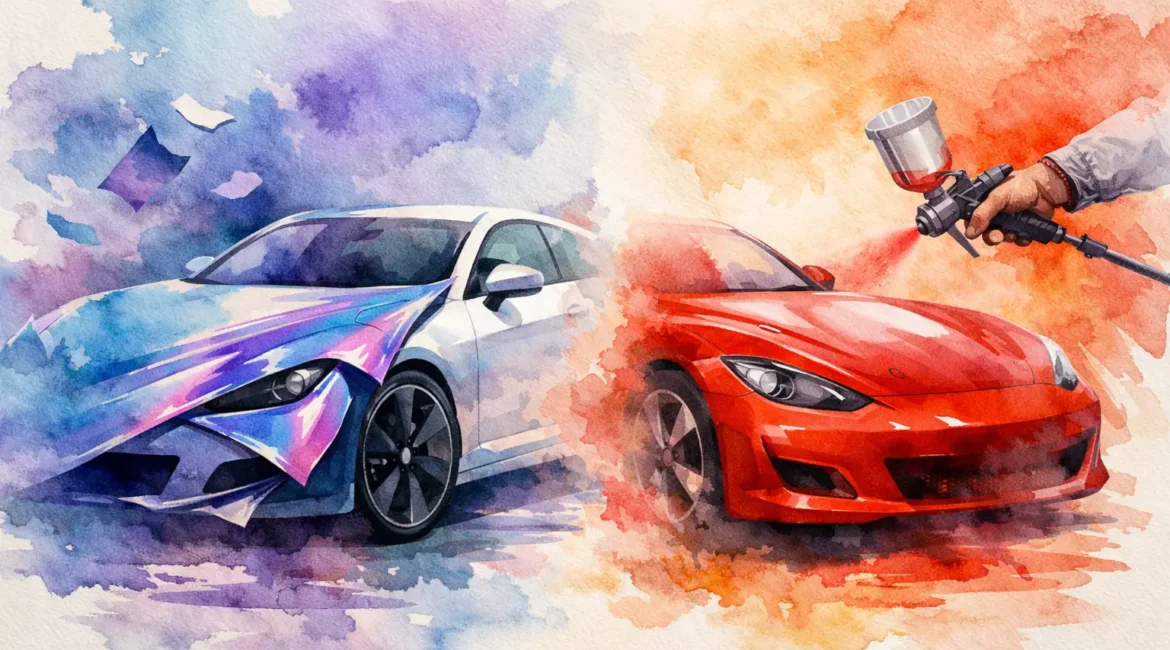
You spot a car in a fresh satin grey or a sharp gloss black and think, I want that for mine. Then the real question lands – when it comes to car colour change wrap vs paint, which one actually makes sense for your car, your budget and how long you plan to keep it?
The honest answer is that both can look excellent when the job is done properly. The right choice depends on what you want from the finish, how perfect your current bodywork is, how permanent you want the change to be, and how much use the car gets day-to-day. For some drivers, a wrap is the smart move. For others, paint is the better long-term investment.
Car colour change wrap vs paint – what is the difference?
A colour change wrap is a vinyl film applied over the existing paintwork. It changes the appearance of the car without permanently repainting every panel underneath. Wraps come in a wide range of finishes, including gloss, satin, matte and more specialist looks.
A full colour change respray means the vehicle is painted in a new colour by preparing the panels, correcting imperfections, applying paint, and finishing it to a high standard. It is a more involved process and, when done properly, it becomes part of the car rather than a layer sitting on top.
That difference matters. A wrap changes the look. Paint changes the car itself.
When a wrap makes more sense
If you want a different look without committing to it forever, a wrap is often appealing. It gives you flexibility. If tastes change, or you want to return the car closer to its original appearance later on, the wrap can be removed.
That can be useful for drivers who like to refresh the look of their car every few years, or for enthusiasts who want something more individual without going all-in on a permanent respray. It can also suit leased vehicles in some cases, although you should always check your agreement first.
Wraps are also popular because of the range of finishes available. Some looks are easier to achieve in vinyl than in paint, especially if you want a matte or satin finish without the higher maintenance that some painted finishes can bring.
But there is a catch. Wraps only look as good as the surface underneath. If the car has peeling lacquer, poor previous repairs, rust bubbles, dents or scratches, a wrap will not hide those properly. In many cases, it can make them more obvious.
When paint is the better option
If your goal is showroom condition, paint usually wins. A high-quality respray is the stronger option when the car already needs cosmetic repair, panel correction or restoration work. Instead of covering over issues, paint allows them to be dealt with properly first.
That is especially important if the current finish is tired, damaged or inconsistent. A wrap cannot fix poor bodywork. Paint can, provided the preparation is done to the right standard.
Paint also makes more sense if you plan to keep the vehicle for years and want a finish that feels factory-level or better. A proper colour change respray is more permanent, and on the right car it can add far more visual value than a temporary covering ever will.
For owners of performance cars, cherished cars or vehicles undergoing full cosmetic restoration, paint is often the route that gives the best final result.
Cost matters – but so does what you’re paying for
For many people, price is the first thing they compare in the car colour change wrap vs paint debate. That is understandable, but it is also where a lot of confusion starts.
A wrap can appear cheaper at first glance, especially if you are comparing headline figures only. But the price of a wrap varies depending on the size of the vehicle, the complexity of the panels, the quality of the material and how much disassembly is needed for a clean finish.
Paint can cost more, particularly if the job is being done properly with preparation, repairs and careful refinishing. Yet that extra cost is often paying for something more substantial. You are not just changing the colour. You are correcting the bodywork, improving the surface and creating a lasting finish.
If your car already needs dent repair, scratch repair or paint correction, a respray may offer better value than wrapping over flaws that really should be sorted first.
Finish quality – this is where standards matter
Both wrap and paint can look impressive in photos. Real life is different. Edges, shuts, handles, mirrors, bumpers and panel contours are where quality shows.
A poor wrap can lift at the edges, trap dirt, show joins or fail to sit neatly around awkward shapes. A poor respray can leave mismatched panels, orange peel, overspray or a finish that lacks depth.
That is why the skill of the workshop matters more than the marketing around the product. Good materials help, but preparation and workmanship decide the result.
If you want the car to look right up close, not just from ten feet away, it is worth choosing experienced specialists who understand both finish and body condition. That is particularly true if the car has had previous repairs or carries the usual wear that comes with everyday driving around Glasgow and the surrounding areas.
Durability and maintenance
A wrap is not fragile, but it is not the same as paint. Daily use, weather, road grime and washing habits all affect how well it holds up over time. Park outside all year, use harsh cleaning methods, or catch edges with pressure washing, and the lifespan can shorten.
Paint, when applied and cared for properly, is generally the more durable long-term finish. It stands up better as a permanent solution, especially on cars that cover serious mileage or spend a lot of time exposed to the elements.
That said, durability is not only about material. It is also about use. A weekend car kept clean and garaged may do very well with a wrap. A hard-worked family car or commuter might be better served by paint if the intention is to keep it looking right for the long haul.
What about resale value?
This is where it depends on the buyer and the car.
A wrap can help preserve the original paint underneath, which some owners see as a plus. If removed carefully and the underlying paint is in good condition, that can be attractive later on. But some buyers are cautious about wrapped cars because they wonder what is underneath.
A quality paint finish can support resale value if it is done to a high standard and suits the car. A poor respray can do the opposite. Colour changes also need to be declared properly, and buyers will usually look closely at door shuts, under-bonnet areas and the overall consistency of the job.
If resale is a major concern, the best route is usually the one done best, not simply the one chosen on paper.
The hidden factor – condition of the current bodywork
This is the point many drivers miss. The decision should not start with colour charts. It should start with the condition of the car.
If the bodywork is straight, the paint is sound and you simply want a new look, a wrap may be a sensible option. If the car has scuffs, stone chips, dents, lacquer issues or signs of previous poor repair, paint is often the more honest and effective route.
At Unique Bodywork, this is usually where the conversation starts. Before talking about finishes, the first step is understanding what the car actually needs to look right and stay looking right.
Which option is right for you?
Choose a wrap if you want flexibility, like the idea of trying a different finish, and your existing paintwork is already in very good condition. It can be a strong option for style-led changes where reversibility matters.
Choose paint if the car needs cosmetic correction, if you want the best long-term finish, or if you are aiming for a proper restoration or showroom-standard result. Paint is also the better route when you want the new colour to feel fully integrated rather than applied over the top.
Neither option is automatically better for every car. The right answer depends on the vehicle, the condition, the budget and what you expect from the end result.
If you are weighing up car colour change wrap vs paint, the smartest move is to get the car looked at properly before making a decision. A good workshop will tell you what suits the vehicle, not just what sounds easiest to sell. That usually saves money, disappointment and a second job later on.
A colour change should make you pleased every time you walk up to the car, not leave you noticing corners that were cut. Get the groundwork right, and the finish tends to take care of itself.