
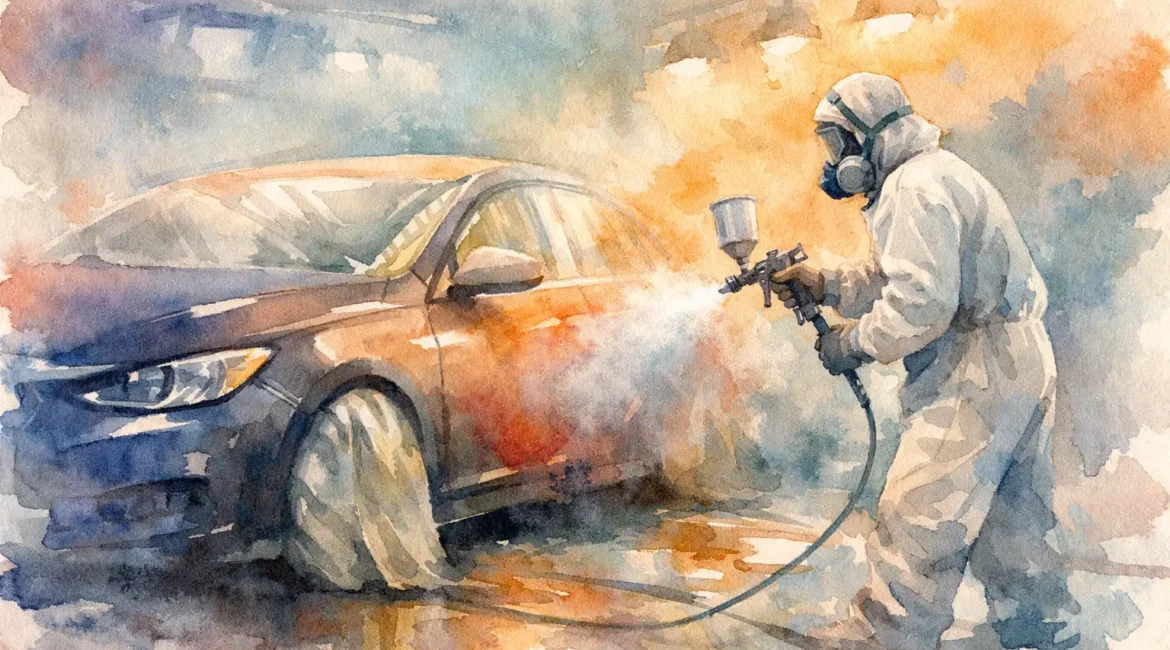
If your car’s paintwork is tired, scratched, peeling or mismatched after repairs, one of the first questions you’ll ask is how long does a car respray take. The honest answer is that it depends on the size of the job, the condition of the vehicle, and the standard of finish you expect. A quick cosmetic paint job can be turned around far faster than a full bare-panel respray done properly.
For most drivers, the real concern is not just the number of days. It is whether the finish will last, whether the colour will match properly, and whether the car will come back looking right. A rushed job might get a vehicle out of the workshop quickly, but poor preparation usually shows up later in the form of dull paint, uneven texture, overspray or early lacquer failure.
How long does a car respray take in practice?
A small localised respray, such as a bumper corner, wing or door repair, can often be completed in one to three days. If the damage is light and the panel only needs minor preparation, it may even be possible to carry out the work faster. That said, speed should never come at the expense of the finish.
A partial respray covering several panels will usually take around three to five days. This gives enough time for proper prep, masking, painting and drying, with room to check the blend into adjacent panels.
A full car respray generally takes between five days and two weeks. On some vehicles, especially those with poor existing paint, corrosion, previous body repairs or custom colour changes, it can take longer. If trims, handles, lights and other fittings need removed and refitted, that adds time too, but it usually leads to a far cleaner end result.
Why the timeframe can vary so much
People sometimes compare respray quotes and wonder why one bodyshop says two days while another says a week. In most cases, the difference comes down to process.
A proper respray is not just about spraying paint onto a car. The bulk of the time is spent getting the surface ready. Any chips, dents, scratches, filler marks or old paint defects need dealt with first. If that stage is rushed, the final paint will highlight every flaw instead of hiding it.
Then there is the question of what type of work the car actually needs. A scuffed bumper is one thing. A car with peeling lacquer on the bonnet, rust starting around the arches and poor previous repair work is another. Two vehicles can both be booked in for a respray, but the labour involved can be completely different.
The stages of a car respray
Inspection and assessment
The first step is checking the current condition of the paint and bodywork. This helps identify damage that is obvious straight away and problems that only show once the car is cleaned and inspected properly. Previous filler work, rust bubbles and badly matched older paint often extend the job.
Preparation
This is where most of the time goes. Panels may need sanding back, minor dents repaired, filler shaped, stone chips dealt with and surrounding areas smoothed out. If parts are damaged beyond surface level, repair work has to be completed before any paint goes near the vehicle.
Masking and panel removal
Depending on the job, trims, badges, mirrors, lights, handles and seals may be masked or removed. Removal takes longer, but it often gives a neater finish because paint reaches the edges properly rather than stopping short around fittings.
Priming and sanding
Once repairs are done, the surface is primed and sanded again to create a smooth base. This stage matters just as much as the topcoat. Paint needs a properly prepared foundation if you want a consistent finish.
Basecoat and lacquer
The colour coat is applied in controlled conditions, followed by lacquer where required. Metallic, pearl and specialist finishes can take more time because colour matching and blending need greater care.
Drying and curing
Paint may be touch-dry quite quickly, but that does not mean the job is ready to leave the bodyshop immediately. Drying and curing times still matter. Handling the car too soon can affect the finish.
Final checks and polishing
After the paint has cured enough, the vehicle is checked, any minor imperfections are rectified, and the finish may be polished to achieve the right gloss level. Reassembly and final quality control also add time, but they are part of delivering a proper result.
What affects how long a full respray takes?
The biggest factor is the condition of the car before work starts. If the bodywork is straight and the existing paint is stable, the job moves much faster. If there is corrosion, lacquer peel, deep scratching or old accident damage, more preparation is needed.
Colour also makes a difference. Solid colours are generally more straightforward than pearls, metallics and specialist finishes. A full colour change usually takes longer than respraying the car in its original shade because door shuts, inner edges and less visible painted areas may need attention too.
Vehicle size matters as well. A small hatchback is simply quicker to prep and paint than a large SUV or van. Custom work, such as body kits or modified panels, can add more labour because the shapes are more complex and the finish needs to be consistent across altered parts.
Workload can also affect turnaround. A reputable bodyshop will usually give you a realistic timeframe based on current bookings, parts availability and the scope of the repair. That is far better than promising a date that cannot be met.
Can a car respray be done in a day?
For a full respray, that is not realistic if you want quality. A same-day turnaround may be possible for very minor paint repairs or SMART repairs on a small area, but not for stripping back, preparing and repainting a whole vehicle to a proper standard.
If someone offers a full respray in a day or two at a bargain price, it is worth asking exactly what is included. Sometimes that means minimal preparation, poor masking and a finish that looks acceptable at first glance but does not hold up well over time.
A good respray should improve appearance and protect the car, not create fresh problems a few months down the line.
How long before you can drive the car after a respray?
In many cases, you can drive the car once the paint has dried and the bodyshop is happy the vehicle is ready for collection. But fresh paint is still settling after that. It is sensible to treat it with care for the first few weeks.
That means avoiding anything that could mark or stress the finish too soon. Automatic car washes, aggressive cleaning products and unnecessary polishing are best left until the paint has properly hardened. A good bodyshop will tell you exactly how to look after it once the car is back with you.
Choosing quality over speed
When people ask how long does a car respray take, what they are often really asking is how quickly they can get their car back without compromising the finish. That is the right question to ask.
A bodyshop that takes the time to prepare panels properly, match the colour accurately and inspect the final result is usually the safer choice than one that focuses only on speed. The paintwork is one of the first things people notice on a car. If it is done badly, it stands out straight away and can hurt resale value instead of helping it.
For drivers around Glasgow and the surrounding areas, convenience matters too. Collection and drop-off, realistic booking times and clear communication can make the process far less disruptive, especially if the car is used daily for work or family life.
What to ask before booking a respray
It is worth asking whether the quote is for a local repair, a panel respray or a full vehicle respray, because those are very different jobs. You should also ask what preparation is included, whether trims are removed or masked, and how long the vehicle is likely to be off the road.
A reliable repairer will explain the timescale in plain language and tell you what could extend it. That might include hidden damage, rust, extra panel repairs or delays on parts. Clear expectations from the start usually lead to a much smoother job.
At Unique Bodywork, the focus is always on getting the finish right while keeping turnaround practical for the customer. That balance matters. Most people do not just want fresh paint – they want their car back looking as it should, without hassle and without corners being cut.
If your paintwork needs attention, the best approach is to have the car assessed properly rather than guessing based on general timelines. A good respray takes time, but done well, it is time well spent.