
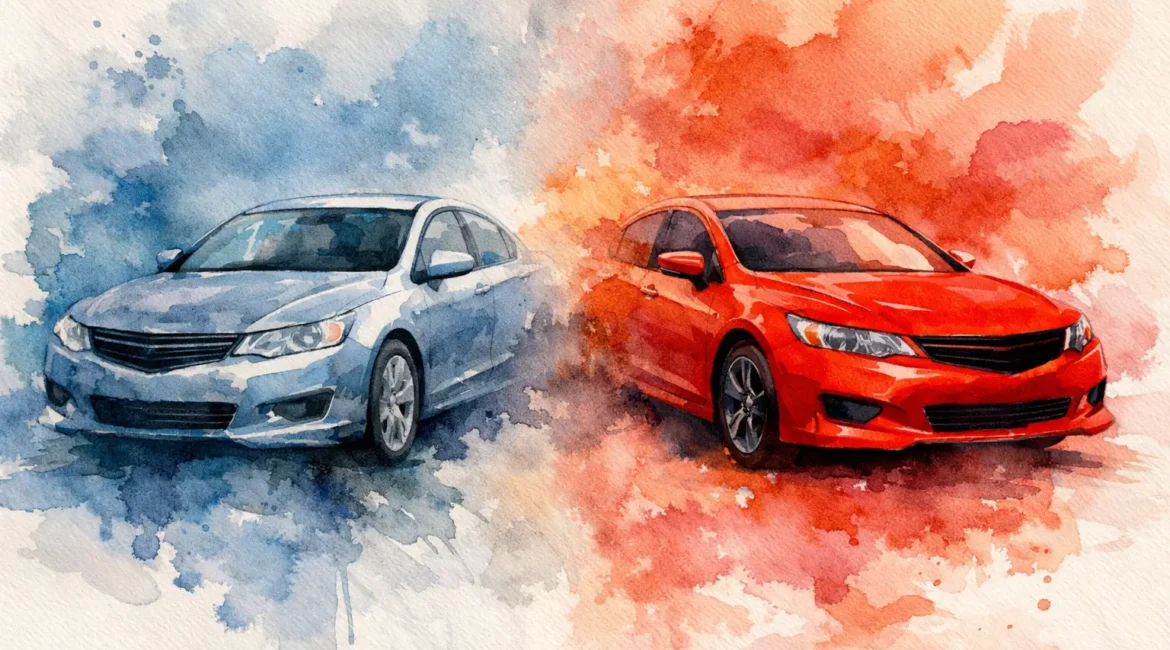
You do not usually consider a full colour change on a whim. It tends to start when the current paint is tired, lacquer peel is spreading, panels no longer match, or you simply cannot look at the same shade for another year. A proper full respray colour change example is useful because it shows the difference between a quick cosmetic blow-over and a job that genuinely looks right when the car is opened up, checked in daylight, and lived with.
For most drivers, the question is not just, “Can my car be painted a different colour?” It is whether the finish will look factory-clean, whether the value of the car is protected, and whether the cost makes sense against the age and condition of the vehicle. That is where a realistic example matters.
A realistic full respray colour change example
Let’s take a common situation. A five-door hatchback comes in with faded solid red paint, a few shopping-trolley dents, stone chips across the bonnet, and light scuffs on both bumpers. The owner wants a change to metallic grey for a cleaner, more modern look and to make the car easier to maintain visually.
On paper, that sounds straightforward. In practice, a proper colour change is more than spraying the outside panels. If only the visible outer skin is painted, the old red will still show when you open the doors, lift the bonnet, or check the shut lines. That is the kind of shortcut people notice straight away, and it can make the whole car look cheaply done even if the outer panels are shiny.
In this example, the work starts with a full inspection. Every dent, chip, scratch and previous repair is checked because the final finish is only as good as the surface underneath. If the car has poor old paintwork, sinkage in filler, or mismatched previous repairs, those issues need sorted before the new colour goes anywhere near it.
What actually changes in a full colour respray
A proper colour change usually includes the bonnet, roof, wings, doors, tailgate or boot lid, bumpers, and the visible return edges. Depending on the level of finish the owner wants, the door shuts, inner edges, and some under-bonnet or boot-lip areas may also need painted so the old colour is not obvious.
That is where cost and finish level start to vary. Some customers want an exterior-only change because they are keeping the car a short time or working to a strict budget. Others want the job to look as close to factory as possible. Both are valid, but they are not the same product and should never be priced or described as if they are.
For the hatchback in our example, trims, handles, lights, badges and bumpers are removed where needed rather than simply masked around. That extra time gives cleaner edges and a better final result. It also reduces the risk of tell-tale paint lines around rubbers and plastic trims.
Prep is where the finish is won or lost
The biggest difference between an average respray and a strong one is prep. Customers often focus on the final colour coat because that is what they see, but the hard work happens before that stage.
The car is washed, degreased and stripped as required. Dents are repaired, scratches are feathered out, old damaged coatings are stabilised, and filler work is shaped properly. Panels are then primed, blocked back and checked again. If the bodyshop rushes this stage, the final paint can still be glossy but every ripple, pinhole and repair edge will show once the car is outside.
In our full respray colour change example, the owner chose metallic grey. Metallics can look excellent, but they demand consistency in application. Poor technique can leave patchiness, striping or shade variation from panel to panel. That is why experience matters – not just with spraying, but with how each repaired panel is prepared beforehand.
Choosing the right new colour
Not every colour change makes equal sense. A move from one dark shade to another is usually easier to manage visually than going from bright red to white or yellow to black. The greater the contrast between old and new, the more thorough the job needs to be if you want to avoid the previous colour showing in hidden areas.
Metallic grey works well in our example because it suits a wide range of cars, hides day-to-day dust better than black, and often gives an older car a more upmarket feel. That said, there is always a trade-off. Metallic and pearl finishes can cost more than solid colours because materials and application are more demanding.
You also need to think about the style of car. A small city car in a very high-end custom shade can look great, but the spend may not always be sensible if resale value is a concern. On the other hand, if you plan to keep the vehicle and want to enjoy it, personal preference counts for a lot.
How long a proper job takes
This is one area where unrealistic promises cause problems. A full colour change is not a same-day service. Even on a smaller vehicle, proper stripping, preparation, painting, curing, reassembly and final checks take time.
If repairs are needed before paint, the job can take longer. If extra areas such as shuts and inner returns are included, that adds labour too. A fast turnaround is valuable, but speed should never come at the expense of prep or finish quality. Most customers would rather wait a little longer and get the job done properly than collect a car that looks good for two weeks and disappointing after two months.
What affects the price most
People often ask for a rough figure straight away, but a full respray is one of those jobs where the detail matters. The main price factors are vehicle size, current paint condition, the difference between the existing and new colour, how much dismantling is needed, and whether hidden areas are included.
A small hatchback with straight panels and an exterior-only colour change is a different proposition from a larger SUV with peeling lacquer, previous accident repairs and a full inside-and-out colour conversion. Both are called full resprays by some customers, but the labour involved can be miles apart.
Material choice also plays a part. Premium paint systems, metallic finishes and pearl colours cost more, but they can make a visible difference in depth, durability and consistency. The cheapest quote is not always the most cost-effective one if corners are cut in prep, masking or reassembly.
What the finished result should look like
A good colour change should not rely on dim workshop lighting or a wet finish to impress. It should still look right in daylight, from different angles, and when the car is clean a month later.
On our example hatchback, the finished metallic grey gives the car a sharper, more modern look. The repaired dents disappear into the panel lines, the bumpers match the body, and the old red no longer shouts from every edge. Open the doors and the finish still makes sense. That is the difference between a colour change that adds pride of ownership and one that simply photographs well on handover day.
There can still be sensible limits. Not every vehicle needs every hidden area stripped and painted if the customer is trying to keep the cost realistic. A good bodyshop will explain where the old colour may remain, where it will be visible, and what level of finish best suits the car and budget.
Is a full colour change worth it?
It depends on the car and the reason for doing it. If the current paint is badly faded or damaged, a respray can improve appearance and make the vehicle feel newer again. If you already like the car mechanically and want to keep it, changing the colour can be a better move than replacing the vehicle altogether.
If resale value is your main concern, the answer is less straightforward. Some buyers love a fresh, professionally done colour change. Others prefer original paint and factory specification. That is why the standard of work matters so much. A poor respray puts buyers off. A well-executed one gives confidence.
For drivers around Glasgow and the surrounding areas, convenience matters too. Being able to have the car inspected properly, understand the finish options in plain language, and get clear advice before committing makes the whole process easier. That is exactly how a local specialist such as Unique Bodywork should approach a job like this – no fluff, no guessing, just honest guidance on what will give the best result.
Before you book a colour change
Ask the practical questions first. Will the door shuts be painted? Will trims be removed or masked? Are dents and scratches included in the prep? Is the quote based on making the car look good from ten feet away, or on delivering a finish you will still be happy with after the novelty wears off?
Those details matter more than fancy sales talk. A full respray is a visible job, and you should know exactly what standard you are paying for.
If you are thinking about changing your car’s colour, the best starting point is not the shade chart. It is the condition of the vehicle in front of you, the finish you want when the doors open, and whether the work will be done thoroughly enough to look right long after collection day.