
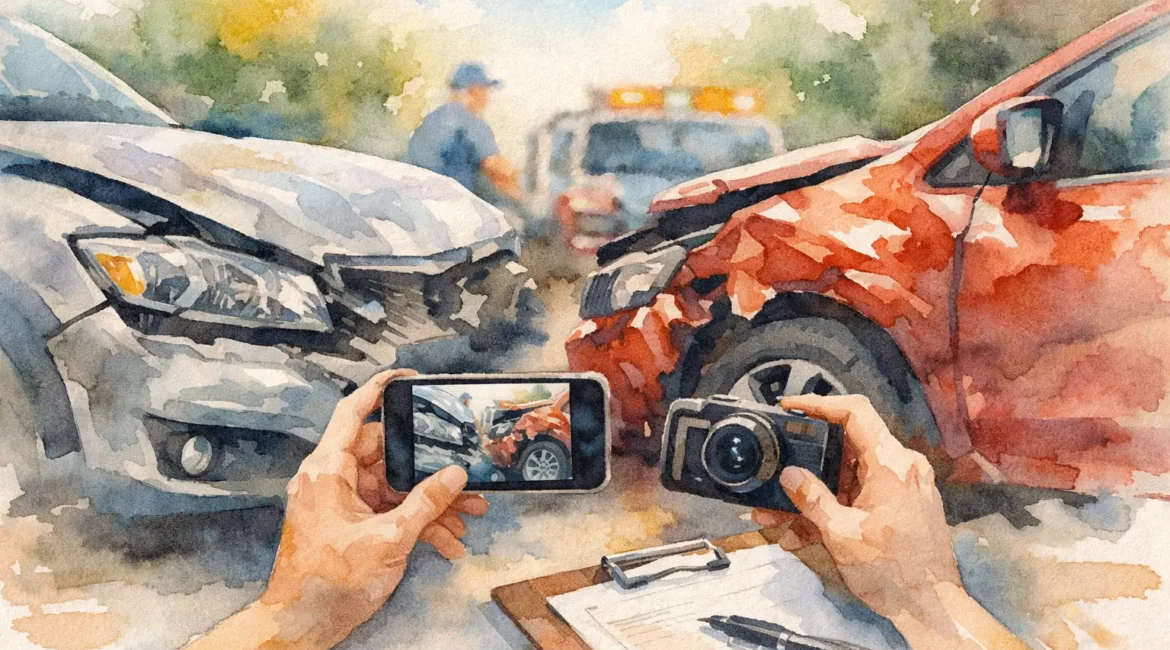
A cracked bumper, scuffed alloy or dented door can look straightforward at first glance. It may not be. Damage behind a bumper, around a wheel arch or beneath the car can be missed until a proper inspection takes place. Knowing how to document vehicle accident damage gives you a clear record for your insurer, the other driver and the repairer, while helping protect your position if details are disputed later.
Your priority after any collision is safety, not photography. Check for injuries, move to a safe place where possible and call the emergency services if anyone is hurt, the road is blocked or there is a danger from fuel, traffic or debris. Once everyone is safe, take a calm, methodical approach. Good evidence does not need expensive equipment – your phone is usually enough.
Start with the accident scene
Before focusing on the scratch or dent, record the wider scene. This provides context that close-up photographs cannot. Take pictures from a safe position that show the road layout, vehicle positions, junction markings, traffic lights, signs and any relevant weather or surface conditions.
If it is safe and legal to do so, photograph the registration plates of every vehicle involved. Include the other vehicle from several angles, not just the point of impact. A photo of a clean, undamaged panel may matter as much as a photo of the damage, particularly where there is disagreement about which parts were affected.
You should also make a brief written note while events are fresh. Record the date, time, exact location, direction each vehicle was travelling and a simple account of what happened. Keep it factual. Do not speculate about speed, blame or damage that you cannot see. A clear note such as, “My vehicle was stationary at the roundabout when the other vehicle made contact with the rear offside corner,” is far more useful than an emotional account written hours later.
Collect the right details
Exchange names, addresses, telephone numbers, vehicle registration numbers and insurance details with the other driver. If they are driving a company vehicle, note the business name too. Ask witnesses for their contact details and, if they are willing, a short description of what they saw.
Do not rely on verbal promises that someone will “sort it privately”. You can still discuss that option later, but record the details first. Repairs can reveal hidden issues, and an initially minor-looking impact can turn into a larger job once the bumper, trims or wheel are inspected properly.
Take photos that show the full story
A useful accident record has both wide shots and close-ups. Start several metres back and photograph all four sides of your vehicle. Then move closer, taking clear images of every affected area. Work around the car in a consistent order so that you do not miss a panel.
For close-up images, photograph dents, scratches, broken lights, cracked trim, paint transfer, distorted panel gaps and damaged wheels. Take one photo that shows where the damage sits on the vehicle, then a closer image showing its condition. If a panel is creased or pushed out of shape, photograph it from more than one angle, as shadows can make dents easier to see.
Avoid standing so close that the image could be of any car. Include recognisable features such as a door handle, wheel, badge or light unit in some shots. If you have a small object that can provide scale, such as a coin or key, use it carefully beside a scratch or crack without covering the damage.
Video can help, but it should support, not replace, photographs. A slow walk-around video can capture loose parts, warning lights, tyre condition or a panel that is rubbing against a wheel. Speak plainly if you narrate it: identify the date, vehicle and visible concern. Do not film while standing in moving traffic or put yourself at risk to get a better angle.
Do not edit the original files
Keep the original photographs and videos on your phone or back them up as soon as possible. Cropping or adjusting brightness can make an image easier for a repairer to view, but preserve the untouched version as well. Original files may retain useful date, time and location information.
Create one folder for the incident and save everything there: photos, videos, witness details, claim references, correspondence and repair estimates. Name files clearly if you can, for example, “rear_nearside_bumper_closeup” rather than leaving dozens of unidentified images in your camera roll.
Look beyond obvious bodywork damage
Cosmetic damage is often only part of the picture. A bumper can spring back into shape while its internal absorber, mounting points, parking sensors or brackets remain damaged. A kerbed wheel after an impact may also mean a tyre, suspension or steering alignment check is needed.
Walk around the vehicle and look for uneven gaps between panels, doors that no longer close cleanly, lights that have shifted, fluid leaks, rubbing noises or dashboard warning lights. Photograph anything unusual, including marks on the ground beneath the vehicle. If you are unsure whether the car is safe to drive, do not guess. Arrange recovery or speak to a qualified repair specialist.
It is also sensible to photograph the inside of the vehicle where relevant. Deployed airbags, broken glass, damaged child seats or a boot floor that no longer sits correctly may all be relevant to the claim and repair assessment. Child seats involved in a collision may need replacing, even where there is no visible damage, so check the manufacturer guidance and your insurer’s position.
Write down what photos cannot show
Photographs are strong evidence, but they do not always capture noises, handling changes or intermittent faults. Add these details to your notes as soon as you notice them. Mention whether the steering pulls, a wheel vibrates, a sensor has stopped working, a window will not operate, or a door needs extra force to shut.
Include any costs that result from the accident, such as recovery, taxis, replacement transport or storage. Keep receipts and record the reason for each expense. Whether these costs can be recovered depends on the circumstances and the type of claim, but you cannot evidence an expense you have not recorded.
If another party accepts responsibility, do not let that stop you reporting the incident to your own insurer in line with your policy terms. Failing to notify them can cause problems later, even if you do not intend to make a claim through your own cover.
How to document vehicle accident damage for repair estimates
When sending evidence to a bodyshop, provide the clearest photos first, along with the vehicle registration, make, model and a short account of the impact. Mention whether the car is driveable and flag any warning lights, wheel damage or concerns about safety. This helps the repairer decide whether an initial estimate is realistic or whether the vehicle needs an in-person inspection.
A photo estimate can be quick and convenient for straightforward scuffs, scratches and minor dents. However, no reputable repairer should promise a final price from photographs alone where hidden damage is likely. Modern cars have sensors, cameras, radar equipment and intricate bumper fixings, so the repair plan may change once components are removed and inspected.
For non-fault accidents, thorough evidence can also make the claims process less stressful. Clear photographs, accurate notes and the other driver’s details give the people handling the claim a stronger starting point. They also help ensure the visible damage is not mistaken for old wear and tear.
A practical record protects your vehicle’s value
Do not wash, polish or attempt a quick touch-up before documenting the damage. You may accidentally remove paint transfer, road debris or marks that help explain how the impact occurred. Once you have taken good photographs, a repairer can advise on the best next step.
For drivers across Glasgow and the surrounding area, Unique Bodywork can inspect accident damage, handle body repairs and help make the process more manageable from first assessment through to a quality finish. The key is to act while the evidence is clear: take the photographs, write the facts down and get the vehicle checked before a small-looking issue becomes a bigger repair.