
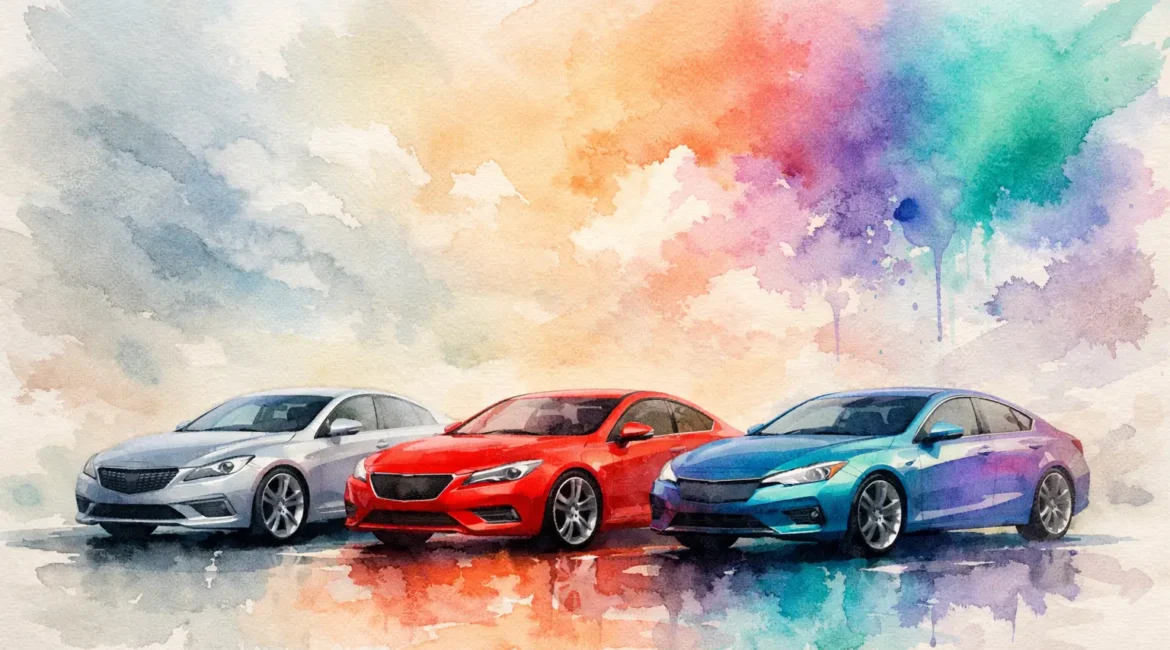
A car’s paintwork says more than most drivers realise. It affects how modern the vehicle looks, how easily it hides day-to-day marks and, when the time comes to sell, how widely it appeals. The latest car paint colour trends are moving in two directions at once: understated finishes for everyday cars, and richer, more personal colours for drivers who want to stand out.
That does not mean every trend is right for every vehicle. A colour that looks excellent on a new performance model can be harder to live with on a family car, particularly through a Glasgow winter. The best choice is one that suits the car, your routine and the level of upkeep you are happy to give it.
The car paint colour trends leading the road
White, black, silver and grey remain the safe choices on British roads, but the balance within that familiar group has changed. Plain silver has lost some ground, while deeper greys, pearlescent whites and darker metallic finishes have become more common. These colours look smart without being too risky, which matters to owners thinking about resale value.
Grey is especially popular because it works on almost anything, from a compact hatchback to an executive saloon or SUV. Modern versions are rarely flat. They may have a warm graphite tone, a blue tint or a fine metallic sparkle that changes in different light. The result is more character than traditional silver, with a clean, premium look.
At the same time, manufacturers and owners are bringing more colour back to the road. Deep greens, rich blues, burgundy reds and bronze-toned metallics are increasingly being chosen by people who want something distinctive without going fully custom. These shades tend to suit cars with strong body lines because they add depth and draw attention to the shape of the panels.
Greens are back, but not as you remember them
Green was once seen as a difficult sell. That has changed with darker, more sophisticated shades such as forest green, British racing green-inspired finishes and muted olive tones. On the right car, a deep green can look every bit as premium as black, while feeling far less predictable.
The trade-off is visibility of damage. Dark green paint can show scratches, stone chips and swirl marks, particularly when the sun catches it. A professional repair is important because a slight mismatch in shade or metallic content is more noticeable on a complex colour.
Blue offers a safer way to be different
Blue remains one of the strongest alternatives to grey and black. Navy, ink blue and deep metallic blue are popular because they look refined and tend to appeal to a broad range of buyers. Brighter blues can suit sporty models and custom projects, but they are more personal.
If you are considering a respray rather than a repair, think beyond the colour card. The same blue may look completely different on a small city car and a larger SUV. Viewing a painted sample in daylight, shade and indoor lighting gives a far better idea of the finished result.
Matte and satin paintwork: striking, but not always simple
Matte and satin finishes continue to attract attention. They give a vehicle a purposeful, modern appearance and can make even a familiar model look more individual. Satin black, dark grey and metallic satin colours are particularly popular for roof sections, bonnets, body kits and full styling projects.
They do, however, come with practical considerations. Conventional polishing is not suitable for matte paint, as it can create shiny patches that are difficult to correct. Bird droppings, fuel spills and road grime need to be dealt with promptly, using the right cleaning products. When a panel is damaged, matching the texture as well as the shade calls for careful preparation and application.
For many drivers, a satin or matte accent is the better option than a full vehicle colour change. A professionally refinished roof, mirror caps, spoiler or body kit can add impact while keeping maintenance and future repair work more straightforward.
Why pearlescent and special-effect finishes remain popular
Pearlescent white, metallic black and colour-shifting paints remain favourites for drivers who value a high-end look. These finishes contain pigments or flakes that reflect light differently, so the paint can look brighter, darker or slightly different in tone depending on the angle.
The visual result is impressive, but repair quality matters even more than it does with a solid colour. Matching a pearlescent or three-stage finish is not simply a case of finding the paint code. The painter must account for the car’s age, how the original panels have weathered and how the paint sits on the surface. Blending into neighbouring panels is often the best way to achieve an even, showroom-standard finish.
This is worth bearing in mind if your car has suffered a scrape, dent or accident damage. Choosing the cheapest repair without proper colour matching can leave a visible edge between the repaired panel and the original paintwork. A good repair should look right in all conditions, not only under workshop lights.
Are bold colours a good choice for resale?
Bright yellow, orange, vivid red and electric blue have their place. They can suit hot hatches, sports cars and custom builds brilliantly. A bold colour also makes a car easier to spot in a busy car park, which is a practical bonus that is rarely mentioned.
For resale, though, it depends on the vehicle and the buyer. Neutral shades usually attract the largest audience, while an unusual colour can either help a desirable model stand out or limit interest in an everyday car. If you plan to keep the vehicle for years, personal enjoyment may matter more than the broadest possible resale appeal. If you change cars regularly, a sophisticated grey, blue, black, white or green is generally the safer route.
A full colour change should also be declared to your insurer and recorded correctly with the relevant vehicle details. This avoids problems later if you need to make a claim or sell the car.
Choosing a colour that works in real life
Trends are useful inspiration, but paintwork has to cope with school runs, motorway miles, supermarket car parks and Scottish weather. Black looks sharp when freshly cleaned, yet shows dust, water spots and light scratches quickly. White can hide dust well but may show road tar and grime around the lower panels. Mid-tone grey and silver are often the most forgiving options for busy owners.
Before committing to a repaint or custom finish, consider four practical questions:
- How often are you prepared to wash and maintain the car?
- Will the vehicle be parked outdoors most of the time?
- Do you want the widest possible resale appeal, or a look that feels personal?
- Is the work a small cosmetic repair, a panel respray or a complete colour change?
The answer affects both the finish and the repair approach. A small bumper scuff may only need a SMART repair, while damage across a door or wing may require a more extensive blend for the colour to match correctly. For a complete transformation, preparation is just as important as the final coat. Rushing the work can lead to uneven texture, poor panel alignment or a finish that does not last.
The trend that matters most: a finish that looks original
The strongest paint trend is not a particular shade. It is quality. Whether your car is metallic grey, pearl white, deep green or a one-off custom colour, the paint should look even, glossy where it should be glossy, and properly matched across the vehicle.
At Unique Bodywork, the focus is always on restoring damaged paintwork to a finish you can be proud of, or creating a custom look with the same attention to detail. For drivers across Glasgow and the surrounding area, an inspection is the sensible first step. It gives you a clear view of what can be repaired, what needs repainting and which finish will continue to look right long after the latest colour trend has moved on.