
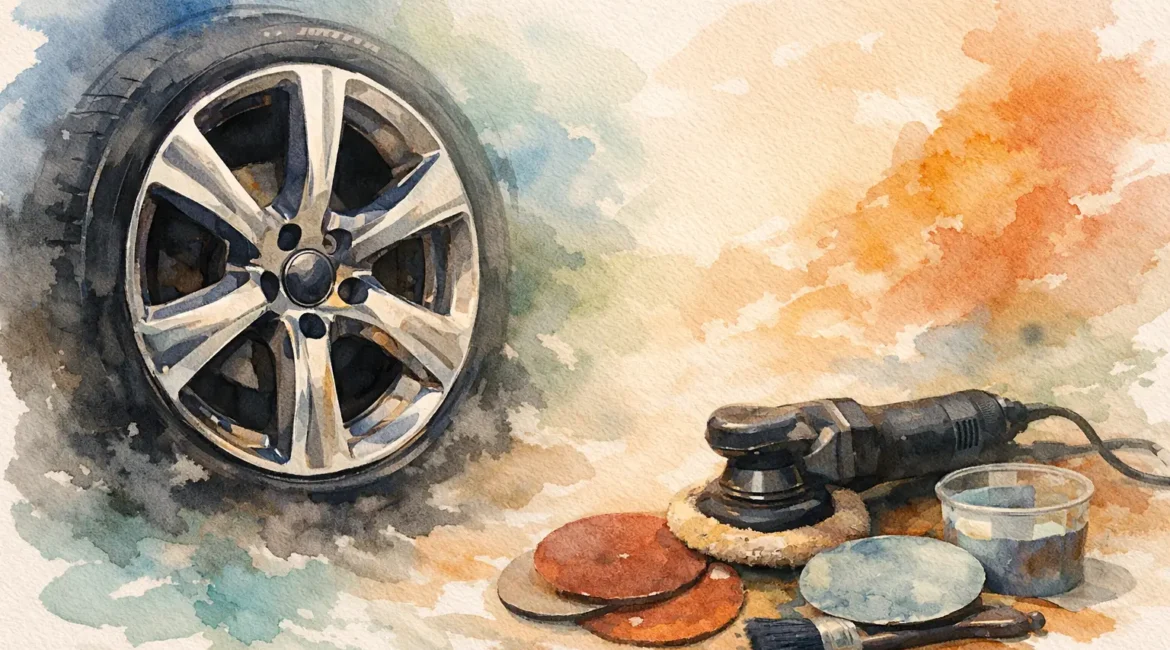
A wheel can be mechanically sound and still make an otherwise well-kept car look tired. Kerb scuffs, peeling lacquer, white corrosion and deep gouges stand out immediately, particularly on darker-coloured vehicles or polished alloys. Knowing how to restore alloy wheels helps you decide whether a careful home repair is realistic or whether a professional refurbishment will give the finish your car deserves.
The right approach depends on the damage. A light scuff around the rim edge is very different from a cracked wheel, a buckle or corrosion that has spread under the paint. The goal is not simply to cover the marks. It is to create a level, properly prepared surface with a finish that will stand up to road salt, brake dust and everyday Glasgow weather.
Start by checking what damage you are dealing with
Wash the wheel thoroughly before making any decision. Brake dust can hide scratches, while grime around the bead area can make corrosion look worse than it is. Use a wheel-safe cleaner, rinse it well and allow it to dry so you can see the true condition of the alloy.
Light cosmetic damage usually includes surface scratches, small kerb marks and localised paint chips. These can often be repaired without replacing the wheel, provided the damage is confined to the face or outer rim and the metal has not been seriously gouged.
Deeper damage needs a closer look. If there is a crack, a flat spot, vibration through the steering wheel, repeated tyre-pressure loss or visible distortion, stop treating it as a cosmetic job. A damaged alloy can affect tyre sealing, wheel balance and vehicle safety. It should be assessed by a wheel refurbishment specialist before it goes back into regular use.
You should also identify the wheel finish. Most alloys are painted and lacquered, but diamond-cut wheels have a machined metal face beneath a clear protective coating. Polished, chrome-effect and powder-coated wheels each need their own process. Applying a standard touch-up repair to a diamond-cut face, for example, may disguise a small area but will rarely recreate the original uniform machined appearance.
How to restore alloy wheels with minor kerb damage
For a small painted-area scuff, preparation makes the difference between a tidy repair and one that begins lifting after a few weeks. Remove the wheel if possible. It gives better access, avoids overspray on the tyre and allows you to inspect the inner rim. If you cannot remove it, mask the tyre, valve and surrounding bodywork carefully.
Start by sanding the damaged area to remove loose lacquer, corrosion and raised edges. Use a fine abrasive and work gradually. You are aiming to feather the damaged paint into the sound finish, rather than leaving a sharp ridge that will show through the new coating. Do not sand aggressively into undamaged sections just to speed things up.
Where kerbing has taken a noticeable piece from the rim, a suitable metal repair filler can rebuild the shape. Apply it in thin layers, allow it to cure fully and sand it back until it follows the original curve of the wheel. A rushed filler repair is one of the most common reasons a refurbished alloy looks uneven in daylight.
Once the surface is smooth, clean it with a proper degreaser. Primer should be applied only where bare metal or filler is exposed. After it dries, apply wheel paint in several light coats rather than one heavy coat. Heavy coats are more likely to run, trap solvent and leave an uneven finish. Finish with a compatible clear lacquer where the wheel design requires it, then allow enough curing time before refitting.
Colour matching can be difficult. Silver alloys are not all the same silver, and even a close match can look noticeably different beside an original wheel in direct sun. For a small scuff on an older daily driver, a local repair may be good value. For a newer car, a prestige model or a vehicle you plan to sell, refurbishing the full face or all four wheels usually produces a far more consistent result.
Do not overlook tyre and valve condition
Alloy restoration is a sensible time to check the tyre sidewall, tread and valve. A kerb strike hard enough to mark the wheel can also damage a tyre. Any cut, bulge or suspected sidewall impact needs professional advice, not a cosmetic cover-up.
When the tyre is removed, the bead seat can also be inspected for corrosion. Corrosion in this area may cause a slow leak even when the tyre itself is in good condition. Proper refurbishment deals with the corrosion rather than painting over it and hoping the problem disappears.
When professional alloy refurbishment is the better option
DIY products have their place, but they cannot replace the preparation equipment, controlled coating process and repair experience used in a bodyshop. Professional refurbishment is normally the better choice for severe kerbing, widespread corrosion, peeling lacquer, multiple damaged wheels and diamond-cut finishes.
The process begins with stripping the wheel of old coating and contamination. The alloy is then inspected for cracks, buckles and other damage before imperfections are repaired and the surface is prepared. Depending on the required finish, the wheel may be painted, powder coated or machined before being protected with a durable lacquer.
Powder coating is popular because it creates a hard-wearing, even finish and is available in a wide range of colours. It suits many painted alloys, especially where corrosion or old paint failure covers much of the wheel. However, it is not identical to every factory finish, and wheels with a diamond-cut face often need machining to achieve the original contrast between the bright metal surface and painted inner sections.
Diamond cutting can make a wheel look sharp again, but it has a limit. Each machining process removes a very thin layer of material, so a wheel cannot be cut endlessly. A reputable repairer will inspect the wheel and explain whether refurbishment is appropriate or whether replacement is safer and more economical.
At Unique Bodywork, alloy wheel refurbishment is approached as part of the overall appearance of the vehicle. If your car has collected kerb damage alongside bumper scuffs or paint scratches, dealing with the work together can restore a cleaner, more showroom-ready finish and save the inconvenience of arranging separate repairs.
Choosing between a mobile repair and a workshop repair
A mobile cosmetic repair can be convenient for a small localised scuff, particularly where the wheel does not need tyre removal or extensive preparation. It can be a practical option when time is tight and your expectations are realistic.
A workshop repair is usually preferable where there is corrosion, damage around the tyre bead, a diamond-cut design or a need for all four wheels to match. Removing the wheel and tyre allows the full rim to be treated, including areas that cannot be reached properly on the car. It also gives the coating more controlled curing conditions.
Price should not be the only deciding factor. The cheapest quote may cover the visible scrape but leave corrosion beneath the paint or use a finish that does not match the other wheels. Ask what preparation is included, whether the tyre is removed, how the finish will be matched and what happens if hidden damage is found during inspection.
Keep restored wheels looking their best
Freshly refurbished alloys will last longer with simple, regular care. Avoid acidic cleaners and harsh brushes that can damage lacquer. A pH-neutral wheel cleaner and a soft brush are usually enough for routine washing, especially if brake dust is not allowed to bake on for weeks.
During winter, rinse wheels regularly to remove road salt. Try not to rub against high kerbs when parking, and keep an eye on tyre pressures, as underinflated tyres can make a kerb impact harsher. If you notice a chip, deal with it early before water works beneath the coating and creates a larger corrosion problem.
A well-finished wheel does more than improve first impressions. It protects the alloy, supports your car’s resale appeal and makes the whole vehicle look properly cared for. If the damage is more than a light scuff, a professional inspection is the sensible next step before a small cosmetic issue turns into a costly replacement.