
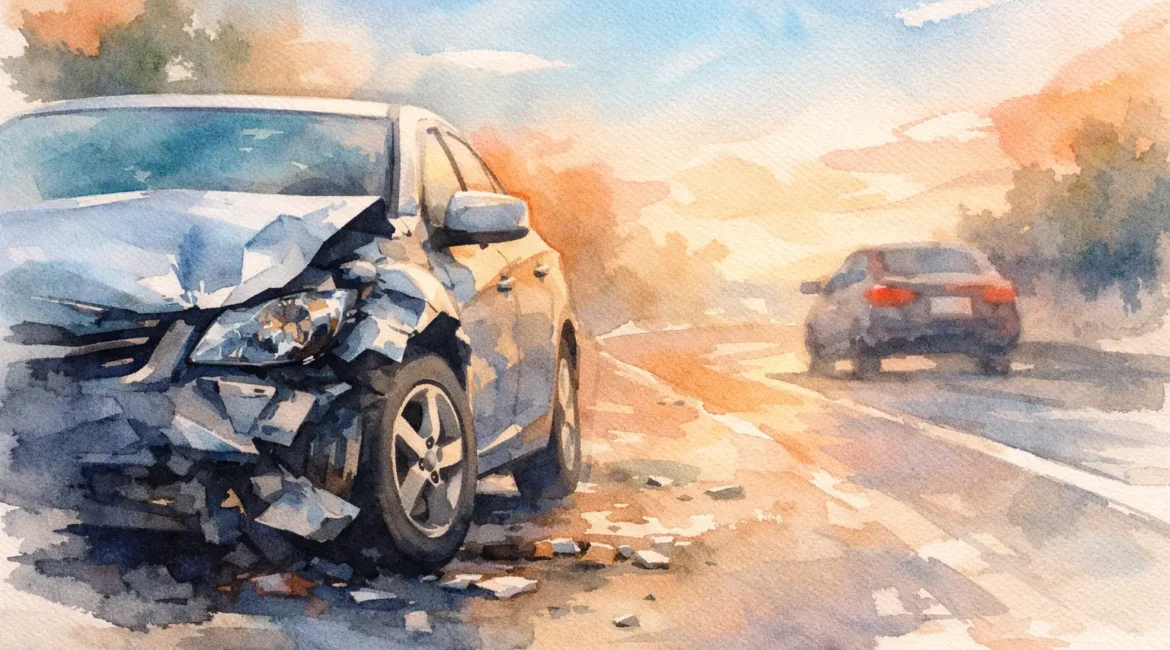
You’ve had a bump, the adrenaline has worn off, and now you’re standing beside the car asking the question most drivers ask next – can you drive with accident damage? Sometimes the answer is yes for a very short distance. Sometimes it is a flat no. The hard part is that damage is not always obvious, and what looks minor on the outside can still make the car unsafe.
If the vehicle has been involved in any collision, your first job is not to judge the paintwork. It is to judge whether the car is roadworthy. A cracked bumper might be cosmetic. A bent wheel, leaking fluid or damaged light is a different story. If there is any doubt at all, do not keep driving just because the car still starts.
Can you drive with accident damage if the car still feels normal?
Possibly, but only after a sensible check. A car can drive in a straight line and still have damage that makes it unsafe or illegal to use on the road. Modern vehicles are designed to absorb impact, which means some of the important damage happens underneath panels, around mounting points, or behind the bumper where you cannot easily see it.
After even a low-speed accident, you should stop and check the basics. Look at the tyres, wheels, lights, mirrors, bonnet, number plates and any loose panels. Check underneath for leaking coolant, oil or other fluids. Open and close the doors if it is safe to do so. If the steering feels off, the brakes feel strange, or the car pulls to one side, that is enough reason to stop driving and arrange recovery.
Airbag deployment is another clear warning sign. If airbags have gone off, the vehicle needs proper inspection before it goes anywhere beyond transport to a repairer. The same applies if seatbelt pre-tensioners have activated, the dash shows warning lights that were not there before, or the impact was strong enough to move structural parts.
What damage makes a car unsafe to drive?
Some accident damage is clearly cosmetic. Scuffed paint, a shallow dent in a door, or minor bumper marking may not stop you driving home. The problem is that people often assume visible damage is the whole story.
Damage becomes a safety issue when it affects steering, suspension, braking, visibility, lighting, tyres, wheels or structural alignment. If a wing is rubbing on the tyre, if a headlamp is smashed, if the wheel arch liner is hanging loose, or if the bonnet does not latch properly, the car should not be driven. The same goes for cracked glass that affects your view, mirrors that no longer function, and bumpers or trims that could detach while moving.
Even something as simple as a damaged alloy can become a bigger risk. A wheel may look only slightly marked but have a crack or buckle from the impact. Drive on that and you could end up with vibration, poor handling or tyre failure. That is why a proper inspection matters more than a guess from the kerbside.
Legal roadworthiness still applies
A lot of drivers focus on whether the car can move. The better question is whether it is still legal and roadworthy. If accident damage means sharp edges are exposed, lights are not working, the number plate is missing or unreadable, or the vehicle presents a danger to other road users, you should not drive it on public roads.
Insurance is part of this as well. Driving a damaged vehicle that is clearly unsafe can create problems if something else happens before it is repaired. If you are unsure, get advice before using the car again.
When you might be able to drive with accident damage
There are cases where you may be able to drive the vehicle carefully and temporarily, usually to get home or to a bodyshop. That tends to apply where the damage is limited to non-safety-critical panels and there are no issues with lights, tyres, steering, suspension, braking or visibility.
For example, a minor dent in a rear quarter panel or a scuffed bumper cover may not stop the car being safely moved. But this is not a free pass to carry on as normal for the next few weeks. Even apparently light damage can worsen if parts are loose, and small alignment issues often become more obvious once the car is driven at speed.
If you do move the car, keep the journey short and avoid motorways until it has been checked properly. Listen for scraping, knocking, hissing or vibration. If anything changes, stop.
Can you drive with front-end accident damage?
Front-end damage needs extra caution because so many critical parts sit behind the bumper and grille. Radiators, condensers, crash bars, sensors, headlamps and bonnet catches can all be affected in a front-end impact. You might see a split bumper and think it is mostly cosmetic, but the cooling pack behind it may have shifted or cracked.
If the front of the car has taken a hit, check for fluid leaks, rising engine temperature, misaligned bonnet gaps and warning lights. If the bonnet does not close securely, do not drive it. If one headlamp is damaged or loose, do not drive it at night and in many cases do not drive it at all until repaired. Front parking sensors, radar units and driver assistance systems can also be knocked out of calibration after what looks like a modest bump.
This is one of the most common situations where drivers in Glasgow and the surrounding areas try to manage with damage for a few days, only to find the repair is more involved than expected. Getting it looked at early usually saves hassle.
Rear-end and side damage can still be a problem
Rear-end damage is often dismissed because the car still drives, but a damaged rear bumper, boot floor or light cluster can still make the vehicle unsafe. If the boot will not shut properly, the bumper is loose, or the rear lights are cracked or not working, it needs attention before regular use.
Side damage can be even more misleading. A dented door might open and close today but catch later once the shell flexes. If the sill has been hit, if the door gaps have changed, or if the impact reached the wheel area, there may be more going on than a panel repair. Side impact damage can also affect window operation, mirror housings and sensor systems.
What to do straight after the accident
Once everyone is safe and the immediate incident is handled, take a calm look around the vehicle before deciding whether to move it. Photographs help, especially if insurance is involved. Check each corner of the car rather than just the obvious point of impact. Then pay attention to how it behaves if you do move it a few metres.
If the steering wheel is no longer centred, the car feels unstable, a warning light appears, or there is any smell of fuel or coolant, stop there. Recovery is cheaper than the consequences of pushing on with an unsafe car.
This is also the point where a trusted repairer earns their keep. An experienced bodyshop can quickly tell the difference between cosmetic damage and something that affects roadworthiness. That means less guesswork, less risk, and often a faster route back to normal.
Why a proper inspection saves money
A lot of drivers delay repairs because the damage does not look too bad. That can be a false economy. Loose trims fall off, cracked bumpers split further, hidden bracket damage gets worse, and poor alignment can wear tyres faster than you expect. If water gets behind damaged paint or broken seals, corrosion can start too.
A proper body and mechanical inspection gives you a clearer picture from the start. You find out what is cosmetic, what is structural, what can wait a few days, and what needs dealt with immediately. That is especially useful if you are handling an insurance claim or a non-fault accident, because accurate repair assessment matters.
For drivers who want the process kept simple, that practical support makes a real difference. A repairer that can inspect the damage, explain it in plain language and get the vehicle back to pre-accident condition without dragging the job out is usually the best route.
The simple answer to can you drive with accident damage
You can sometimes drive with accident damage, but only if the car remains fully roadworthy and the damage is genuinely minor. That means no issues with steering, suspension, brakes, lights, tyres, wheels, visibility, fluids, body security or structural safety. If you are not certain, do not guess.
At Unique Bodywork, we see plenty of vehicles that looked fine at first glance but needed more than a cosmetic touch-up once checked properly. If your car has been knocked, scraped or hit, getting it assessed early is the safest move and usually the smartest one as well.
A short delay to get the right advice is better than turning a repairable problem into a dangerous one.